

The cost of living in Saigon is one of the most searched questions among people considering the move — and one of the most frequently misunderstood. The misunderstanding usually goes in both directions: some people arrive expecting everything to be impossibly cheap and get surprised by how quickly the numbers add up in certain lifestyle configurations; others talk themselves out of moving because they’ve seen inflated expat-facing estimates that don’t reflect how the city actually works. This guide tries to tell you what it actually costs, honestly, in 2026.
The short version: a single expat can live comfortably in Saigon for $1,200–$2,000 USD per month. The wide range exists because the biggest variable — housing — varies enormously depending on the neighborhood and apartment type you choose. Below that range, you can have a decent life in a more local part of the city. Above it, you’re in serviced apartment or premium expat compound territory. Everything in between is entirely liveable and often very good.

Cost of Living Saigon: The Key Numbers
Before going into the detail, here’s a snapshot of what different lifestyle levels actually cost in Saigon in 2026. These are realistic monthly totals for a single expat, not minimums for someone barely surviving or maximums for someone with no interest in managing their spending.
| Category | Budget ($) | Mid-Range ($) | Comfortable ($) |
|---|---|---|---|
| Rent (1-bedroom) | 350–500 | 600–900 | 900–1,500 |
| Food (eating out + home) | 150–200 | 250–400 | 400–700 |
| Transport | 40–70 | 70–120 | 120–200 |
| Utilities + internet | 50–80 | 80–120 | 100–160 |
| Health insurance | 80–120 | 120–200 | 200–350 |
| Gym + leisure + social | 80–150 | 150–300 | 300–600 |
| Monthly Total | $750–$1,120 | $1,270–$2,040 | $2,020–$3,510 |
Couples find the per-person cost drops meaningfully, since the largest fixed costs — rent, utilities — are split. A couple can live very comfortably in Saigon for $2,000–$3,000 USD/month total.
Cost of Living Saigon: Rent and Housing
Housing is the cost that determines everything else about your budget. Get this right and the rest of the numbers are manageable. Make a poor housing choice — paying premium prices for a location that doesn’t fit your life, or underinvesting in quality and ending up with an apartment that’s miserable to live in — and no amount of frugality elsewhere compensates for it.
The rental market in Saigon breaks into distinct tiers, and understanding which tier you’re shopping in makes the search significantly cleaner.
Rent by Neighborhood and Budget
The neighborhood you choose has the single biggest impact on what you’ll pay for rent. Thao Dien (old District 2) and District 1 are the most expensive expat areas — modern 1-bedroom apartments start around $700/month and go up significantly from there. District 7 offers better value at $500–$900 for a comparable 1-bedroom. Binh Thanh and Phu Nhuan have the city’s best price-to-location ratio, with good 1-bedrooms available from $400–$750/month.
For a full comparison of what you get for your money in each neighborhood, the where to live in Saigon guide breaks down each area with current rent ranges and what the lifestyle looks like in practice.
What Affects Rent in Saigon
Several factors beyond neighborhood affect what you’ll pay. Building age and quality: newer apartment towers with amenities (pool, gym, concierge) command $100–300/month more than equivalent square footage in older buildings. Furnished vs unfurnished: furnished is the norm in expat areas and is almost always worth the marginal premium — buying furniture is an expensive, time-consuming complication most expats skip entirely. Floor: higher floors with city views or river views cost more. Air conditioning quality: a subtle but important factor in a hot city — ask about the system before you sign.
For a detailed breakdown of rent prices by district and apartment type, our article on rent prices in Saigon has current market data by neighborhood.

Food Costs: Where Saigon Shines
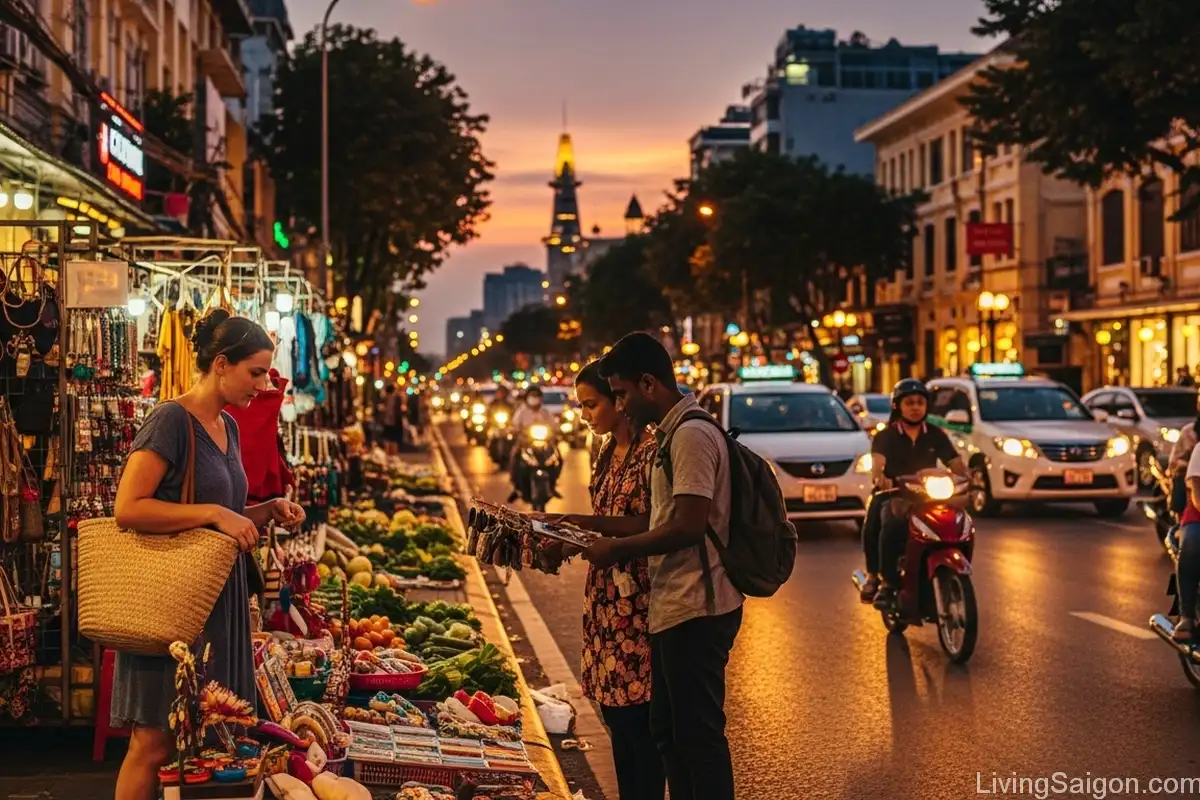
Food is where the cost of living in Saigon most dramatically outperforms comparable cities. The gap between what you can eat — and eat well — for the money is genuinely striking if you’re coming from anywhere with Western price levels.
Eating local — which means pho and banh mi for breakfast, com tam or bun bo for lunch, local rice dishes for dinner — costs $2–4 per meal at a neighborhood stall or local restaurant. A full day of local eating, including morning coffee, comes to $8–12 USD. This isn’t roughing it: the food at these local spots is frequently excellent, cooked fresh, and deeply satisfying.
Mid-range international dining — a meal at a decent Western or fusion restaurant — typically costs $10–20 per person including one or two drinks. Fine dining at the best restaurants in District 1 or Thao Dien reaches $40–80 per person for a full experience with wine. Most expats eat a combination: local food during weekday lunches, a mix of local and international for dinners, international brunch on weekends.
Cooking at home is possible and some expats do it regularly, but it’s less of a money-saver here than in most cities. Local wet market produce is inexpensive, but imported groceries (cheese, good wine, specific European or American ingredients) carry significant premiums at stores like Annam Gourmet. Many expats find that eating out at local restaurants costs similar to or less than cooking with imported ingredients.

Transport Costs in Saigon
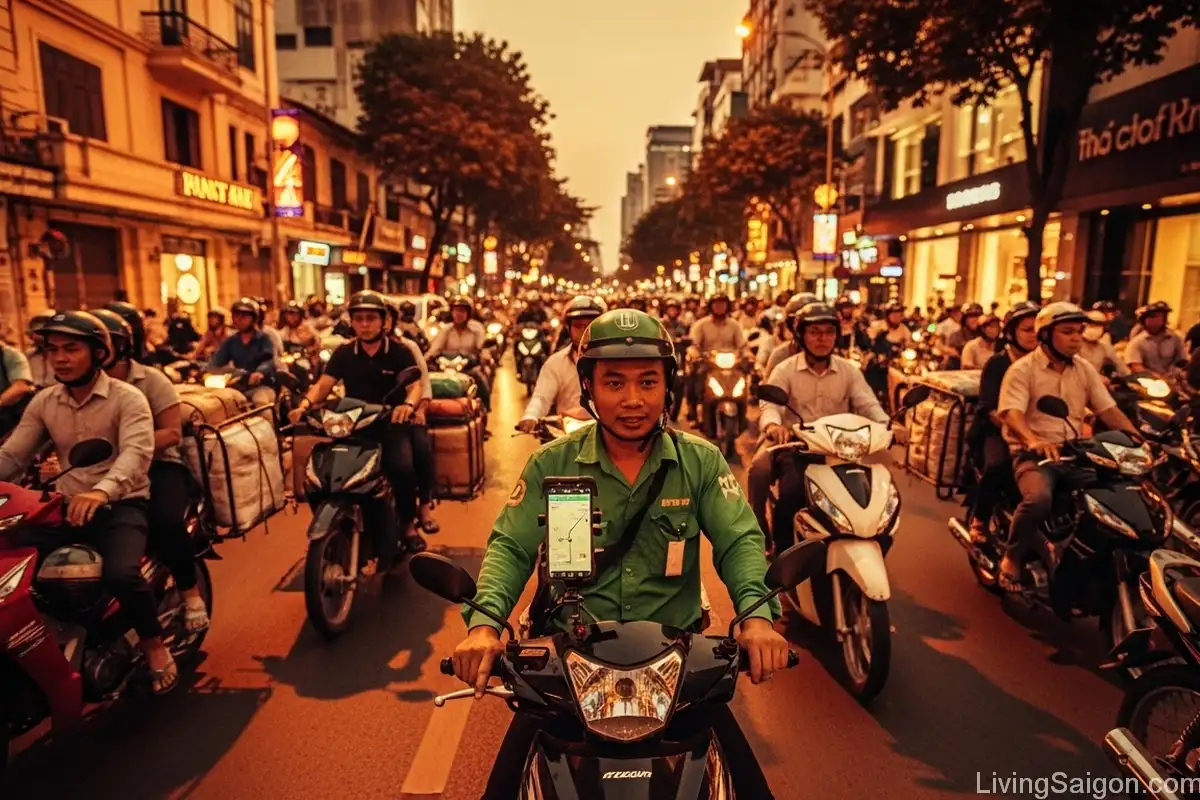
Transport is one of the lowest line items in the cost of living in Saigon for most expats, and it’s extremely affordable compared to any Western city.
Grab (the local ride-hailing app) is the primary transport option for most people who don’t own a motorbike. A GrabBike (motorbike) trip across District 1 costs 20,000–40,000 VND ($0.80–$1.60). A GrabCar across town runs 80,000–150,000 VND ($3.20–$6). Monthly Grab spending for an active social life is typically $50–100 USD if you’re not owning your own vehicle.
Many expats who stay longer than three months buy a motorbike. A good used 110cc motorbike costs $400–700 USD and eliminates the Grab dependency entirely. Fuel costs roughly $5–8/week at typical usage levels. Parking is cheap — most places have fee parking attendants who charge 5,000–15,000 VND ($0.20–$0.60) per session.
The Metro Line 1 now connects Thao Dien to the city center, providing a reliable and inexpensive alternative to Grab for that corridor specifically. Monthly transit cards are available at subsidized rates.
Utilities, Internet, and Mobile
Utilities in Saigon are inexpensive except for one significant exception: electricity. Vietnam uses a tiered pricing system for electricity where each additional tier costs progressively more per kilowatt-hour. In a hot city where air conditioning runs most of the year, heavy AC usage can push bills into the higher tiers quickly.
A rough guide: one air-conditioned bedroom used for sleeping only, with daytime cooling kept moderate, typically generates an electricity bill of $30–50/month. A large apartment with multiple AC units running throughout the day can reach $80–150/month in electricity alone. This surprises many new arrivals whose base rent looked attractive until the first utility bill arrived.
Water is negligible — typically $5–15/month. Internet is excellent and cheap: a fiber connection of 100–200 Mbps costs $8–15/month through Viettel, VNPT, or FPT. Mobile data plans are similarly affordable — $5–10/month for 20–30GB of 4G data. For a full breakdown of what to budget for utilities by apartment type and usage pattern, our guide to utilities costs in Saigon has the detail.
Health Insurance: Non-Negotiable
Health insurance is the one cost where cutting corners is genuinely dangerous. International hospitals in Saigon — FV Hospital, Vinmec, Columbia Asia — provide excellent care, but an uninsured visit for anything moderately serious can run $2,000–5,000 USD or more. A single ICU night without insurance has bankrupted expats who underestimated this risk.
Expat health insurance from providers like AXA, Bupa International, Cigna, or Pacific Cross starts at approximately $80–120/month for a basic individual plan and provides access to the full range of international medical facilities. More comprehensive plans covering dental, maternity, and higher annual limits run $150–300/month. This is not optional. Budget for it from day one.
Lifestyle Costs: Gyms, Social Life, Entertainment
This is the most variable category in the cost of living in Saigon, and also the one most influenced by the type of expat you are. Someone who goes out three nights a week, takes exercise classes, and travels regionally once a month will spend significantly more in this category than someone who stays home most evenings and does most exercise outdoors.
Gym memberships: California Fitness, Elite Fitness, and similar mid-range gyms charge $30–60/month. Premium facilities with pools, sauna, and group classes run $60–100/month. CrossFit boxes typically charge $80–130/month for unlimited classes. Yoga studios are similar.
Bars and nightlife: a round of cocktails at a mid-range bar costs $15–30 for two. A full evening out with dinner and drinks, assuming you’re at reasonably priced venues, typically runs $30–60 per person. Rooftop venues and premium clubs cost more — $50–100 for an evening is realistic at the better places. For a snapshot of what nightlife actually costs, the expat life in Saigon guide covers the social landscape in detail.
Regional travel: Southeast Asia is remarkably cheap to explore from Saigon. Budget flights to Bali, Bangkok, Singapore, or Kuala Lumpur frequently cost $80–150 return. Domestic flights within Vietnam are often $20–40. Many expats build a pattern of one regional trip per month, which adds $200–400 to the average monthly spend depending on destination and style.

Cost of Living in Saigon by Lifestyle Type
The Budget Expat ($800–$1,200/month)
Living in Phu Nhuan or the less central parts of Binh Thanh. Renting a clean, basic 1-bedroom for $400–550/month. Eating almost entirely local. Owning a motorbike for transport. Basic health insurance. Limited international dining or nightlife. This budget is genuinely achievable and produces a comfortable, if modest, life. The neighborhood will feel more Vietnamese than most expats initially expect, which is either a feature or a drawback depending on the person.
The Mid-Range Expat ($1,200–$2,000/month)
Living in Binh Thanh, parts of Thao Dien, or District 7. A modern 1-bedroom with amenities for $650–$950/month. A mix of local and international food. Grab plus occasional motorbike rental or ownership. Mid-range health insurance. Regular social life with some international dining. This is the lifestyle most expats are actually living, and it’s genuinely good — comfortable, varied, and socially rich.
The Comfortable Expat ($2,000–$3,500/month)
A well-located apartment in Thao Dien or a premium building in District 1 for $900–$1,500/month. Regular international dining. Premium health insurance with dental. Active gym or fitness studio membership. Regular regional travel. Multiple nights out per week at mid-to-premium venues. This is what the city’s more senior expats, company-sponsored relocators, and financially established remote workers typically spend.
Hidden Costs to Factor Into Your Budget
A few costs that frequently catch expats off-guard when they first arrive and don’t appear in most “cost of living” summaries.
Visa costs: Depending on your situation, visa-related costs — e-visa fees, border run transport, agency fees for long-stay business visas — can add $100–300/month amortized over the year. Factor this in from the start rather than treating it as an incidental.
Air purifier and filter replacements: Most long-term expats run an air purifier given Saigon’s air quality. A decent unit costs $150–300 upfront; filter replacements run $30–80 every three to six months depending on the model.
Motorbike maintenance: If you own a motorbike, budget $20–40/month for routine maintenance, fuel, and the occasional repair. More if you own an older bike or ride heavily.
Annual flights home: Most expats fly home at least once a year. A return flight to Europe or North America from Saigon costs $600–$1,200 depending on the airline, booking timing, and route. Divided across twelve months, this adds $50–100/month to the real cost of the lifestyle.
For a complete month-by-month budget scenario including these hidden costs, our article on the monthly budget for expats in Saigon gives you a template you can adapt to your own situation. The cheap vs expensive living in Saigon comparison is also worth reading if you’re trying to understand where the line sits between genuinely affordable and gradually expensive.
Is the Cost of Living in Saigon Worth It?
The question behind the numbers is always: what do you get for what you spend? And on that measure, the cost of living in Saigon compares very favorably with most alternatives.
A $1,500/month budget in Saigon gives you a modern apartment in a good neighborhood, a rich social life, excellent food at every price point, regular regional travel, gym access, and the kind of comfortable daily life that in London, Sydney, or San Francisco would require three or four times that income. The exchange rate in quality of life for dollar of income is one of the most favorable of any major city in the world.
The expat life experience and the lifestyle infrastructure of the city are covered in detail in the expat life in Saigon guide. For the big picture on what living here actually involves, the living in Saigon guide is the right starting point. And if you’re at the stage of actively searching for an apartment, our apartment rental service in Saigon connects you with agents who know the current market and communicate clearly in English — making the housing search significantly less stressful than going it alone.
The districts of Saigon vary enough in price and character that where you land matters a lot to what you’ll actually spend. Our districts in Saigon overview covers the character of each area, which pairs with this cost guide to give you the full picture needed to make a well-informed decision.