
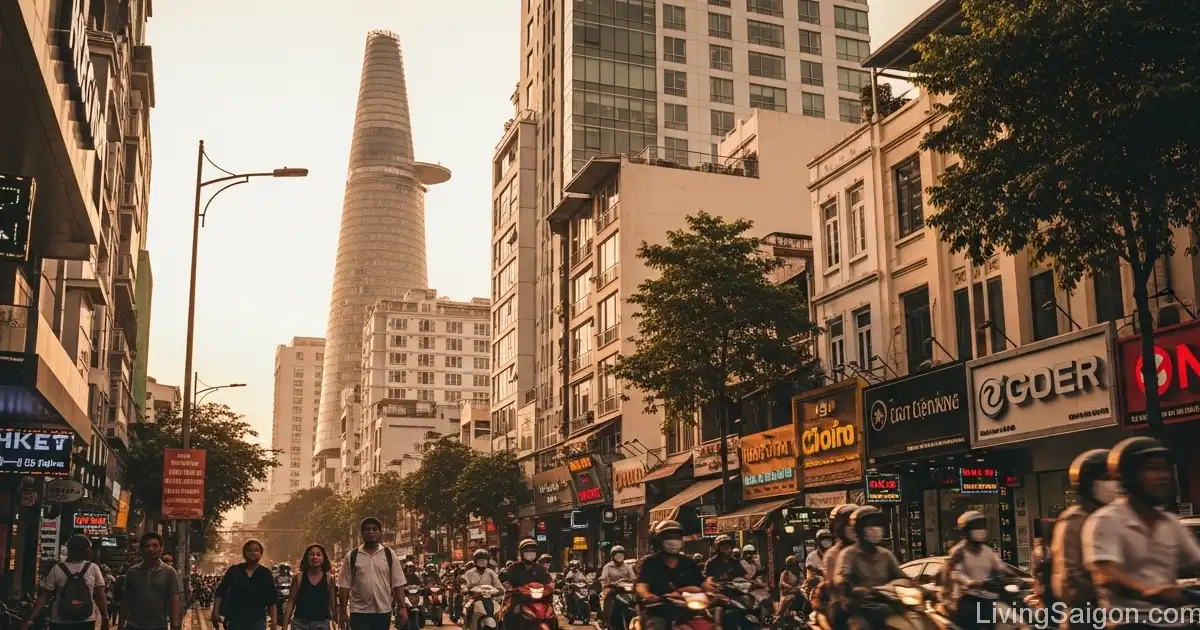
There’s a moment that happens to almost every expat somewhere in their first month of living in Saigon. You’re sitting at a plastic stool on a side street, eating a bowl of bún bò Huế that costs less than a dollar, watching the city’s endless river of motorbikes roll past, and you think — how did I not know about this place sooner? That feeling doesn’t really go away. Saigon has a way of pulling people in and keeping them far longer than they planned.
This guide is written for people who are seriously considering making the move — not tourists passing through for two weeks, but people who want to understand what day-to-day life actually looks like. We’ll cover the real costs, the best areas, the honest challenges, and the parts of this city that make expats keep extending their stay year after year.
Why So Many Expats Choose Living in Saigon Over Other Asian Cities
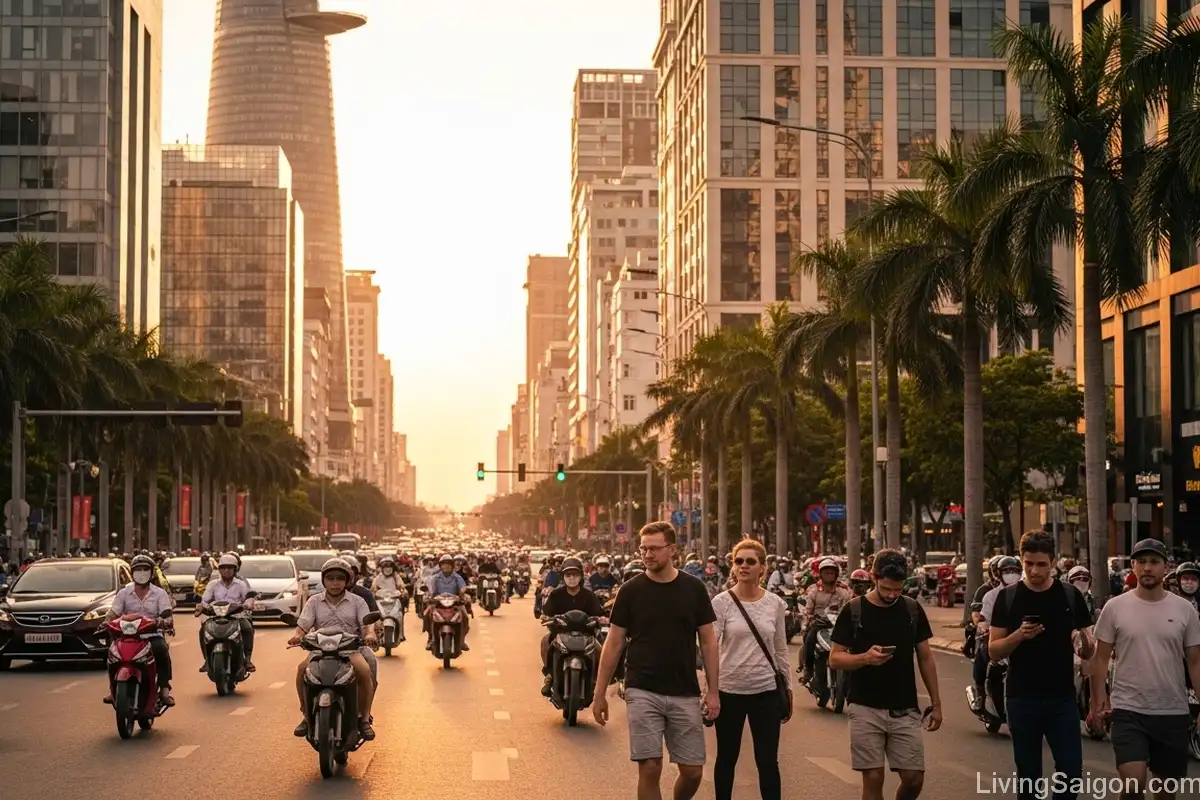
Bangkok, Kuala Lumpur, Bali, Chiang Mai — these are the cities that usually come up first when people talk about moving to Southeast Asia. Saigon tends to be a little further down the list, which is honestly part of why the expats who do end up here love it so much. It hasn’t been polished into a tourist-friendly theme park version of itself. It’s loud, chaotic, occasionally baffling, and absolutely alive in a way that more “expat-friendly” cities can struggle to replicate.
The practical reasons stack up quickly. The cost of living is low enough that a comfortable, quality life — nice apartment, eating out regularly, social life, gym, occasional travel — comes in well under what the same lifestyle would cost in Bangkok or Singapore. English is spoken widely in restaurants, cafes, co-working spaces, and most expat-facing businesses. The food scene is one of the best in the world at every price point. The city has a genuine international community, not just a revolving door of tourists.
Then there’s the job market. Saigon is Vietnam’s commercial capital, and the country’s economy has been one of the faster-growing in the region for the past decade. That means real opportunities: tech companies, manufacturing, education, finance, hospitality, and a growing startup scene that continues to attract investment. Remote workers have also discovered that a fast internet connection and a timezone that overlaps with European morning hours makes Saigon a surprisingly functional base.
The Real Cost of Living in Saigon
This is the question everyone asks first, and the honest answer is: it depends enormously on how you want to live. Saigon can be a budget paradise or a surprisingly expensive city depending on your choices. The good news is that you get a lot of control over where you land on that spectrum.
A realistic monthly budget for a single expat living comfortably — meaning a decent apartment in a good neighborhood, eating out most meals, having a social life, and covering all the basics — sits somewhere between $1,200 and $2,500 USD. That range is wide because the biggest variable is housing. Rent in Saigon runs from around $400 for a basic studio in a local neighborhood to $1,500+ for a serviced apartment in a prime expat area. Most expats who’ve been here a while find a sweet spot around $600–$900 for a modern one-bedroom with the amenities they want.
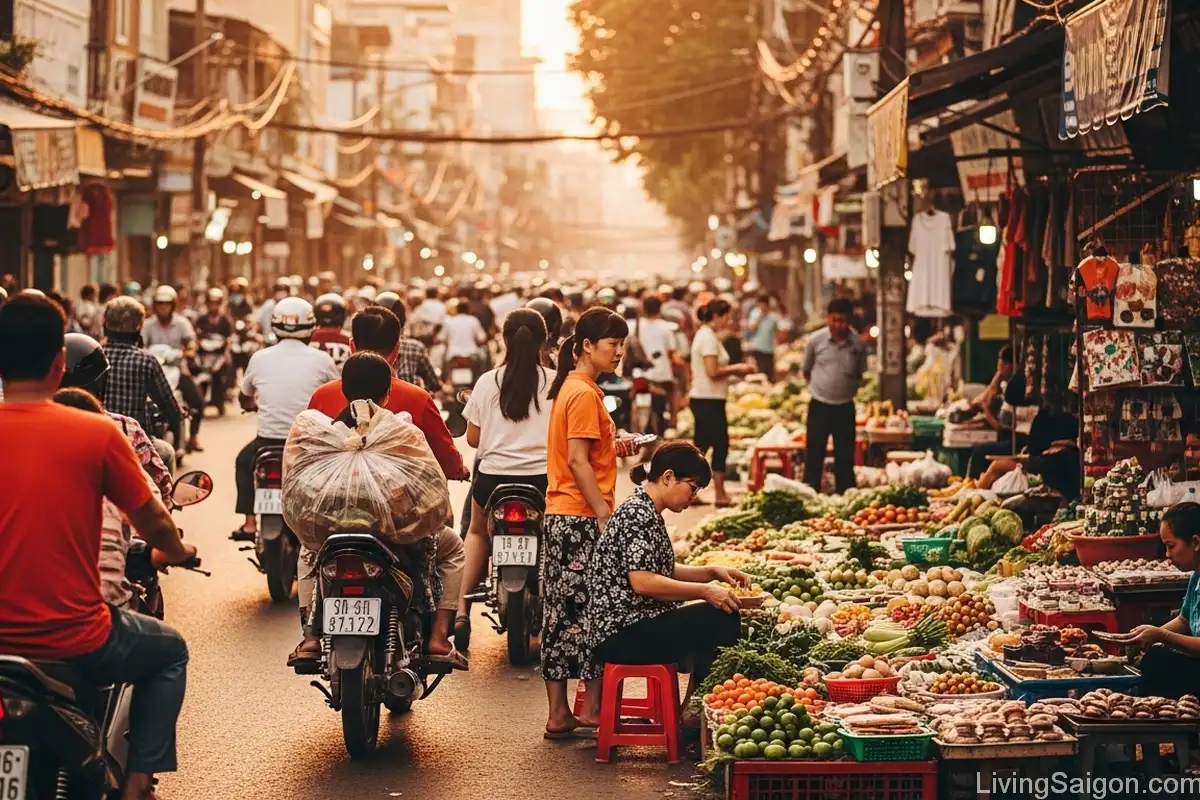
Food costs are where Saigon really shines. Eating local — which means pho at the corner stall, banh mi from the cart on the street, and lunch sets at neighborhood restaurants — is genuinely cheap, often $1–3 a meal. Even eating at mid-range Western or fusion restaurants a few times a week doesn’t add up to much compared to European or North American prices. Expect to spend $200–$400 a month on food if you’re eating a mix of local and international.
For a detailed breakdown of monthly expenses by category — from groceries to transport to entertainment — see our full cost of living in Saigon guide.
Monthly Budget Snapshot for Expats Living in Saigon
| Category | Budget ($) | Comfortable ($) |
|---|---|---|
| Rent (1-bedroom) | 400–600 | 700–1,200 |
| Food (mix local/international) | 150–200 | 250–450 |
| Transport (Grab + occasional taxi) | 50–80 | 80–150 |
| Gym + leisure | 30–60 | 80–150 |
| Utilities + internet | 60–90 | 80–120 |
| Social + entertainment | 100–200 | 200–400 |
| Total | $790–$1,230 | $1,390–$2,470 |
Where to Live: Choosing the Right Neighborhood When Living in Saigon
Saigon is a city of districts, and where you choose to live shapes your experience more than almost any other decision. The districts have distinct characters, price points, and types of expat communities. Getting this choice right — or wrong — makes a big difference in how settled and comfortable you feel.
District 1 — The Heart of the City
District 1 is the central business district, the tourist hub, and the place with the highest concentration of hotels, international restaurants, rooftop bars, and nightlife. Living here puts you in the middle of everything. The trade-off is that it’s the most expensive district for rent, and the pace can be exhausting if you want something quieter. It suits people who are here on shorter-term stays, who travel constantly, or who genuinely love being in the urban core all the time.
Thao Dien — The Classic Expat Village
Thao Dien, a ward within the old District 2 (now part of Thu Duc City), is where a large chunk of Saigon’s long-term expat population ends up. It has a very different feel from the rest of the city — tree-lined streets, a strong cafe and brunch culture, international schools, and a community atmosphere that makes it easy to meet people. Rent is higher than most of the city but still reasonable for what you get. Families with children gravitate here strongly because of the international school options. If you want an expat community without feeling completely disconnected from Vietnam, Thao Dien hits that balance well.
District 7 — Organized, Expat-Friendly, Korean Community Hub
District 7 is a planned district that feels noticeably more organized and quieter than the older parts of the city. It has wide roads, more greenery, and large residential complexes popular with Korean expats, Japanese families, and professionals who want a clean, calm environment. Phu My Hung — the planned township within District 7 — is essentially a city within the city, with shopping malls, good schools, and parks. It’s popular with families and people who want predictability.
Binh Thanh and Phu Nhuan — The Local-Feeling Middle Ground
For expats who want to live somewhere that feels authentically Vietnamese while still being convenient, Binh Thanh and Phu Nhuan are worth serious consideration. These districts are adjacent to the center, have good transport links, and have seen enough development to offer decent cafe and restaurant options — but without the full expat-bubble feel of Thao Dien. Rents here are also among the most competitive in the city.
For a full comparison of every major expat neighborhood with pros, cons, and rent ranges, read our guide to where to live in Saigon. If you want a broader overview of all the main areas and what distinguishes each one, our expat areas in Saigon guide is the place to start.
The Expat Lifestyle in Ho Chi Minh City
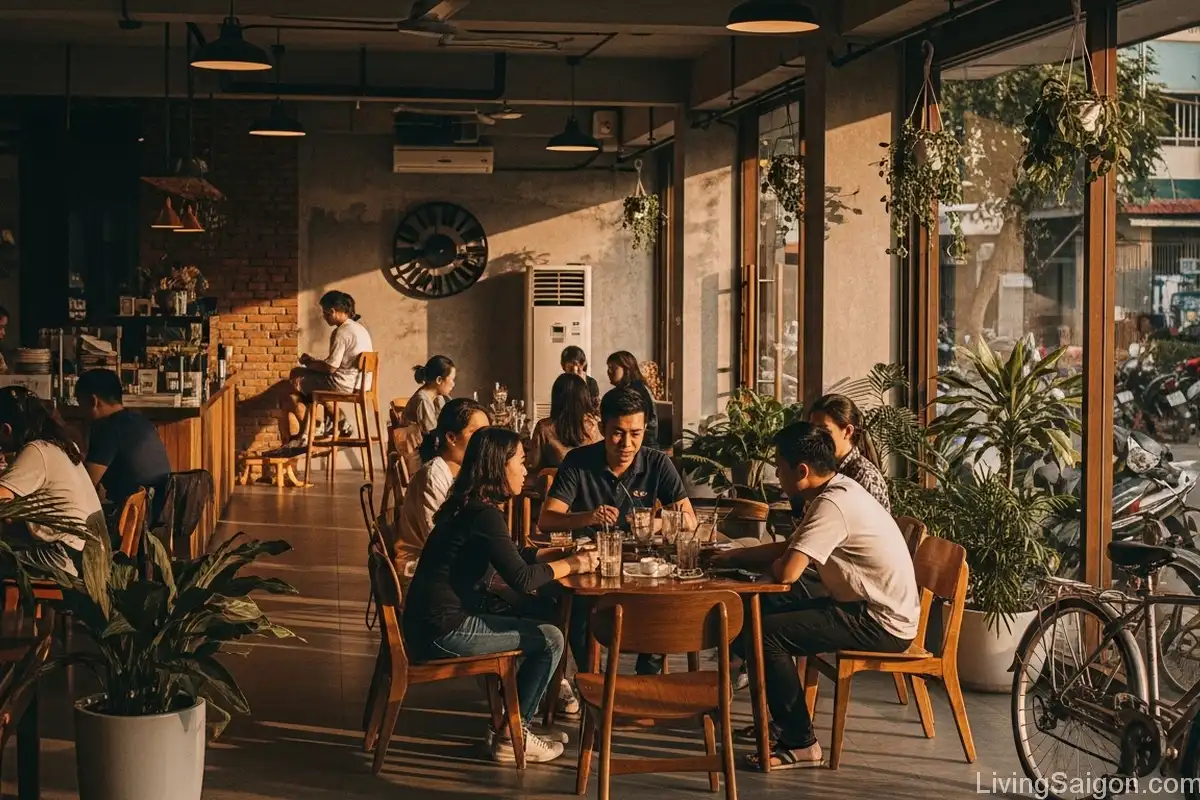
One of the things that surprises people when they first arrive is how quickly a routine forms. Living in Saigon settles into a rhythm faster than you’d expect in a city this big and chaotic. Mornings often start at a local cafe — the coffee culture here is serious, and there’s something for every taste, from traditional Vietnamese cà phê sữa đá to third-wave specialty shops. Working from a cafe is entirely normal and widely accepted.
The social scene for expats is active. There are meetup groups, sports leagues (touch rugby, running clubs, volleyball, football), language exchange events, and a steady calendar of activities organized by the various expat communities. Making friends is generally easier here than in many big cities — partly because so many people are new to the city at any given time and actively looking to connect.
Weekends open up a lot of options. The city itself has enough to keep you occupied — markets, museums, cafes, rooftop bars, street food crawls, live music — and day trips are easy. The Mekong Delta is a couple of hours away. Mui Ne beach is about four hours. Phu Quoc and Da Nang are quick domestic flights. For expats who like to explore, Saigon is an excellent base.
For a deeper look at what day-to-day life actually looks like, read our article on expat life in Saigon — covering everything from social routines to the things that take some getting used to.
Getting Around the City
The motorbike is king in Saigon. Many expats who stay for more than a few months get one, and it genuinely changes how you experience the city — suddenly you can go anywhere, anytime, without waiting for a ride. Grab (the local equivalent of Uber) is cheap, reliable, and available as both car and motorbike, making it easy to get around without your own vehicle.
Traffic in Saigon is famously hectic, and yes — the first few weeks of crossing roads feel genuinely alarming. You adjust. The trick is steady, predictable movement. After a month, you’ll barely think about it.
Practical Realities of Living in Saigon Long-Term
Visas and Legal Stay
Visa logistics are the part of living in Saigon that requires the most ongoing attention. Vietnam does not offer a straightforward long-term residency visa the way some countries do, which means most expats are managing visa runs, e-visa renewals, business visas, or work permits depending on their situation.
The most common approach for people without a work contract is to cycle through e-visas (currently available for 90 days), do periodic border runs to reset, or apply for a 1-year multiple-entry visa through a registered company or agent. People working legally for Vietnamese companies or registered foreign firms can apply for a work permit and temporary residence card (TRC), which is the most stable long-term option.
The rules have shifted a few times in recent years, so it’s worth staying up to date and connecting with the expat community for current on-the-ground advice. The full expat guide to Saigon covers visa options and recent changes in more detail. If you want hands-on help navigating this, our expat support services can connect you with people who handle this regularly.
Healthcare in Saigon
International-standard healthcare is available in Saigon. Hospitals like FV Hospital, Vinmec, and Columbia Asia are equipped to handle most medical needs and are staffed by international doctors or Vietnamese doctors trained abroad. The quality is genuinely good at these facilities.
Expat health insurance is strongly recommended — not just for emergencies, but because it makes accessing private international hospitals straightforward and affordable. Healthcare costs at these facilities without insurance can add up quickly. Public hospitals are generally not recommended for expats unless it’s a genuine emergency.
Language
Vietnamese is a tonal language and genuinely difficult to speak well — most expats pick up a handful of useful phrases and leave it there. In most expat-frequented areas, communication in English is manageable. That said, learning even basic Vietnamese — greetings, numbers, ordering food — makes a real difference in how locals respond to you and how much more of the city opens up.
The Challenges of Living in Saigon (Honestly)
No place is perfect, and living in Saigon comes with some real friction points that are worth knowing about before you arrive.
Air quality is the most commonly cited quality-of-life concern among long-term expats. Saigon doesn’t have the extreme pollution days that some Chinese or Indian cities experience, but it’s not clean by any standard either. Most expats who care about this keep an air purifier running at home and check the AQI on days when it feels noticeably thick.
Heat and humidity are constants. Saigon sits close to the equator and has two seasons: hot and dry (roughly November to April) and hot and wet (May to October). The rainy season brings intense afternoon downpours that last thirty to forty-five minutes and then clear completely — which is actually pleasant in its own way once you adjust your schedule around it.
Bureaucracy is a real part of life here. Getting things done — whether it’s a visa extension, registering with your local ward office, or opening a bank account — often involves more steps, more paperwork, and more waiting than you’d expect. This is where having a good expat network or a support service pays off significantly.
Noise is part of the city’s personality. Construction is constant. Karaoke places operate late. Early mornings come with street vendors and motorbike engines. If you need genuine quiet, it requires choosing your apartment carefully — good soundproofing and a building set back from the main street make a big difference.
Finding an Apartment: What to Know Before You Search
The apartment rental market in Saigon moves fast, especially in popular expat areas. Listings come and go quickly, and the best apartments at reasonable prices don’t stay available long.
Most landlords expect a deposit of one to two months’ rent paid upfront along with the first month. Leases are typically 6 or 12 months, though shorter-term furnished options exist at a premium. Furnished apartments are common in expat areas — most expats prefer them since sourcing furniture is an extra complication most people skip.
Working with a reliable agent or a platform that has English-speaking support makes the process significantly smoother. You can also use our apartment rental service in Saigon to search with the help of people who know the market well.
What to Look For in an Expat Apartment
The things expats most commonly flag as worth paying for: reliable hot water, elevator in the building, backup generator for power outages, on-site security, and proximity to a main road with good Grab access. Natural light and a decent view are worth more than they might seem after six months. Air conditioning quality matters a lot in a hot climate — inspect the units before signing.

Is Living in Saigon Right for You?
There are certain types of people who thrive here almost immediately. If you’re adaptable, curious, comfortable with some chaos, and don’t need everything to work the way it does back home — Saigon will reward you generously. The cost of living gives you a quality of life that would require a significantly higher income to replicate in most Western cities. The food, the community, the pace, the proximity to the rest of Southeast Asia — it adds up to something genuinely special.
If you need everything to be predictable, quiet, bureaucratically straightforward, and physically close to home — Saigon will test your patience. That doesn’t mean it can’t work, but the adjustment takes longer and requires more intention.
The expats who stay the longest are usually the ones who stopped fighting the city’s nature and started leaning into it. They found their neighborhood, their regular spots, their community. They learned enough Vietnamese to make street food orders smoother. Saigon becomes home in a particular way — not by softening into something familiar, but by you finding what’s worth holding onto within its particular kind of chaos.
If you’re at the stage of seriously researching the move, read through the linked guides on this site — they’re built to answer the specific questions that come up at each stage of the process. For more on the expat communities, lifestyle, and social scene, explore our expat life in Saigon section. For practical questions — visas, banking, SIM cards, healthcare — the complete expat guide to Saigon is a good place to keep reading. And if you’re just starting to think about where in the city to base yourself, our guide to where to live in Saigon breaks down every major area in detail.