

Choosing where to live is one of the most consequential decisions you make when moving to Saigon. The city is large, the neighborhoods are genuinely different from each other, and the wrong choice — not wrong in any absolute sense, but wrong for your particular lifestyle, budget, and priorities — can make the whole experience harder than it needs to be. This guide to the main expat areas Saigon is designed to give you an honest, detailed picture of each neighborhood so you can make a well-informed decision before committing to a lease.
The guide covers the five areas where the majority of Saigon’s foreign residents live: Thao Dien, District 7, District 1, Binh Thanh, and Phu Nhuan. Each has a distinct character, a different type of expat it suits best, and a different price point. Read through all of them before deciding — the differences are significant enough that the right neighborhood changes depending on who you are and how you want to live. For a broader overview of everything involved in the move, the where to live in Saigon guide covers the decision framework in detail.
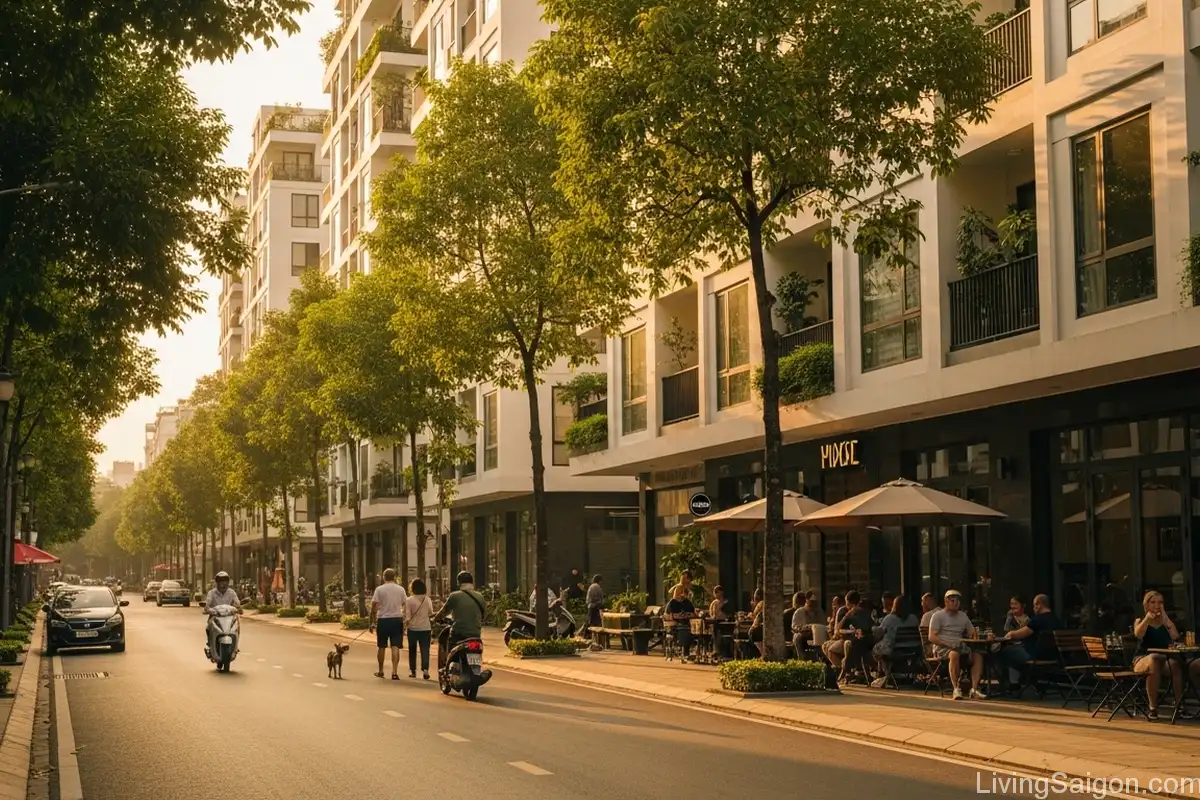
The Main Expat Areas in Saigon: An Overview
Saigon’s expat areas are not evenly distributed across the city. They cluster in a handful of specific zones — the result of historical patterns, infrastructure development, international school locations, and the organic process by which expat communities tend to grow around where other expats already are. Understanding the geography first helps make sense of the individual neighborhoods.
The inner city — particularly Districts 1, 3, and 4 — contains the oldest established expat presence in the city, rooted in the commercial center and the hotel and hospitality infrastructure that developed around it. The east bank across the Saigon River — primarily Thao Dien in the old District 2 — became the dominant expat residential zone over the past two decades as international schools established themselves there and the neighborhood built up a lifestyle infrastructure tailored to foreign residents. District 7 in the south developed later, with a strong Korean and Taiwanese expat community shaping its character. Binh Thanh and Phu Nhuan represent the newer wave of expat settlement — more local in character, more affordable, and increasingly popular with people who want to live in Saigon rather than in an international enclave.
Thao Dien — The Flagship Expat Area in Saigon
Ask any long-term expat in Saigon where most foreigners live and the answer is Thao Dien. This ward in the old District 2 — now technically part of Thu Duc City following the 2021 administrative merger, though everyone still uses the old name — is the most established and most internationally oriented of all the expat areas in Saigon.
The neighborhood has a very specific atmosphere: tree-lined streets, bougainvillea over garden walls, an international farmers market every Saturday morning, an extremely dense concentration of cafes and international restaurants, and a social infrastructure that makes settling in faster than anywhere else in the city. If you arrive in Saigon knowing no one, Thao Dien does more work than any other neighborhood to solve that problem quickly.
The international schools — British International School, Australian International School, International School Ho Chi Minh City, and others — are clustered in and around Thao Dien, which is why it’s the dominant choice for families with school-age children. The school your children attend effectively determines your neighborhood choice, because school bus routes are fixed and the morning commute with young children is miserable if you’ve chosen a distant area.
Two well-known challenges come with Thao Dien. The first is flooding: certain streets in the ward become impassable for a few hours during heavy rains or high tides between May and October. If you’re looking at ground-floor or villa rentals, ask your landlord specifically about this — it genuinely affects quality of life during rainy season. The second is the traffic bottleneck at the main entrance to the neighborhood, which can make getting in and out during peak hours slow. The Metro Line 1 connection has helped considerably.
Rents are among the highest in the city: 1-bedroom apartments typically run $700–$1,500/month, with premium compounds and villas going significantly higher. For a dedicated deep-dive into this neighborhood covering specific apartment buildings, the best streets, and how to find a good place, the Thao Dien expat area guide is the most comprehensive resource on the site.

Who suits Thao Dien
- Families with school-age children — the strongest international school infrastructure in Saigon
- Digital nomads who want the densest cafe and coworking scene in the city
- Anyone arriving alone who needs a ready-made social network
- Expats staying for six months or more who want to plug into an established community
District 7 — The Most Organized Expat Area in Saigon
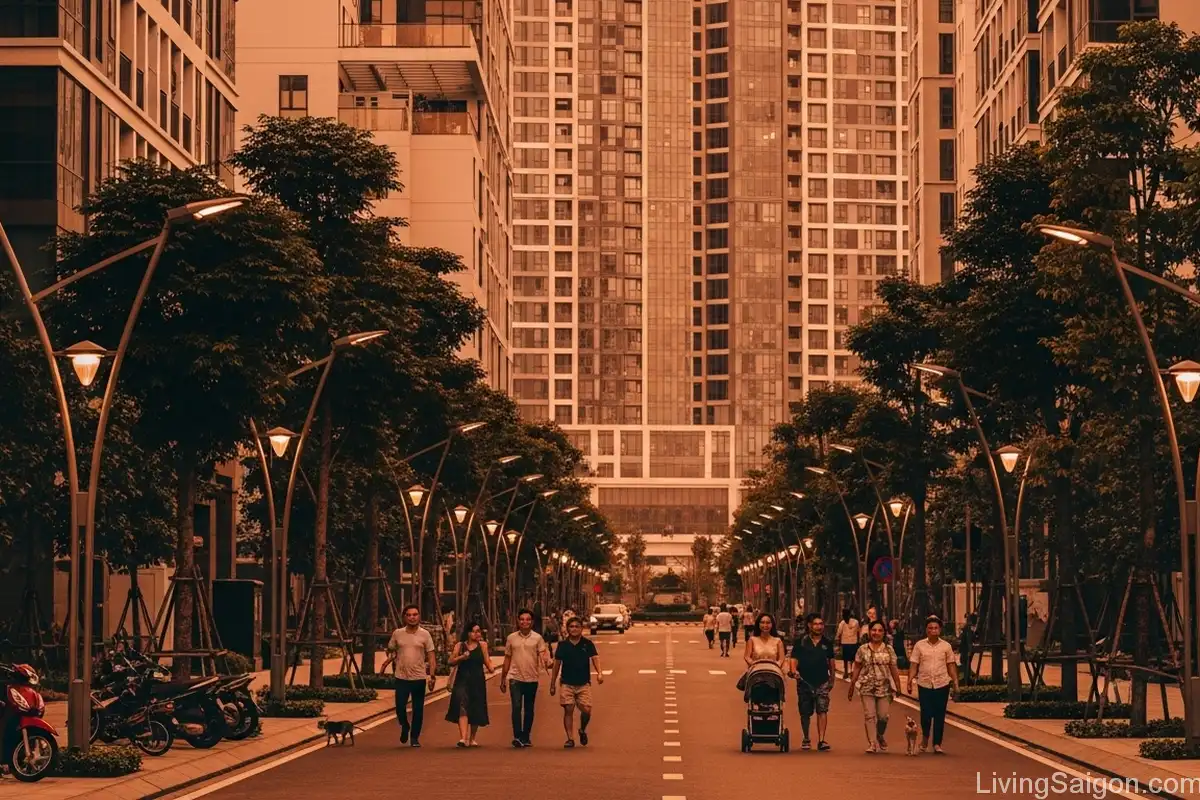
District 7 is what results when residential development is actually planned. Wide roads with real footpaths. Genuine green space. Gated residential compounds with pools, gyms, and security. A pace that’s noticeably calmer than the inner city. For people relocating from large planned suburbs in North America, Australia, or Europe, District 7 will feel the most familiar.
The Phu My Hung development at District 7’s core was master-planned from the 1990s and has been refined and expanded since. The Korean expat community is particularly strong here — Korean BBQ restaurants, Japanese ramen shops, Korean supermarkets, and Korean-language signage are all features of the District 7 landscape that reflect this demographic. The SC VivoCity mall is the district’s commercial anchor, covering most practical shopping needs.
The main limitation is distance. District 7 sits in the city’s south, and commuting to District 1 or the main expat social areas requires planning. The tunnel under the river helps, but getting to the center during peak hours takes 20–40 minutes. If your work, school, or social life is primarily in the south of the city, this matters less. If you expect to spend significant time in the center regularly, factor in the commute cost and time.
Rents are generally better value than Thao Dien for comparable space: 1-bedroom apartments run $500–$900/month, with large 3-bedroom units in gated compounds reaching $1,500–$3,000/month. The District 7 Saigon guide covers the best residential complexes, the school options, and what each part of the district is like to actually live in.
Who suits District 7
- Families who want space, greenery, and genuine quiet at home
- People working in the south of the city or from home
- Expats from Korea, Japan, or Taiwan who want the strongest community of their own nationals
- Those who want more space for their money than Thao Dien provides
District 1 — The Central Expat Area in Saigon
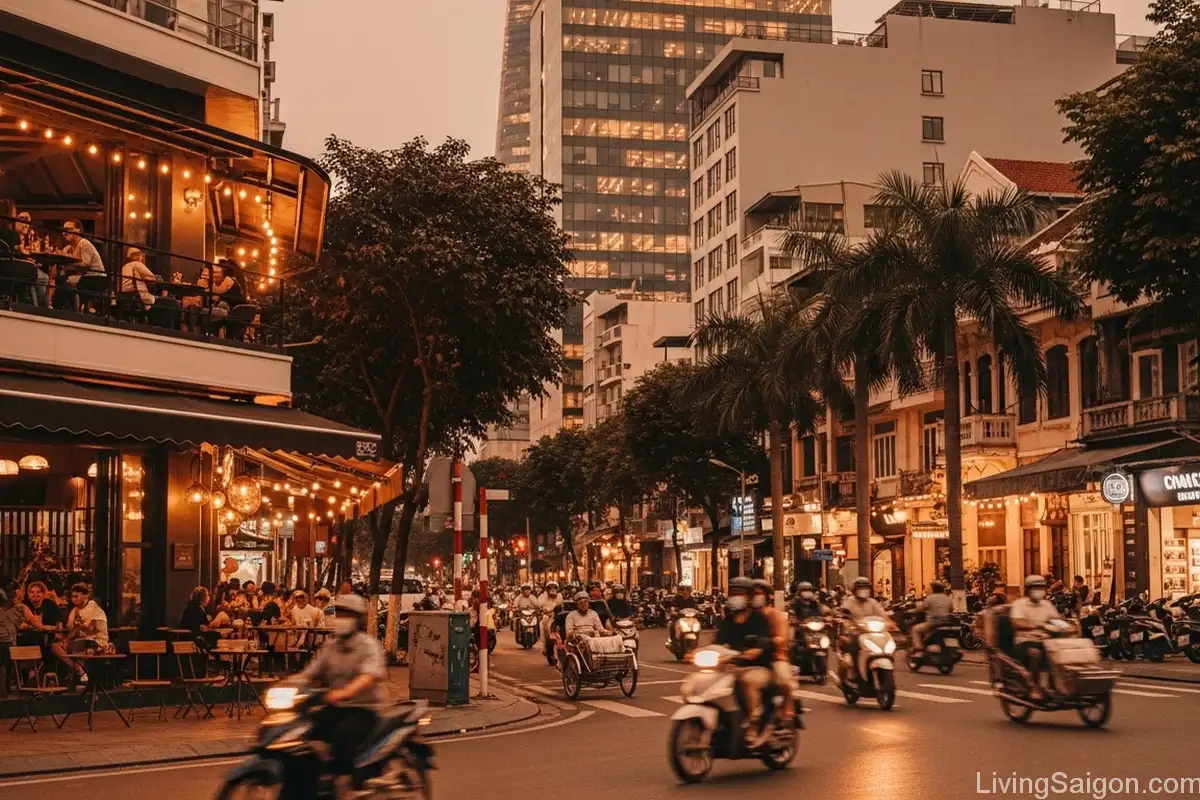
District 1 is not primarily a residential expat area in the way that Thao Dien or District 7 are — it’s the commercial and tourist center of the city, with a different mix of foreign residents. Expats who live here tend to be either on shorter-term stays (serviced apartment users, business travelers staying for a few months), those who work in the CBD and want zero commute, or those on company relocation packages with generous housing budgets.
The case for District 1 is straightforward: you can walk to your office, walk to dinner, and walk from dinner to a bar. Every restaurant, bar, cultural attraction, and transport hub in the city is either here or a short Grab ride away. The urban infrastructure is maximally dense in your favor.
The case against District 1 for long-term living is equally straightforward: it’s the loudest, most expensive, and most exhausting neighborhood in the city. Most expats who start in District 1 and stay longer than six months eventually move to somewhere quieter. It’s an excellent first base when you arrive and don’t yet know the city, but it tends not to be where people put down roots.
Rents: 1-bedroom apartments run $700–$1,500/month in mid-range buildings, with premium options like Vinhomes Golden River going significantly higher. For a full breakdown of life in the center, the expat areas guide covers the sub-areas within District 1 that actually work for residential living.
Who suits District 1
- Short-term stays of one to three months
- Single professionals who work in the CBD and prioritize zero commute
- People on generous company relocation packages
- Those who thrive on urban energy and genuinely don’t need quiet
Binh Thanh — The Rising Expat Area in Saigon
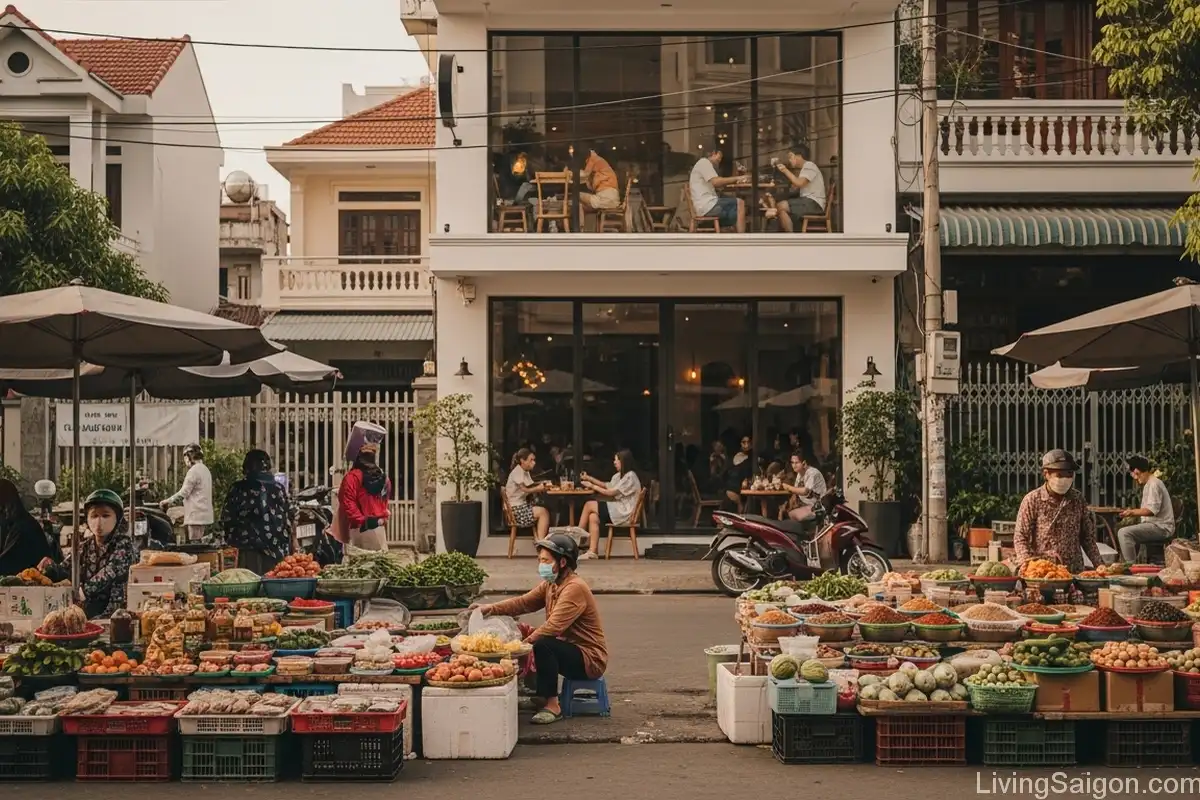
Binh Thanh is where the more interesting story of Saigon’s evolving expat landscape is happening right now. It’s not a traditional expat enclave — it’s a diverse district that spans from the luxury of Vinhomes Central Park (adjacent to Landmark 81, the tallest building in Vietnam) to the creative, gritty streets around Pham Viet Chanh and Dien Bien Phu, where Japanese izakayas, craft beer bars, and independent cafes have established themselves alongside Vietnamese pho shops and com tam stalls.
The expat profile here is younger and more independently minded than in Thao Dien. People who choose Binh Thanh typically want to live in Saigon rather than in a version of Saigon that’s been filtered through expat preferences. The streets here feel more Vietnamese. The markets are real local markets. The cafes are mostly Vietnamese-owned. This is either a drawback or the whole point, depending on who you are.
The practical case is also strong: Binh Thanh is adjacent to District 1, making it the closest major residential area to the city center that offers significantly lower rents. A Grab to the center takes under twenty minutes from most parts of the district. Rents for 1-bedroom apartments run $400–$800/month — substantially less than Thao Dien for comparable quality. The Binh Thanh expat guide covers the specific sub-areas, the best apartment options, and what the day-to-day reality of living there looks like.
Who suits Binh Thanh
- Younger expats who want local Vietnamese city life rather than an international bubble
- People priced out of Thao Dien who still need central access
- Those who work in District 1 but don’t want to pay District 1 rent
- Expats drawn to the creative and independent bar and cafe scene
Phu Nhuan — The Underrated Expat Area in Saigon
Phu Nhuan is the expat area that doesn’t appear in most expat guides, which is both its challenge and its advantage. The district sits between District 1 and the airport corridor — as centrally located as you can get in Saigon — while maintaining a genuinely local character that the main expat enclaves have largely lost.
The main commercial street, Phan Xich Long, is lined with hundreds of cafes and local restaurants and has built a solid reputation as one of the better food streets in the city. Gia Dinh Park gives the district some green space in an otherwise dense urban environment. Rents are among the best price-to-location ratios in the city: 1-bedroom apartments start from $350–$650/month, and the commute to District 1 by Grab or motorbike is short.
The expats who choose Phu Nhuan tend to be either long-term residents who’ve moved past the initial need for expat-bubble infrastructure, or people who actively prefer to live among Vietnamese neighbors from the start. It works best for people who speak some Vietnamese, who have built their social life elsewhere in the city and just need a comfortable, well-located base, or who are deeply committed to the more authentic experience. The Phu Nhuan expat guide covers the best streets, apartment options, and what to expect from life in this underestimated district.

Who suits Phu Nhuan
- Budget-conscious expats who still want a genuinely central location
- Long-term residents who’ve moved beyond the expat bubble
- Vietnamese language learners who want daily immersion
- Those who value authenticity over international amenities
Comparing the Expat Areas in Saigon
| Area | 1BR Rent (USD) | Expat Community | Local Feel | Families | Best For |
|---|---|---|---|---|---|
| Thao Dien | $700–$1,500 | ★★★★★ | ★★☆☆☆ | ★★★★★ | Families, community |
| District 7 | $500–$900 | ★★★★☆ | ★★★☆☆ | ★★★★★ | Families, space, quiet |
| District 1 | $700–$1,500 | ★★★☆☆ | ★★☆☆☆ | ★★☆☆☆ | Singles, short stays |
| Binh Thanh | $400–$800 | ★★★☆☆ | ★★★★☆ | ★★★☆☆ | Young expats, value |
| Phu Nhuan | $350–$650 | ★★☆☆☆ | ★★★★★ | ★★☆☆☆ | Budget, authenticity |
How to Choose Between the Expat Areas in Saigon
The comparison table gives you the numbers, but the real decision usually comes down to a small number of honest questions.
Start with the school, not the neighborhood
If you’re moving with children, the international school your family chooses should determine your neighborhood — not the other way around. School bus routes are fixed, and school drop-off and pickup logistics shape your daily life more than almost anything else. Thao Dien and District 7 have the strongest international school infrastructure. Make the school decision first, then narrow down the area. Our article on Thao Dien vs District 7 covers the specific school options and how they affect the neighborhood choice.
Be honest about your budget
A comfortable 1-bedroom in Thao Dien starts around $800/month and rises quickly from there. In District 7, you can get comparable quality for $100–200 less. Binh Thanh and Phu Nhuan are genuinely cheaper at the same quality level. The gap between these areas in rent is significant enough to make a real difference in your overall monthly budget, especially when combined with utilities and the cost of living in the surrounding neighborhood.
How long are you staying?
Short stays of one to three months: District 1 is easiest — flexible serviced apartment leases, everything within walking distance. Medium stays of three to twelve months: Thao Dien or Binh Thanh give you better value and a more sustainable rhythm. Long stays of one year or more: most expats end up wherever they found their community, which is as individual as the person involved. For the full picture on how each area suits different stay lengths, our article on where expats live in Saigon goes into detail.
Expat community or local immersion?
This is the question people underestimate most. If you arrive alone and need to build a social life quickly, Thao Dien’s dense expat network does a lot of that work for you. If you’ve been here before, speak some Vietnamese, or actively prefer to live among locals, Binh Thanh or Phu Nhuan give you a better experience. There’s no wrong answer — but being honest about which matters to you will save you a move within the first year. Our guide to the expat communities in Saigon is useful reading if you’re still working this out, alongside the best areas for expats in Saigon overview.
Once you’ve narrowed down the area, the where to live in Saigon guide covers the practical side of finding and securing an apartment in each neighborhood — including how the rental market works, what to look out for, and how to avoid the most common first-timer mistakes.