

Expat Guide Saigon — every year, thousands of people from dozens of countries make the decision to move to Ho Chi Minh City, and almost all of them go through the same sequence of questions. How do I get a visa that actually lets me stay? Where should I live? What does it cost? How does healthcare work here? What do I need to set up on arrival? This guide is built to answer those questions honestly, in one place, without the filler.
This is not a guide full of generic advice that applies to any city in Southeast Asia. It’s specific to Saigon: how the city actually works, what the bureaucratic realities are in 2026, and what experienced expats wish they’d known before arriving. Whether you’re three months from your move date or still in the research phase, this is the right place to start. For a broader look at what life here is like day to day, the living in Saigon guide covers the lifestyle side in depth.
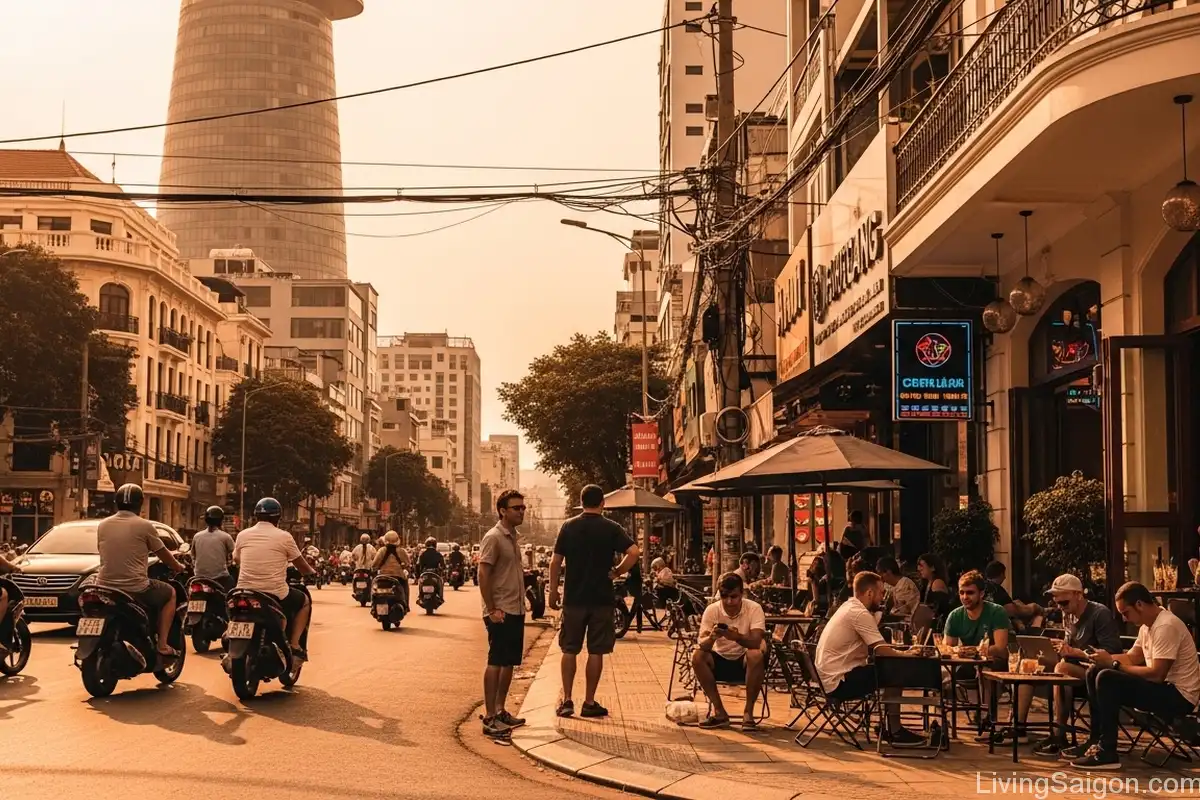
Visas: The Most Important Thing to Get Right in Your Expat Guide to Saigon
The visa situation is the first thing every prospective expat needs to understand, and it requires more attention than most people initially give it. Vietnam does not have a simple long-term residency route for most foreign nationals. What it has is a set of options that experienced expats navigate strategically — and knowing which option fits your situation before you arrive saves a significant amount of stress.
E-Visa: The Standard Starting Point
Vietnam’s e-visa is currently available to nationals of most countries and allows stays of up to 90 days, with multiple entries permitted. It’s applied for online through the official Vietnam Immigration portal and typically approved within three business days. For people planning an exploratory move — arriving to see if they like it before committing — the e-visa is the obvious starting point.
The limitation is that you cannot currently chain e-visas by leaving and re-entering immediately. Vietnam immigration has become more attentive to this in recent years, and visa runs that consist of crossing the border and coming straight back have attracted more scrutiny. The e-visa works well for genuine stays, but it’s not a long-term strategy on its own.
Business Visa: The Expat Workhorse
The DL (business) visa, available in 3-month and 6-month single or multiple-entry variants, has been the most common long-term stay solution for expats without a formal work contract in Vietnam. It’s typically arranged through a Vietnamese company or visa agency that provides sponsorship documentation. A 1-year multiple-entry business visa is the goal most long-term expats work toward — it provides the most flexibility and requires the fewest ongoing administrative steps.
The availability and ease of obtaining business visas has varied over the years depending on government policy. As of 2026, they remain accessible through established agencies, but the process requires using a reputable agent who knows the current requirements. This is one area where getting advice from the current expat community — not from articles written two years ago — matters most.
Work Permit and Temporary Residence Card (TRC)
If you’re employed by a Vietnamese company or a registered foreign enterprise operating in Vietnam, a work permit followed by a temporary residence card is the most stable long-term solution. A TRC is issued for the duration of your work permit (up to two years, renewable) and eliminates the need for ongoing visa management. The process involves your employer, the Ministry of Labour, and immigration authorities, and typically takes four to eight weeks to complete.
For detailed, current guidance on each visa type and the common questions that come up — including what happens if your visa lapses and how to handle border runs correctly — our dedicated Vietnam visa guide for expats goes through each option step by step.

Where to Live: The Expat Guide Saigon Housing Overview
Housing is the decision that shapes everything else about your experience in the city. Get it right and you settle quickly, build a routine, and start enjoying the place. Get it wrong and you spend your first year feeling vaguely out of place and commuting too far.
The five main areas where expats live in Saigon each have a distinct character. Thao Dien (old District 2) is the most established expat neighborhood — tree-lined streets, strong community infrastructure, the best international school access, and a dense social network. District 7 is the choice for families who want space, quiet, and organized urban planning. District 1 suits shorter stays and people who want maximum urban access. Binh Thanh is increasingly popular with younger expats who want a more local feel without sacrificing central location. Phu Nhuan offers the best price-to-location ratio in the city for people who’ve moved past the need for expat-bubble infrastructure.
For a full neighborhood-by-neighborhood comparison with current rent ranges and who each area suits best, the where to live in Saigon guide is the most comprehensive resource on this site. Budget-conscious expats should also check what the cost of living in Saigon looks like across different housing scenarios before committing to a specific area.
Renting an Apartment: What You Need to Know
The Saigon rental market is active and moves fast in popular areas. A few things that will make your search smoother. Deposits are typically two months’ rent, paid upfront alongside the first month. Leases are usually six or twelve months — shorter-term furnished options exist but cost more per month. Most expats prefer furnished apartments, which are common in the expat-facing areas and available at a range of price points.
Electricity is the utility that most frequently surprises people. Vietnam uses a tiered pricing system where heavy air conditioning use — which is a given for most months of the year — pushes bills into the higher tiers. Budget an extra $60–150/month on top of your base rent for utilities. Internet is excellent and cheap: fiber connections of 100Mbps+ cost roughly $8–15/month through providers like Viettel, VNPT, or FPT.
Working with an agent who knows the neighborhood you’re targeting is the most efficient approach, especially if you don’t speak Vietnamese. If you want help from a local team that communicates in English and knows the current market, our apartment rental service in Saigon can connect you with the right people.
Cost of Living: The Numbers Every Expat Needs
One of the main draws of this city is how far your money goes. The gap between what a comfortable life costs in Saigon versus what the same quality of life costs in a Western city is significant — and it’s real, not just a perception. But the numbers vary enough depending on your lifestyle choices that it’s worth understanding the range.
A single expat living comfortably — good apartment, eating out regularly including some international restaurants, active social life, gym membership, occasional weekend travel — spends somewhere between $1,200 and $2,500 per month. The biggest variable is always housing. Couples typically find the per-person cost drops meaningfully as fixed costs are shared.
| Category | Budget Range ($) | Comfortable Range ($) |
|---|---|---|
| Rent (1-bedroom) | 400–600 | 700–1,200 |
| Food (mixed local/international) | 150–250 | 300–500 |
| Transport (Grab + motorbike) | 50–80 | 80–150 |
| Utilities + internet | 70–100 | 100–150 |
| Health insurance | 80–150 | 150–300 |
| Social + entertainment | 100–200 | 200–500 |
| Monthly Total | $850–$1,380 | $1,530–$2,800 |
The detailed breakdown — including what things cost in specific neighborhoods, how to manage expenses in each category, and where expats commonly overspend — is covered in the cost of living in Saigon guide.
Setting Up Life in Saigon: The Practical Checklist
Once you’ve arrived, a handful of practical tasks unlock the rest of your life here. The order matters — some things are prerequisites for others.
SIM Card and Mobile Data
Get a local SIM card at the airport or at any Viettel, Mobifone, or Vietnamobile shop in the city. Bring your passport — registration requires it. Data plans are inexpensive: most expats spend $5–10/month for a plan with 20–30GB of data and good 4G coverage across the city. Viettel has the best nationwide coverage; Mobifone is strong in urban areas. The whole process takes about fifteen minutes. For full guidance on the best plans and how to navigate the registration process, our SIM card and internet guide for expats covers all the options.
Banking in Saigon
Opening a local bank account as a foreigner is possible but has some requirements. Most banks — Vietcombank, Techcombank, BIDV — require a valid visa with sufficient remaining time and your passport. The process is straightforward at the bank branch, takes about an hour, and gives you access to ATM withdrawals, online transfers, and the Vietnamese digital payment apps (MoMo, ZaloPay, VNPay) that make everyday transactions faster.
Many expats also maintain their home country bank account and use a card like Wise or Revolut for international transfers and fee-free ATM withdrawals while they get established. Having both a local and an international option gives you maximum flexibility. For a step-by-step guide to opening a bank account in Vietnam as a foreigner, read our banking guide for expats in Saigon.
Transport: Grab, Motorbike, and Getting Around
Grab is the foundation of transport in Saigon for most expats, at least at first. It’s reliable, affordable, English-friendly, and available everywhere in the city. Grab car and Grab motorbike (GrabBike) both work well — bikes are faster in traffic and cheaper, cars are more comfortable for longer trips or when you’re carrying bags.
Most expats who stay beyond three months get a motorbike. It transforms how you experience the city — suddenly you can go anywhere, any time, without planning. Buying a used motorbike (50cc or 110cc is ideal for city riding) costs between $400–800 USD. An international driving permit or Vietnamese licence is technically required, though enforcement varies. Start slow, learn the traffic patterns, and build confidence gradually. For everything you need to know about getting around — from Grab pricing to motorbike buying to the new Metro Line 1 — our transportation guide for expats in Saigon is the complete resource.

Healthcare for Expats in Saigon
Healthcare is one of the areas where the expat guide to Saigon most needs to be honest: international-standard care is available, but the system requires knowing where to go and having the right insurance in place before you need it.
The international hospitals — FV Hospital in District 7, Vinmec International Hospital in Binh Thanh, Columbia Asia (now operating under CMI), and a number of international clinics in Thao Dien and District 1 — provide genuinely good care. The doctors at these facilities are either international or Vietnamese physicians trained abroad, and the facilities are clean and well-equipped for most medical situations. Emergency care is available 24 hours at FV and Vinmec.
Public hospitals in Saigon are not recommended for expats in most circumstances. Language barriers, very different service standards, and crowding make them a difficult environment to navigate. They handle emergencies when international facilities aren’t accessible, but for any non-emergency medical need, the private international options are the right choice.
Health insurance is not optional — it’s essential. A single uninsured visit to FV Hospital for something moderately serious can cost several thousand dollars. Expat health insurance plans from providers like AXA, Bupa International, Cigna, or Pacific Cross start at around $100/month for a standard individual plan and provide access to the full range of international medical facilities without significant out-of-pocket costs. Get this sorted before you arrive. Our guide to healthcare in Saigon for expats covers the best hospitals, what insurance covers, and how to use it.

International Schools in Saigon
For expats relocating with children, international schools are often the single most important logistical question — and rightly so. The school choice shapes the neighborhood choice, affects the social network your family builds, and has a direct impact on how settled your children feel in the first months.
Saigon has a strong international school ecosystem, particularly in Thao Dien and District 7. The main options include the British International School (BIS), Australian International School (AIS), International School Ho Chi Minh City (ISHCMC), Renaissance International School, and Saigon South International School (SSIS), among others. Curricula range from British (IGCSE/A-Level), International Baccalaureate, and Australian to American AP programs.
Fees are significant — typically $15,000–$30,000 USD per year depending on the school and year level — and most schools have waiting lists for popular year groups. Registration should ideally start six to twelve months before your planned move date if you have school-age children. Many companies that relocate employees provide an education allowance as part of the package, which makes this more manageable.

Building Your Life in Saigon: Community, Social Life, and Settling In
The practical setup — visa, apartment, SIM, bank account, insurance — takes a few weeks to sort. Building an actual life takes a bit longer, but Saigon makes it easier than most cities its size.
The expat community here is large, active, and generally welcoming to newcomers. Facebook groups remain one of the most effective ways to connect — Expats in Ho Chi Minh City, HCMC Expats, and neighborhood-specific groups (Thao Dien Community, for example) are genuinely active and useful for recommendations, local advice, and meeting people. Meetup groups, sports leagues (touch rugby, running clubs, volleyball, football, tennis), language exchanges, and interest-based communities all operate regularly.
Making friends is generally easier in Saigon than in many larger cities, partly because so many people arrive as strangers and are actively looking to connect. Most long-term expats develop a local friend group alongside the international one — and those local friendships are often what makes the city feel genuinely like home.
If you want help navigating the early weeks — from finding the right apartment to connecting with the right people to understanding how the city’s practical systems work — our expat support services in Saigon are built exactly for that transition period. And for the full picture of what day-to-day life looks like once you’re settled, the airport transfer guide covers your very first logistics in the city, while the broader living in Saigon guide takes it from there.

A Final Word from This Expat Guide to Saigon
Saigon rewards people who approach it with patience and openness. The first month is often the hardest — the heat, the traffic, the paperwork, the sensory overload. By month three, most expats have built a routine, found their neighborhood, discovered their regular spots, and stopped noticing the things that overwhelmed them at the start.
The city doesn’t make itself easy, but it gives back generously to people who put in the effort to understand it. A high quality of life at a fraction of what it costs elsewhere. Some of the best food in the world at every price point. A social scene that can be as active or as quiet as you want it to be. A base for exploring the rest of Southeast Asia. And a community of people — expats and locals alike — who have collectively figured out how to make this chaotic, brilliant city work.
Use this guide as a starting point, work through the linked resources for each topic, and feel free to reach out to the expat support team if you want help making the move as smooth as possible.