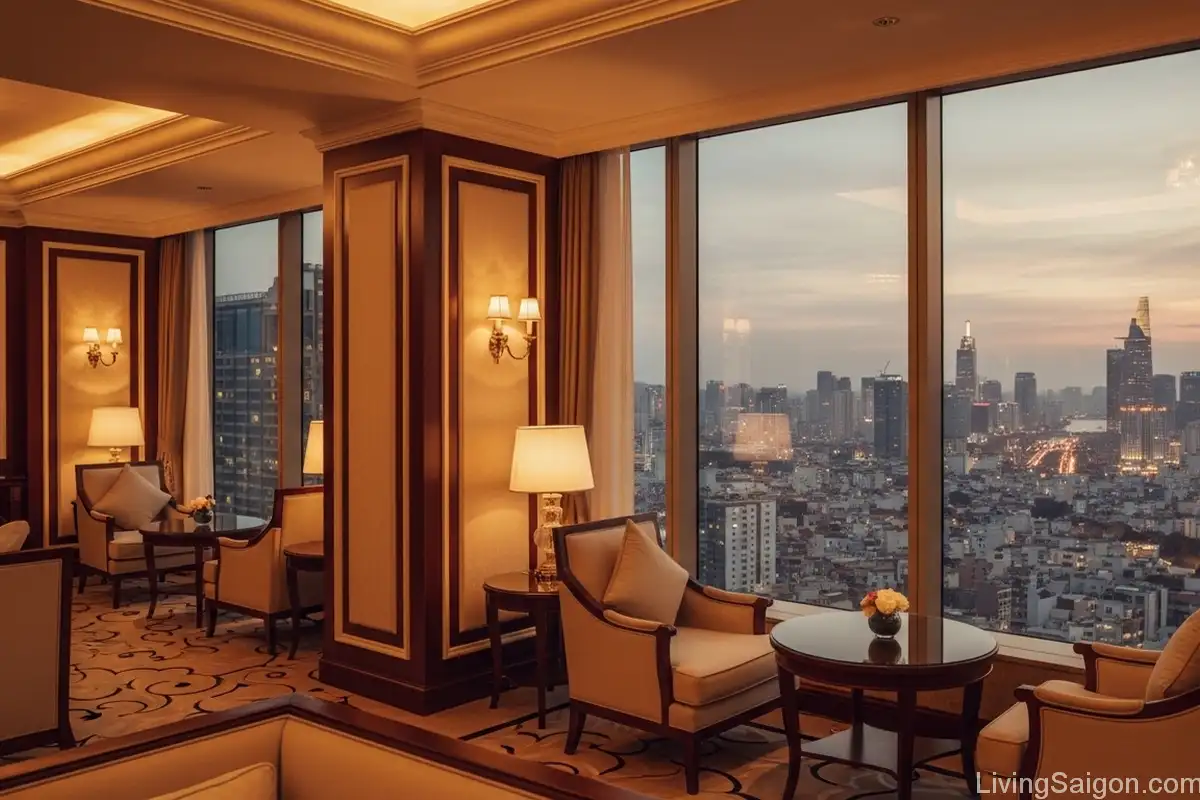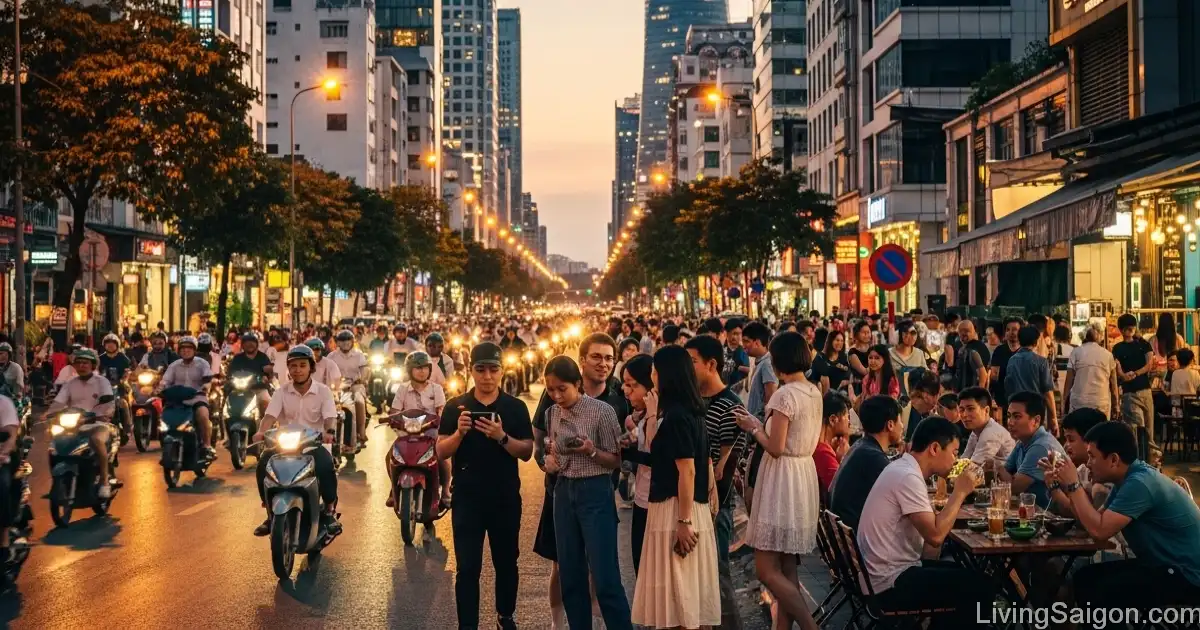
District 1 is where Saigon announces itself. The skyline, the history, the best restaurants, the most famous streets, the rooftop bars, the colonial architecture, the dense energy of a city that never fully stops — it’s all here, concentrated into one of the most compact and stimulating urban environments in Southeast Asia. This District 1 Saigon guide covers everything: the character of each sub-area, where to eat and drink at every budget, how the living situation actually works, what to see and do, and the honest trade-offs involved in making the district your base.
Whether you’re visiting for a week, considering living here for a few months, or just trying to understand how the city’s center fits into the broader picture, this guide gives you the ground-level detail that maps and tourist lists don’t. For the bigger-picture view of how District 1 compares to the other neighborhoods across the city, the districts in Saigon overview is the right starting point.

District 1 Saigon Guide: Understanding the Geography
District 1 is the smallest of Saigon’s urban districts by area but the most dense by almost every other measure — population per square kilometer, commercial real estate value, restaurant and bar density, and tourist footfall. It sits on the west bank of the Saigon River and is bounded by the river to the east, the Ben Nghe channel to the south (separating it from District 4), and the various administrative boundaries that separate it from Districts 3 and Binh Thanh to the north and west.
Within that compact geography, the district contains several distinct sub-areas that have genuinely different characters. Understanding which part of District 1 you’re dealing with matters when making decisions about where to stay, eat, or set up a temporary office for the week.
Ben Nghe — The Commercial and Tourist Core
Ben Nghe ward contains the most famous addresses in District 1: Dong Khoi street (the former rue Catinat of the French colonial era, now lined with luxury hotels, galleries, and high-end retail), the Nguyen Hue pedestrian boulevard, the Opera House, the Hotel de Ville (the ornate yellow city hall), and most of the city’s five-star hotels. The French Quarter’s preserved colonial architecture makes this area visually distinctive from virtually any other part of Vietnam.
This is also where the most tourist-facing restaurants, bars, and rooftop venues are concentrated. The prices in Ben Nghe reflect the foot traffic and the real estate costs — a meal that costs $3 at a local spot a kilometer away might cost $15–25 in a Ben Nghe restaurant. The quality is often excellent, but you’re paying a significant premium for location.
Pham Ngu Lao and De Tham — The Backpacker Zone
The streets around Pham Ngu Lao and De Tham form Saigon’s backpacker quarter, and they’ve been doing so for decades. Budget guesthouses, travel agencies, cheap beer stalls, noodle shops, and the infamous Bui Vien street — where the party goes until 3 or 4am every night — define the character of this area. It’s dense, loud, and cheerfully chaotic. The prices are among the lowest in the district for accommodation and food, and the social scene is one of the most accessible in the city for first-time visitors.
Long-term expats rarely spend much time in the Pham Ngu Lao area, but it’s worth knowing and worth visiting occasionally. Bui Vien street specifically is an experience rather than a dining or drinking destination — but it’s a genuinely memorable one. The streets surrounding it have better bars and restaurants that attract a wider mix of nationalities and age groups.
Da Kao and Tan Dinh — The Quieter Residential North
The northern wards of District 1 — Da Kao and Tan Dinh — feel noticeably different from the commercial core. The streets are quieter, the character more residential, and the ratio of Vietnamese locals to foreign visitors significantly higher. Da Kao in particular has well-preserved French colonial villas and a more relaxed pace than the Ben Nghe area. Tan Dinh Market is one of the city’s better neighborhood wet markets, and the streets around it have a good concentration of authentic Vietnamese restaurants and cafes operating primarily for the local community.
For expats who want to live in District 1 without being embedded in the tourist core, Da Kao and the streets near Tan Dinh offer better options — quieter, more Vietnamese in character, and slightly more affordable in the rental market than addresses on Dong Khoi or Nguyen Hue.
Living in District 1: The Honest Picture
The District 1 Saigon guide would be incomplete without an honest assessment of what living here is actually like — not just what it looks like from a hotel terrace or a tourist brochure, but the day-to-day reality for someone renting an apartment and trying to build a life.
The Case for Living in District 1
The most compelling argument is straightforward: you eliminate commuting almost entirely. If your office is in the CBD, you can walk. If your clients are in the international hotels, you’re five minutes away. If you want dinner at the best Vietnamese restaurant in the city or a drink at the best rooftop bar, you’re walking distance. The time savings over a year are substantial, and the quality of access to the city’s best experiences is unmatched anywhere else.
The density of options is also extraordinary. Within a fifteen-minute walk from most District 1 apartments, you can access dozens of excellent restaurants across every cuisine category, a dozen or more bars and nightlife venues, several gyms, multiple supermarkets and convenience stores, pharmacies, international hospitals (FV Hospital is nearby, and several international clinics operate in the district), and most of what a modern urban professional needs for day-to-day life.
For short-term stays of one to three months, District 1 is almost always the right call. Serviced apartments are widely available with flexible lease terms, the furnished quality is generally good, and the ability to move freely around the city without planning or transport costs makes the experience efficient and enjoyable.
The Case Against Living in District 1 Long-Term
The noise is the most commonly cited issue, and it’s real. Saigon is loud, and the central district is the loudest part of it. Construction is essentially continuous somewhere in the area at any given time. Traffic noise from major roads like Nguyen Hue, Dong Khoi, and Le Thanh Ton permeates apartments that aren’t well soundproofed. Karaoke venues in some blocks operate late. Early morning motorcycle traffic starts before 6am. If you’re a light sleeper or need genuine quiet for concentration, you will spend real money on a building with good soundproofing, or you will not sleep well.
The rent is the second issue. District 1 is the most expensive place to rent in Saigon, and the premium is substantial. A modern, well-located 1-bedroom in the Ben Nghe or Dong Khoi area costs $900–$1,500/month. For $700–$900 in Binh Thanh or $500–$700 in Phu Nhuan, you can get equivalent or superior quality with a reasonable Grab ride to the center. Most long-term expats who start in District 1 end up calculating whether the convenience premium is worth the price difference — and many conclude it isn’t after the first year.
The tourist-facing environment is also a subtle but persistent irritant for some long-term residents. Being surrounded by tourists, with the associated inflated prices at nearby restaurants and bars, the crowding on popular streets, and the general tone of a place that caters heavily to visitors, can feel wearing over time. The city’s more interesting and authentic experiences often require going elsewhere.
Apartment Options and Rent in District 1
The rental market in District 1 spans a wider range than most people expect. At the bottom end, studio apartments in older buildings in the Da Kao or Tan Dinh area start from around $500–$650/month. The mid-range — modern 1-bedroom apartments in newer buildings with amenities — runs $800–$1,300/month. Premium options in buildings like Vinhomes Golden River, the Millennium, or apartments within the five-star hotel complexes reach $1,500–$4,000+/month.
Serviced apartments, which include cleaning, reception, and often gym and pool access, start around $1,000/month for a studio and are the most flexible option for shorter stays. They eliminate the setup hassle but cost more per square meter than regular rentals at comparable quality levels.
For current market listings and help navigating the District 1 rental search, our guide to living in District 1 covers the best buildings by sub-area with current pricing and what to look for when inspecting apartments in this part of the city.
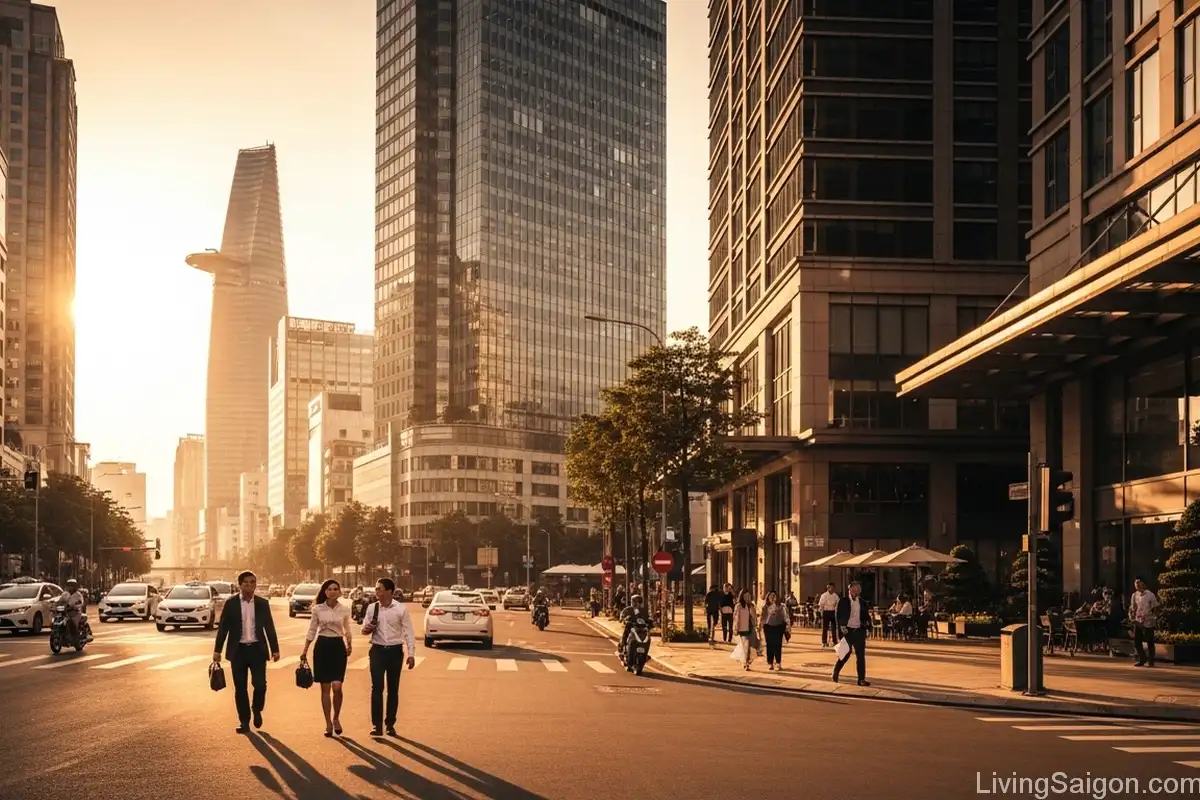
District 1 Saigon Guide: Eating and Drinking
The food and drink scene in District 1 is one of the richest in Southeast Asia, and navigating it well — knowing where to find genuine value versus where you’re paying for location — is one of the skills that separates visitors from people who actually know the district.
Where to Eat in District 1
The most important thing to know about eating in District 1 is that the best food is rarely on the most famous streets. The local restaurants and street food stalls that feed the district’s Vietnamese residents are tucked into side streets and alleys that parallel the tourist drags, and they charge local prices for genuinely excellent food.
The streets around Ton That Thiep and Nguyen Thiep — short alleys connecting Dong Khoi to Ngo Duc Ke — have a cluster of local lunch restaurants that serve the office workers and shopkeepers of the central area. Bun bo and com binh dan stalls operate on these streets from 7am until the lunchtime crowd is gone, typically by 1:30pm. A full meal costs $2–3. The quality at the best of these is excellent.
For international and upmarket dining, District 1 has genuine world-class options. The French-influenced restaurants in the old colonial buildings, the Japanese and Korean restaurants that have clustered along and around Le Thanh Ton (informally called “Japantown”), and the contemporary Vietnamese fine dining venues that have developed along Ly Tu Trong and Dong Khoi represent some of the best cooking in Ho Chi Minh City.
For a curated list of the best restaurants in the district at every price point, our cafes and eating guide for District 1 breaks it down by street and by meal type. The things to do in District 1 article also covers the food scene alongside the broader range of activities and experiences available in the area.
Coffee Culture in District 1
District 1 has one of the most developed cafe scenes in the city. The spectrum runs from street-level Vietnamese coffee stalls serving cà phê sữa đá for 20,000 VND to specialty roasters doing meticulous single-origin pour-overs for $5–8 USD. Both ends of this spectrum are worth experiencing.
The area around Pasteur Street and the blocks between Le Thanh Ton and Ly Tu Trong has several excellent independent cafes that have built strong followings. Many of them occupy beautifully renovated shophouse spaces — exposed brick, high ceilings, wooden furniture, the careful renovation aesthetic that distinguishes the best Saigon cafes from generic chain environments. These places also tend to have reliable wifi and comfortable seating arrangements, making them viable working environments for the growing remote worker population.

Bars and Nightlife in District 1
Nightlife is one of District 1’s strongest suits, and the variety available within walking distance is genuinely impressive. The rooftop bar scene in District 1 is the most developed in the city — for a full guide to what’s available, the rooftop bars in Saigon guide covers every significant venue with current pricing. The mid-tier cocktail bar scene — sophisticated without being intimidating, priced reasonably against what you’d pay in any major Western city — is concentrated in the streets around Dong Khoi, Ly Tu Trong, and the Opera House area.
The live music scene has strong anchor venues in District 1. Several bars host nightly acoustic sets or jazz performances in intimate shophouse settings — a good evening of live music with a few drinks typically costs $15–25 per person, which makes it one of the better value entertainment experiences in any major city. For the full picture of what’s happening after dark, our District 1 nightlife guide covers the bar and club scene in detail, including which nights are worth targeting for specific types of music and crowd.
Things to Do and See in District 1
The sightseeing density in District 1 is remarkable for a relatively small geographic area. You can cover the major landmarks on foot in a day, which makes it a highly efficient base for exploring the city’s history and culture.
The Walking Street and French Quarter
The Nguyen Hue pedestrian boulevard — stretching from the City Hall down to the Saigon River — is the city’s most photographed urban space. Wide, tree-lined, with a constant flow of families, couples, joggers, and street performers in the evenings, it’s a genuinely pleasant public space in a city that doesn’t have many. The City Hall (Ho Chi Minh City People’s Committee building) at the northern end of the boulevard is one of the best-preserved examples of French colonial civic architecture in Vietnam, beautifully lit at night.
Dong Khoi street, running parallel to the river a block inland, has the most concentrated stretch of colonial-era architecture in the city. The Caravelle Hotel, the Continental Hotel, the Opera House, and several beautiful French-era buildings line this street, giving it a physical character that nothing else in the city quite replicates. Walking it slowly, rather than rushing through, is the right approach.

Notre Dame Cathedral and the Central Post Office
The Notre Dame Cathedral of Saigon (Basilica of Our Lady of The Immaculate Conception) anchors the Paris Square area and is one of the most recognizable colonial-era structures in Vietnam. Built from materials imported from France in the 1880s, it remains an active Catholic cathedral and a visual anchor for the surrounding neighborhood. The Cathedral Square fills with local Vietnamese families on Sunday mornings and on religious holidays, giving visitors a glimpse of Vietnamese Catholicism that’s genuinely moving.
The Central Post Office, directly adjacent to the cathedral, is another French colonial masterpiece worth entering for its own sake — the vaulted iron ceiling, the mosaic maps of historical Saigon, and the general grandeur of what is still an operating post office make it one of the more unusual architectural experiences in the city. Postcards and stamps are available inside; sending something home from here has a particular historical resonance.
Ben Thanh Market
Ben Thanh Market is Saigon’s most famous market — and, for most visitors, the most disappointingly tourist-facing experience in District 1. The indoor market sells everything from Vietnamese handicrafts and clothing to fresh produce and cooked food, but at prices that have risen substantially above what locals pay elsewhere. The market is genuinely worth a brief visit for the architecture (the Art Deco-influenced clock tower facade is iconic) and for the color and atmosphere, but it’s not the place to do serious food or souvenir shopping if value matters.
The night market that surrounds the exterior of Ben Thanh from around 6pm is better value and more atmospheric — dozens of stalls selling grilled skewers, pho, banh mi, and various Vietnamese street foods, with plastic tables spread on the pavement and a mix of tourists and locals eating together in the warm evening air.
The Bitexco Financial Tower Skydeck
The Bitexco Tower, with its distinctive helipad jutting out from the 52nd floor, was Vietnam’s tallest building until Landmark 81 took that title in 2018. The observation deck on the 49th floor — the Saigon Skydeck — offers the most dramatic elevated view of District 1 available, with unobstructed panoramas in every direction. It’s not cheap at approximately $12–15 USD entry, but the view at sunset is genuinely spectacular and gives you the geographic context for the city that no street-level experience provides.
Getting Around District 1
District 1 is the most walkable area in Saigon, and using it as a walking district — rather than defaulting to Grab for every trip — is one of the genuine pleasures of being based here. The major landmarks, restaurants, bars, and shopping areas are clustered closely enough that most mid-day and evening trips can be done on foot in fifteen to twenty minutes.
The footpath situation is inconsistent — some blocks have well-maintained, clear pavements while others have surfaces dominated by parked motorbikes that force pedestrians into the road. The main pedestrianized areas (Nguyen Hue and the immediate surrounds) are straightforward, but venturing off these onto typical District 1 streets requires awareness and flexibility.
For trips beyond walking distance — to Thao Dien for brunch, to District 7 for a meeting, to the airport — Grab is the most reliable option. The surge pricing that affects other parts of the city during peak hours applies here too, so planning Grab trips in or out of the district during the 5–7pm rush hour requires some patience or significant budget. The district’s position at the center of the road network means that traffic converges here from all directions during rush hour, and even short Grab trips can take significantly longer than expected.
The Ben Thanh bus terminal adjacent to the market serves as a hub for Saigon’s city bus network, and several routes connect District 1 to major destinations across the city. The Metro Line 1 terminal at Ben Thanh connects the district to Thao Dien and the eastern suburbs of the city — a genuinely fast and comfortable option for that specific corridor during rush hour.
District 1 for Short-Term Visitors: Practical Notes
For visitors staying a week or less, District 1 solves most logistical problems by placing you at the center of everything. The hotel choices range from budget guesthouses starting around $25–40/night in the Pham Ngu Lao area to five-star properties (Park Hyatt, Caravelle, InterContinental, Sheraton) charging $200–600+/night in the Ben Nghe core.
The sweet spot for most visitors is the cluster of boutique hotels and well-reviewed mid-range properties in the streets between Dong Khoi and the walking street — modern rooms in converted shophouses, typically charging $60–120/night, with enough comfort to be relaxing and enough proximity to everything to be genuinely useful. These properties book up quickly on weekends and during Vietnamese holidays, so advance reservation is advisable.
Most visitor needs are served within walking distance: international ATMs are on virtually every block, pharmacies are widespread, SIM cards are available at the airport and at electronics shops near Ben Thanh Market, and English is spoken at most tourist-facing businesses in the district. The concentration of tourist infrastructure here is the highest in Vietnam.

District 1 Saigon Guide: Comparing It to Other Neighborhoods
The most useful context for understanding District 1 is knowing how it compares to the alternatives. For anyone considering where to base themselves in Saigon — whether for a week or a year — the comparison matters more than any absolute description of the district itself.
Against Thao Dien, District 1 wins on location and proximity to everything but loses on space, quiet, community feel, and family infrastructure. Most people who need to be near international schools, who have children, or who want to feel part of an established expat community will choose Thao Dien. Most people who need to be near the CBD and don’t have children will eventually land in District 1 or move there after a stint somewhere else. The full comparison — including rent, lifestyle tradeoffs, and who each area suits — is covered in our District 1 vs District 7 article and the broader where to live in Saigon guide.
Against Binh Thanh, District 1 wins on walkability and convenience but loses on price and authentic urban character. The Binh Thanh expat who Grabs to District 1 for dinner twice a week and otherwise lives in a more local, more affordable environment often gets a better overall experience than the District 1 resident paying a premium for proximity they use less than they expected.
Against Phu Nhuan, the comparison is primarily one of price versus convenience, with Phu Nhuan offering genuinely good value for expats who’ve moved past the need for the full tourist and expat infrastructure that District 1 provides.
The Instagram spots in Saigon guide covers the most photogenic locations in District 1 alongside the visual highlights of the city’s other neighborhoods — useful if you want to understand what makes each area visually distinctive. And for the nightlife dimension specifically, the nightlife in Saigon guide covers District 1’s after-dark scene in the context of the city’s broader entertainment landscape.
District 1 is the heart of Ho Chi Minh City, and no time spent in Saigon is complete without meaningful time here. Whether you’re walking Dong Khoi at golden hour, eating pho on a side street at 7am, having a sunset cocktail thirty floors above the river, or watching the city from a cafe table as the evening rush floods the boulevard — this district delivers an urban experience that very few places anywhere in the world can match at the price point Saigon charges for it.