
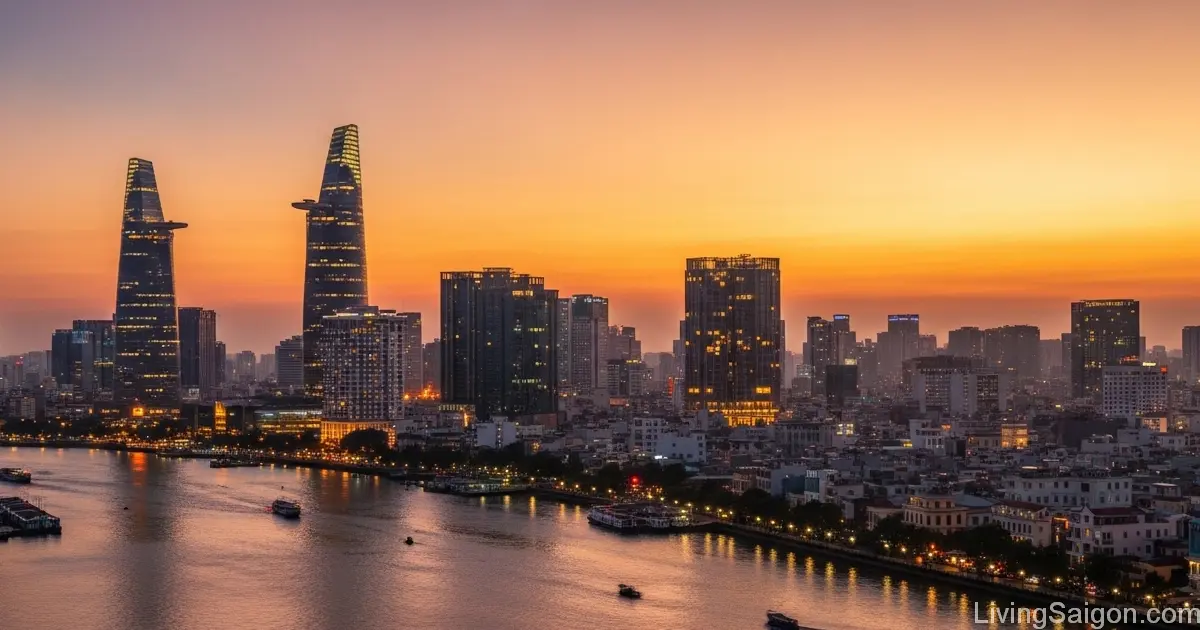
So you’ve made the decision. You’re moving to Ho Chi Minh City — or at least seriously thinking about it. You’ve looked up the cost of living, you’ve read about the food, you’ve watched a couple of YouTube vlogs from people on motorbikes weaving through traffic. Now you’re hitting the question that actually matters: where to live in Saigon.
It’s not a straightforward question. Saigon is a city of very distinct neighborhoods, and the one you choose shapes nearly everything about your daily life — your commute, your social circle, your rent bill, and whether you’ll feel energized or exhausted by the place six months in.
Most expats spend weeks researching where to live in Saigon before arriving, and still end up moving districts within the first year. This guide is designed to shortcut that process. It covers the five main areas where expats settle, what each one is genuinely like to live in, who each suits best, and how to make the final call. If you want a broader overview of life in the city first, the expat life in Saigon guide is a good starting point.
Best Areas to Live in Saigon: How Expats Choose
The way expats pick a district in Saigon has changed over the years. It used to be simple: most foreigners ended up in District 1 because that’s where the offices were and where you could find a Western meal without too much effort. That’s no longer the whole story.
Today, deciding where to live in Saigon is driven by a handful of concrete factors. Where your office is (if you have one). Whether you have kids and which schools are nearby. Your budget. How much you value being around other expats versus living more locally. And honestly — what kind of city experience you’re looking for. A 25-year-old digital nomad and a 40-year-old executive relocating with a family will want completely different things from the same city.
The five areas below cover most of what’s available. Read through all of them before deciding — a lot of expats make the mistake of choosing where to live in Saigon before they’ve actually visited more than one neighborhood.
1. District 1 — Live in Saigon’s City Center

District 1 is where Saigon announces itself. The skyline, the Nguyen Hue walking street, the rooftop bars, the international restaurants, the business district — it’s all here. For a certain kind of expat, there’s nowhere else worth considering.
What daily life looks like in District 1
Busy. Loud. Energizing. District 1 is not a place you go to unwind — it’s a place you go to be in the middle of things. If your office is here, you can walk to work. You can walk to dinner. You can walk from dinner to a bar and not think about a Grab at all. For people who hate commuting, the premium rent buys you genuine time back.
Within District 1, the experience varies quite a bit by sub-area. The Da Kao and Tan Dinh wards are quieter and more residential than the Ben Nghe business core. The streets near the Opera House and the French Quarter feel different at night than the backpacker strip around Pham Ngu Lao. It’s worth being specific about which part of District 1 you’re looking at.
The practical challenges of District 1
Noise, traffic, and cost. Those are the three consistent complaints. Most apartments in District 1 don’t come with the kind of green space or quiet that you find in District 7 or Thao Dien. And the rent-per-square-meter is the highest in the city. If you have a family or if you need genuine downtime in your home environment, District 1 tends to wear people down over time.
Housing and costs in District 1
- Serviced apartment / small 1BR: $700 – $1,200/month
- Modern 1BR in a quality building: $900 – $1,500/month
- 2-bedroom: $1,400 – $3,000/month
- High-end (Vinhomes Golden River, etc.): $2,000 – $5,000+/month
Who should live in District 1
- Single professionals who work in the CBD and want no commute
- Short-term stays of 1–3 months where location access matters most
- People who genuinely thrive on urban energy and won’t miss quiet
- Those on company relocation packages with a generous housing allowance
2. Thao Dien — The Most Popular Place to Live in Saigon for Expats

Ask any long-term expat where they live and there’s a reasonable chance the answer is Thao Dien. It’s become the unofficial headquarters of Saigon’s international community, and its reputation is well-earned.
The area sits in the old District 2 — now technically part of Thu Duc City after a 2021 administrative merger, though everyone still calls it District 2 — across the bridge from District 1, right along the Saigon River. The streets are noticeably greener and quieter than the city center. Bougainvillea creeps over garden walls. There are independent cafes on almost every corner. An international farmers market runs on Saturday mornings and draws half the neighborhood.
What daily life looks like in Thao Dien
The lifestyle here is comfortable in a way that takes a little adjustment if you’ve been living more locally. You can get excellent Japanese food, a proper flat white, and a bottle of decent wine within a five-minute walk of most apartments. Annam Gourmet — the upmarket international grocery store — is essentially the community hub. You’ll run into everyone you know there on a Sunday.
The expat community is dense and well-networked. If you want to meet people quickly after arriving, Thao Dien does a lot of that work for you. Gym classes, weekend brunches, running groups, weekend kids’ birthday parties if you have children — the social infrastructure is genuinely strong.
The flip side is that Thao Dien can feel like a bubble. Some expats love that. Others, after a few months, feel slightly disconnected from the city they actually moved to. It’s worth being honest with yourself about which camp you fall into.
The practical challenges of Thao Dien
Thao Dien has two well-known issues. The first is flooding. During heavy rains or high tides between May and October, certain streets become impassable for a few hours. If you’re renting a ground-floor space or a villa, ask the landlord directly about this — it matters.
The second is the bottleneck at the entrance to the neighborhood. Getting in and out during peak hours can be genuinely slow. The Metro Line 1 now connects Thao Dien to the city center, which has helped considerably, but traffic remains a factor.
Housing and costs in Thao Dien
- Serviced apartment (1BR): $600 – $1,100/month
- Modern condo (1BR) in complexes like Masteri or Gateway: $700 – $1,500/month
- 2-bedroom apartment: $1,200 – $2,800/month
- Private villa: $2,500 – $10,000+/month
Thao Dien is not cheap by Saigon standards. Rents have climbed steadily over the past decade as demand pushed prices up. If budget is a primary concern, other areas will serve you better. For a full breakdown of what life here costs and looks like, the Thao Dien expat guide covers everything from the best apartment complexes to where the neighborhood actually eats.
Who should live in Thao Dien
- Families with children — the strongest school options in the city are nearby
- Digital nomads who want a work-from-cafe lifestyle with strong international food options
- Anyone staying six months or more who wants to plug into an established expat community
- People who prioritize lifestyle comfort over being embedded in local Vietnamese life
3. District 7 — Best Place to Live in Saigon for Families
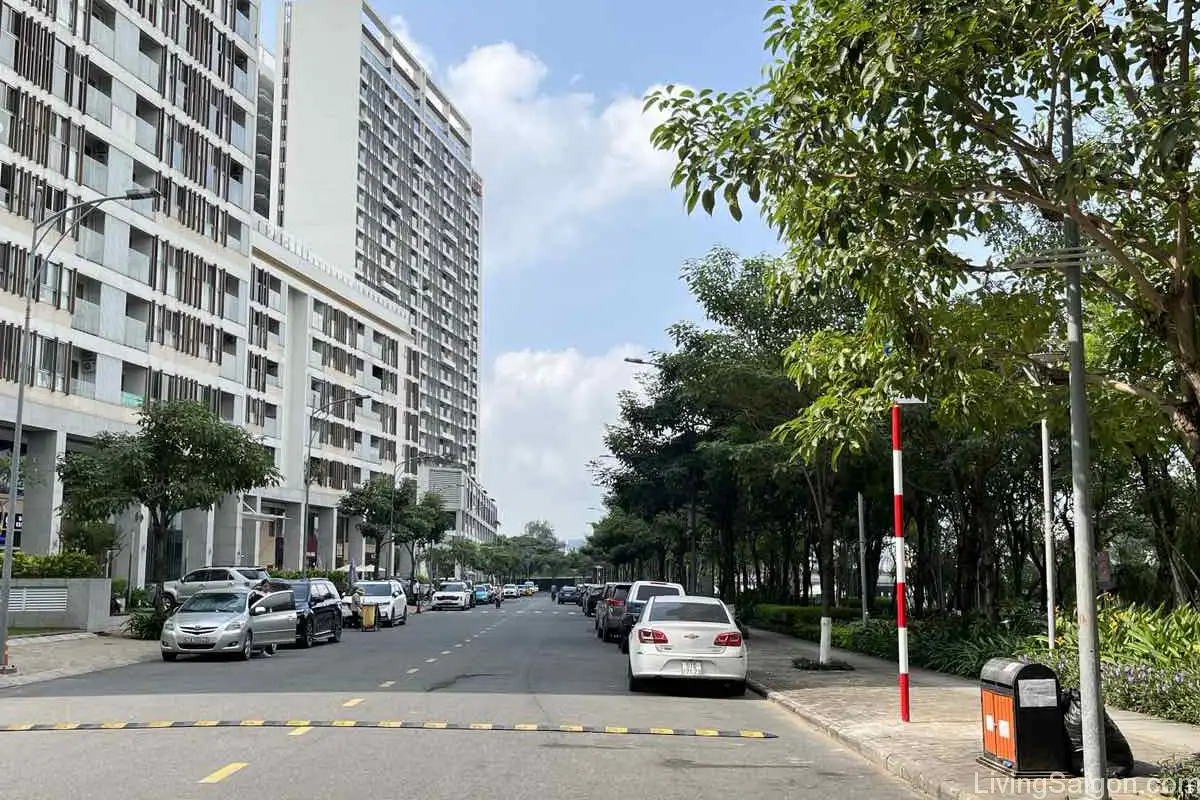
District 7 is what happens when a city actually plans its residential areas. The roads are wide. There are real footpaths. There are parks with grass you can sit on. It feels, in a way that almost no other part of Saigon does, like a neighborhood that was designed with daily life in mind.
The residential core of District 7 is Phu My Hung — a development that was master-planned in the 1990s and has been refined and expanded since. It’s home to a large Korean and Taiwanese expat community, which has shaped the food and commercial scene here in a way that’s noticeably different from Thao Dien.
What daily life looks like in District 7
The pace is slower. There’s less of the frantic energy you feel in District 1 or even parts of Thao Dien. Weekend mornings at Crescent Lake — an artificial lake around which a lot of the district’s leisure activity is organized — have a suburban calm to them. Families cycle. Kids feed fish. It’s easy to see why people with young children end up here and stay.
The Korean community’s presence means the food options lean heavily toward excellent Korean BBQ, Japanese ramen, and Chinese hotpot — the Western food selection is good but slightly less diverse than Thao Dien. The SC VivoCity mall covers most practical shopping needs.
The practical challenges of District 7
Distance is the main issue. District 7 sits in the south of the city, and getting to District 1 takes 20–40 minutes depending on traffic. The tunnel under the river helps, but there’s no getting around the fact that if your work or social life is centered in the city, you’ll be spending time in a car or on a Grab.
Housing and costs in District 7
- 1-bedroom apartment: $500 – $900/month
- 2-bedroom: $800 – $1,600/month
- Large 3-bedroom in gated complex: $1,500 – $3,000/month
- Better square-meter value than Thao Dien at most price points
District 7 generally offers more space for your money than equivalent areas in Thao Dien. The District 7 Saigon guide covers the best residential complexes and what they cost in detail.
Who should live in District 7
- Families — this is the strongest argument for D7; it’s designed for it
- People who work remotely or have an office in the south of the city
- Expats who want space, greenery, and genuine quiet without paying Thao Dien prices
- Those relocating from large planned suburbs in the US, Australia, or Europe who want something familiar
4. Binh Thanh — A Rising Area to Live in Saigon
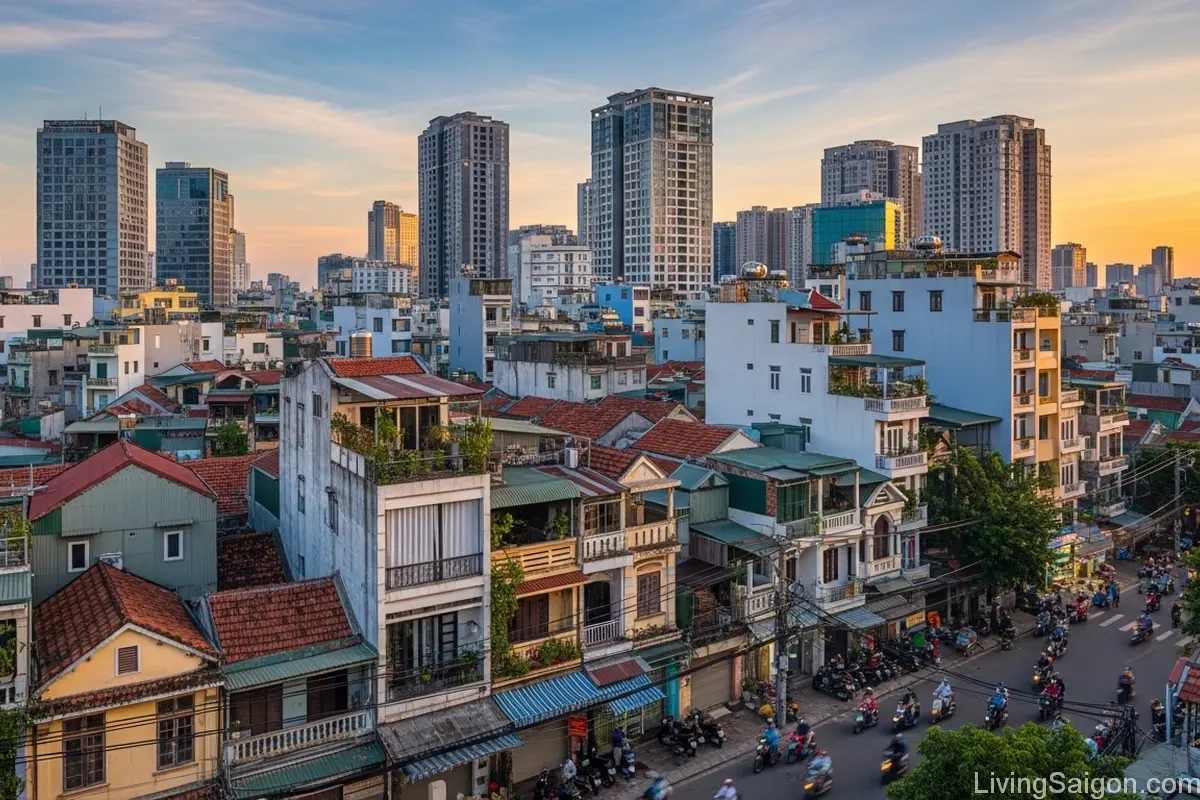
A decade ago, Binh Thanh was somewhere you drove through on the way to the airport. Now it’s one of the most interesting places to live in the city, and it’s attracting a different kind of expat — one who wants to be in Saigon rather than just adjacent to it.
The district spans a wide range of environments. At one end, you have Vinhomes Central Park — a massive luxury complex built around Landmark 81 (the tallest building in Vietnam), complete with its own retail, international schools, and river access. At the other end, you have Pham Viet Chanh and the surrounding streets: narrow alleys, Japanese izakayas, craft beer bars, and a gritty creative energy that feels nothing like the polished comfort of Thao Dien.
What daily life looks like in Binh Thanh
More local than the main expat areas, and that’s increasingly seen as a feature. You’ll hear more Vietnamese spoken. The markets are actual local markets. The cafes are mostly Vietnamese-owned. Getting to District 1 takes under 20 minutes by Grab or motorbike, so the connection to the center remains strong.
Housing and costs in Binh Thanh
- Standard 1BR apartment: $400 – $750/month
- Vinhomes Central Park (1BR): $700 – $1,100/month
- 2-bedroom: $900 – $2,000/month
Who should live in Binh Thanh
- Younger expats who want more authentic Vietnamese city life
- Those priced out of Thao Dien but wanting to stay central
- People who work in District 1 but don’t want to pay District 1 rent
- Anyone drawn to the creative, independent cafe and bar scene
5. Phu Nhuan — An Underrated Spot to Live in Saigon
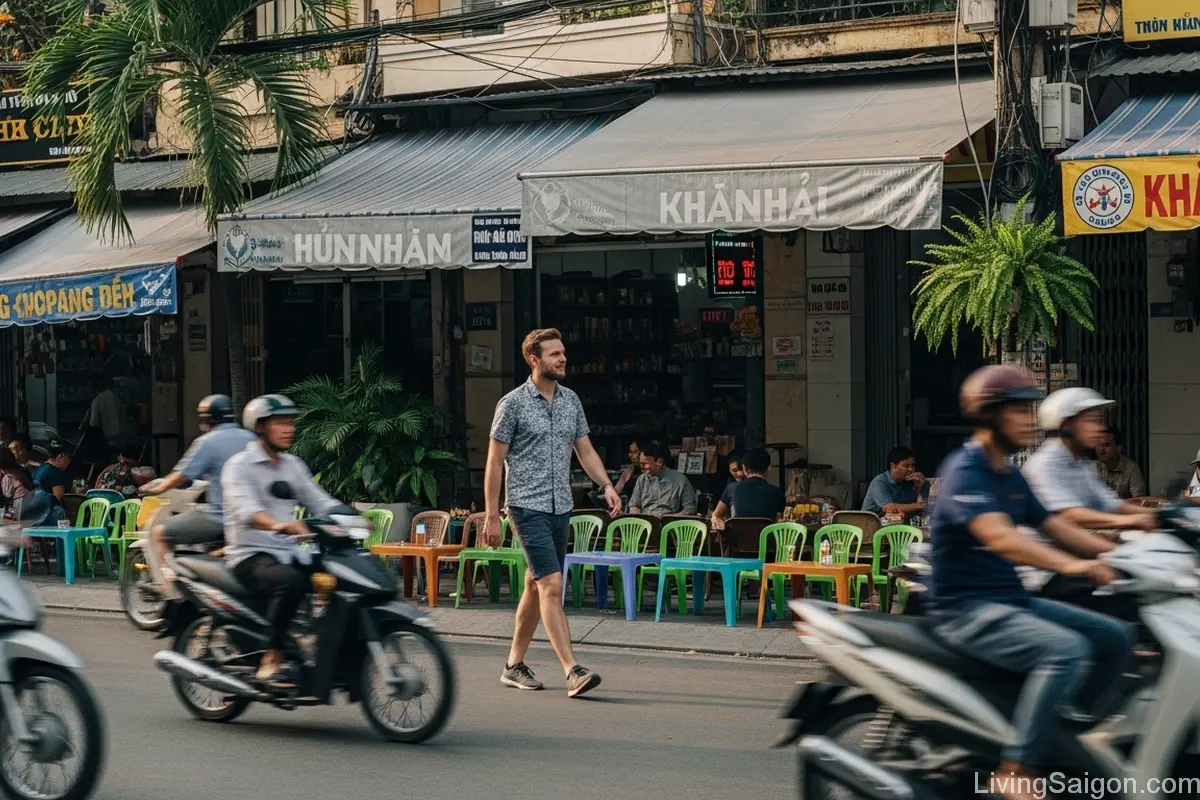
Phu Nhuan doesn’t appear in most expat guides, and that’s part of its appeal. It sits between District 1 and the airport corridor — as central a location as you’ll find in Saigon — while maintaining a genuinely local feel that the main expat areas have largely lost.
The main street, Phan Xich Long, is lined with hundreds of cafes and local restaurants and has a reputation as one of the better food streets in the city. Gia Dinh Park is one of the larger green spaces in Saigon and gives the district a slightly more breathable quality than its density would suggest.
Housing and costs in Phu Nhuan
- 1BR apartment: $350 – $650/month
- 2BR: $600 – $1,200/month
- Some of the best price-to-location ratios in the city
Who should live in Phu Nhuan
- Budget-conscious expats who still want a central location
- Those who want to live among locals rather than in an international enclave
- People who speak some Vietnamese or are actively trying to learn
- Longer-term residents who’ve moved past the expat bubble phase
Where to Live in Saigon: Comparing All Five Areas
Here’s a quick reference table to compare the main factors across all five areas. For a full cost breakdown, see the cost of living in Saigon guide.
| Area | 1BR Rent (USD/mo) | Expat Community | Families | Quiet Level | Best For |
|---|---|---|---|---|---|
| Thao Dien | $700 – $1,500 | ★★★★★ | ★★★★★ | Moderate | Community, comfort |
| District 7 | $500 – $900 | ★★★★☆ | ★★★★★ | High | Families, space |
| District 1 | $700 – $1,400 | ★★★☆☆ | ★★☆☆☆ | Low | Singles, work proximity |
| Binh Thanh | $400 – $800 | ★★★☆☆ | ★★★☆☆ | Moderate | Value, local vibe |
| Phu Nhuan | $350 – $650 | ★★☆☆☆ | ★★☆☆☆ | Moderate | Budget, authenticity |
How to Decide Where to Live in Saigon
Once you’ve read the descriptions above, the decision usually comes down to a handful of honest questions.
Where to Live in Saigon If You Have Children
Start with the schools. The international school your children attend will almost certainly determine which district you live in — school buses run on fixed routes and the commute matters for families. Thao Dien and District 7 have the strongest international school infrastructure. Pick the school first, then narrow down the neighborhood. The expat life in Saigon guide has more on settling in with a family.
Where to Live in Saigon on a Budget
Being clear-eyed about this upfront saves a lot of time. A comfortable 1-bedroom in Thao Dien starts around $800/month. In District 7, you can get similar quality for $100–200 less. Binh Thanh and Phu Nhuan are notably cheaper still. For a full cost breakdown by area, the cost of living in Saigon guide is worth reading before you start looking at listings.
Where to live based on how long you’re staying
Short stays (1–3 months): District 1 is easiest — flexible lease terms, serviced apartments, everything walking distance. Medium stays (3–12 months): Thao Dien or Binh Thanh give you better value and a more sustainable pace. Long stays (1 year+): Most expats who stay more than a year end up in Thao Dien, District 7, or wherever they found their community.
Expats vs local lifestyle — where does that fit?
This is more important than most people admit. If you want an international social life, Thao Dien does that more easily than anywhere else. If you want to actually experience Vietnamese culture as your daily life, Binh Thanh or Phu Nhuan put you in the middle of it in a way the expat enclaves don’t.
Finding Your Apartment Once You Know Where to Live in Saigon
Knowing the neighborhood is one thing. Actually securing a good apartment is another. A few things worth knowing about how the Saigon rental market works before you start.
Lease terms are typically six or twelve months. Shorter-term rentals exist but cost more per month and are often serviced apartments rather than regular residential units. Most furnished apartments include basic white goods — air conditioning, washing machine, fridge — but the quality varies significantly. Inspect carefully before signing.
Deposits are usually two months upfront. Utilities — electricity, water, internet — are almost always additional, and electricity bills can surprise people who use air conditioning heavily. Budget an extra $60–150/month depending on how cold you like your apartment.
Working with a local agent who specializes in your target area makes the process significantly smoother, especially if you’re navigating it without Vietnamese. Our apartment finding service in Saigon connects expats with agents who know the market and communicate clearly in English.
One practical tip: if you can manage it, spend at least a week in Saigon in a short-term rental before committing to a lease. Walk around your target neighborhood at 7am and 7pm. Take the Grab to your office at rush hour. You’ll know within a few days whether the area fits how you actually live — and that knowledge is worth the extra week of planning.
Read These Next
- Best areas for expats in Saigon — expanded overview of every expat-friendly zone
- District 1 vs District 7 — side-by-side comparison to help you choose between the two
- Thao Dien guide — neighborhood deep dive including specific apartment buildings and day-to-day life
- District 7 Saigon guide — everything you need to know about the city’s most liveable family district
- Cost of living in Saigon — full breakdown of what you’ll actually spend each month
- Renting apartments in Saigon — how the rental market works, what to look for, common pitfalls
- Apartment finding service — if you want help navigating the rental market with a local agent
Frequently Asked Questions
Where do most expats live in Saigon?
Thao Dien in the old District 2 is consistently the most popular neighborhood among long-term expats. It has the strongest international community, the best international school access, and the widest range of Western-friendly amenities. It’s also the most expensive of the main expat areas.
Is District 7 better than Thao Dien for families?
It depends on what matters most to your family. District 7 offers more space, better urban planning, wider streets, and is generally slightly cheaper per square meter. Thao Dien has a stronger expat social network and more diverse international food options. Many families with young children choose District 7 for the practicality; families who’ve been in Saigon longer often prefer Thao Dien for the community.
Can I live in Saigon cheaply as an expat?
Yes, if you’re willing to live in less internationally-oriented neighborhoods. Phu Nhuan and Binh Thanh offer comfortable apartments from $400–700/month with central locations. The trade-off is fewer international amenities and a more local environment — which is a positive for many expats.
Do I need a motorbike to live comfortably in Saigon?
Not strictly, but life becomes noticeably easier with one once you’re outside District 1. Grab covers the whole city and is reliable and affordable, but if you’re making multiple daily trips it adds up. Most expats who stay longer than three months end up renting or buying a scooter.
How long does it take to find an apartment in Saigon?
Working with an agent, most expats find a suitable place within one to two weeks once they’ve decided on a district. Going it alone through Facebook groups or property websites takes longer, especially without Vietnamese language skills.
Final Thoughts
Choosing where to live in Saigon is one of the most consequential decisions you’ll make before arriving. The city is large enough that the wrong neighborhood — wrong for your lifestyle, not objectively wrong — can make the whole experience harder than it needs to be. The right one can make you feel settled and genuinely happy within a few weeks.
Most expats don’t get it perfect on the first try. People start in District 1, realize they want quieter, move to Thao Dien. Or start in Thao Dien, find it too much of a bubble, and shift to Binh Thanh. That’s normal, and Saigon’s rental market is flexible enough to accommodate it. But if you do the groundwork first — visit the neighborhoods, understand your priorities, talk to people who actually live there — you’ll get much closer on the first attempt.
If you want help with the practical side of finding a place, our apartment finding service and expat support team are there to make it straightforward.