

Ho Chi Minh City is not one city — it’s more like a collection of very different places that happen to share the same name. The districts in Saigon each have their own character, their own pace, their own type of resident, and their own price point. What works for a 28-year-old digital nomad wanting nightlife and cafes within walking distance is very different from what works for a family with two kids and a school run to manage every morning.
Understanding the districts before you arrive — or before you commit to an apartment — is one of the most valuable things you can do. People who research neighborhoods properly tend to settle faster, spend less time commuting, and build a routine that actually fits their life. People who don’t often end up moving within six months. This guide is designed to give you a clear, honest picture of every major district in Saigon so you can make the right call the first time.
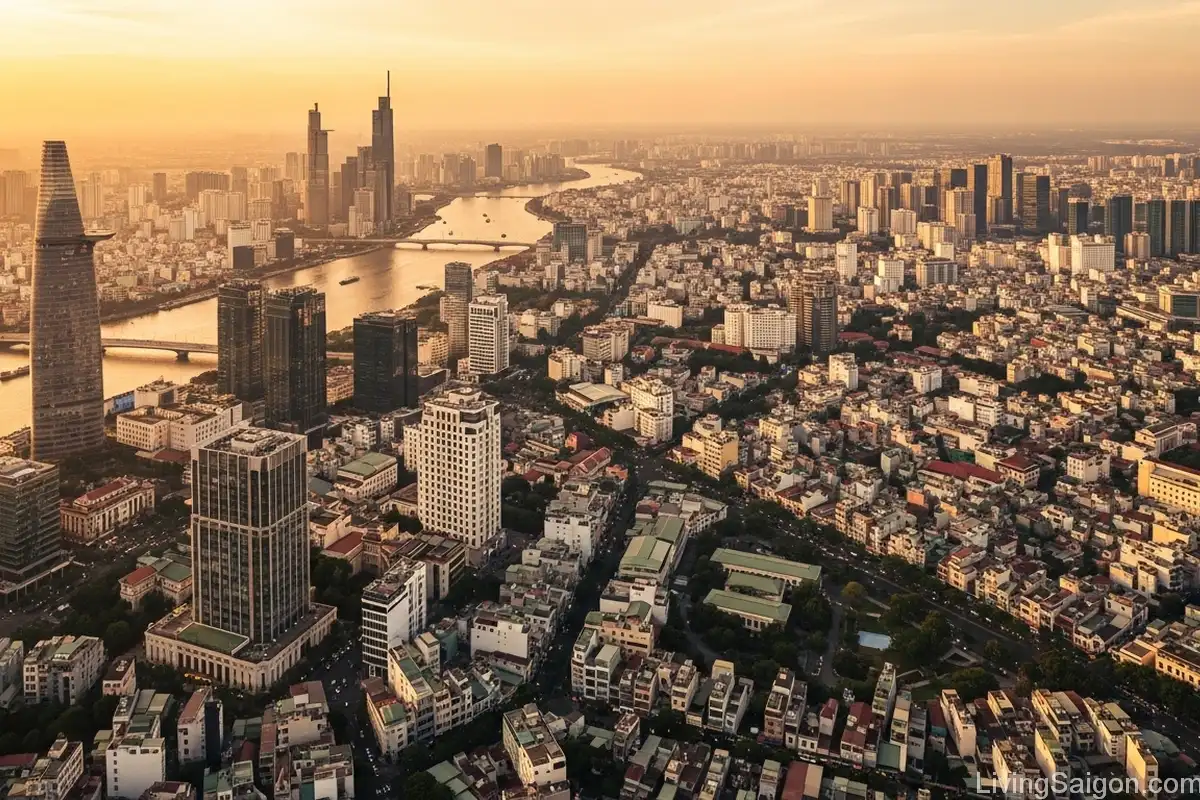
How the Districts in Saigon Are Organized
Saigon’s administrative structure has changed over the years and continues to evolve. Officially, Ho Chi Minh City is divided into urban districts (quận), suburban districts (huyện), and the newer Thu Duc City — a large administrative unit created in 2021 by merging the former Districts 2, 9, and 12 into a single entity. In practice, almost everyone still uses the old district names, especially for areas like District 2 and Thao Dien.
For the purposes of this guide, we use the names and areas that people actually navigate by — the ones you’ll see in rental listings, on maps, and in conversations with locals and other expats. The districts in Saigon that matter most for expats and visitors are concentrated in the inner urban core and the immediately surrounding areas, with a few key outer districts worth knowing.
A useful way to think about the city: the Saigon River divides the older, denser west bank (where District 1, 3, 4, and Binh Thanh sit) from the newer, more planned east bank development (Thao Dien, District 2/Thu Duc). District 7 sits to the south, accessible via the Thu Thiem and Nguyen Van Linh corridors. Each side of the city has a distinct energy.
Districts in Saigon: The Inner Urban Core
District 1 — The Center of Everything
District 1 is Saigon’s commercial heart and the district most people picture when they think of the city. The skyline is here. The main government buildings, the Nguyen Hue walking street, the Opera House, the rooftop bars, the international hotels, the business district — it’s all concentrated in this relatively compact area.
Living in District 1 puts you in the middle of the city’s energy in a way no other district can match. You can walk to dinner, walk to a bar, walk to work if your office is in the CBD. The trade-off is that it’s the most expensive district for rent, the noisiest, and the one where finding genuine quiet in your apartment requires paying a significant premium for a building that’s set back from the main roads.
District 1 suits short-term stays, people who want maximum urban access without thinking about transport, and those on company relocation packages with generous housing budgets. For long-term residents who want something more liveable, most people eventually migrate to other districts. For a full breakdown of life in the center, read our dedicated District 1 Saigon guide.
- Best for: singles, short-term expats, CBD office workers, high-budget relocations
- 1BR rent range: $700–$1,500/month
- Vibe: urban, loud, energizing, international
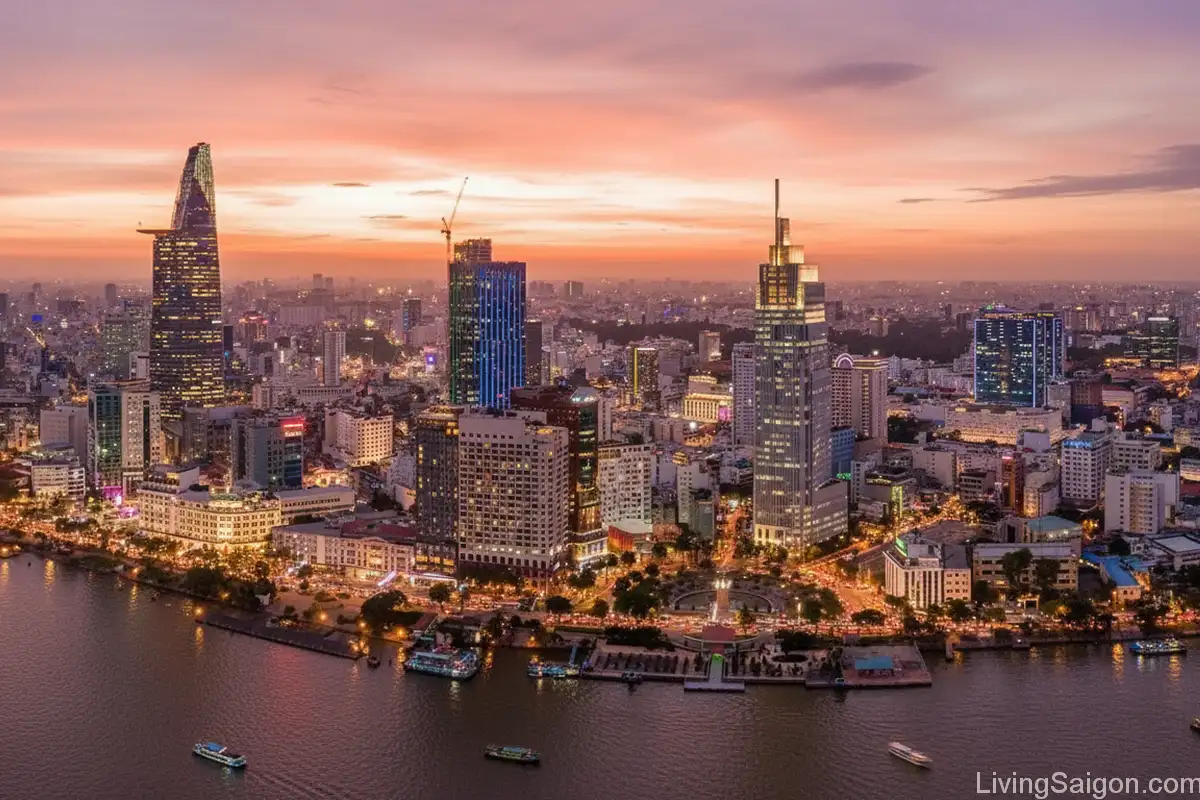
District 3 — The French Quarter Feel
District 3 is one of Saigon’s most characterful districts and one that doesn’t get nearly as much attention in expat conversations as it deserves. Immediately adjacent to District 1, it shares the central location without quite the same intensity. The streets here are lined with colonial-era villas, many of which have been converted into boutique cafes, restaurants, and creative offices. The tree cover is better than most of the city. The pace is slightly slower.
The residential options in District 3 range from older apartment buildings with character to newer mid-rise developments. Rents sit slightly below District 1 for comparable space, and the neighborhood rewards people who like to walk and explore. The food scene here — particularly along Vo Van Tan, Tran Cao Van, and the streets around Tan Dinh Market — is excellent and genuinely local rather than expat-facing.
- Best for: people who want central location with more character and slightly lower rent
- 1BR rent range: $500–$1,000/month
- Vibe: colonial character, creative, local-facing, walkable
District 4 — Gritty, Central, Underrated
District 4 sits just across a small canal from District 1 and is one of the most authentically local areas in the inner city. It has a reputation as one of Saigon’s best eating districts — the seafood restaurants and local food streets here are genuinely excellent — and its proximity to the center means commuting is easy. Rents are lower than District 1 for equivalent apartments.
The district has been gentrifying gradually, with craft beer bars, coffee shops, and creative spaces appearing alongside the traditional wet markets and local eateries. It’s not the first place most expats look, but people who end up here tend to love it.
- Best for: food lovers, budget-conscious expats who want to stay central, people who like authentically local neighborhoods
- 1BR rent range: $400–$800/month
- Vibe: local, food-focused, gritty, central
The Main Expat Districts in Saigon
Thao Dien (Old District 2) — The International Village
Ask any long-term expat in Saigon where most foreigners live and the answer is almost always Thao Dien. This ward within the old District 2 — now technically part of Thu Duc City — has become the unofficial headquarters of Saigon’s international community over the past two decades, and its character reflects that thoroughly.
Tree-lined streets, a bougainvillea-draped garden wall every few hundred meters, an international farmers market on Saturday mornings, the highest concentration of international schools in the city, excellent cafes and restaurants on almost every corner — Thao Dien has built a lifestyle infrastructure that makes settling in fast and easy. If you want to meet people quickly after arriving, the social networks here are denser and more active than anywhere else in the city.
The trade-offs are well known among expats: it can feel like a bubble, it floods on some streets during heavy rains between May and October, and the bottleneck getting in and out during peak hours can be genuinely frustrating. The Metro Line 1 connection has helped considerably with the transport issue. Rents are among the highest in the city outside of District 1 luxury buildings.
For everything you need to know about living in this neighborhood — the best apartment buildings, the food scene, the school options, and the day-to-day reality — the Thao Dien expat area guide covers it in detail.
- Best for: families with children, digital nomads, anyone wanting a strong expat community from day one
- 1BR rent range: $700–$1,500/month
- Vibe: international, comfortable, community-driven, cafe culture

District 7 — Planned, Peaceful, Family-Oriented
District 7 is what happens when a city actually plans its residential development properly. Wide roads with real footpaths. Green spaces you can sit in. Gated residential complexes with pools and gyms. A pace that’s noticeably calmer than the inner city. It’s not going to excite people who want to be immersed in the chaos and energy of Saigon — but for families, for people who need genuine quiet at home, and for those who prefer a more organized environment, it’s the best option the city has.
The Phu My Hung development at District 7’s core was master-planned in the 1990s and has been refined over the decades since. It has a large Korean and Taiwanese expat community, which has shaped the food scene considerably — the Japanese, Korean, and Chinese restaurant options here are excellent. The SC VivoCity mall covers most day-to-day practical needs. The main challenge is distance: getting to District 1 takes 20–40 minutes depending on traffic.
The District 7 Saigon guide breaks down the best residential complexes, the school options, and what living here actually costs day to day.
- Best for: families, people who want space and quiet, those working in the south of the city
- 1BR rent range: $500–$900/month
- Vibe: planned, organized, calm, family-friendly, Korean community influence

The Rising and Underrated Districts in Saigon
Binh Thanh — The Best of Both Worlds
Binh Thanh is where a lot of Saigon’s more interesting expat story is happening right now. The district spans a wide range of environments — from the luxury of Vinhomes Central Park (built around Landmark 81, the tallest building in Vietnam) to the creative, local-facing streets around Pham Viet Chanh and Dien Bien Phu.
The appeal for expats is the combination of central location, lower rents than Thao Dien or District 1, and an environment that feels more genuinely Vietnamese than the established expat enclaves. Getting to District 1 takes under 20 minutes by Grab or motorbike. The eating scene — Japanese izakayas, craft beer bars, local food streets, good cafes — has developed considerably over the past few years. It’s attracting a younger, more independently-minded expat profile than Thao Dien.
The Binh Thanh district guide covers the best sub-areas within the district, what to expect from the rental market, and the neighborhood’s day-to-day character.
- Best for: younger expats, those who want local vibe with central access, people priced out of Thao Dien
- 1BR rent range: $400–$800/month
- Vibe: local-meets-creative, rising, central, independent
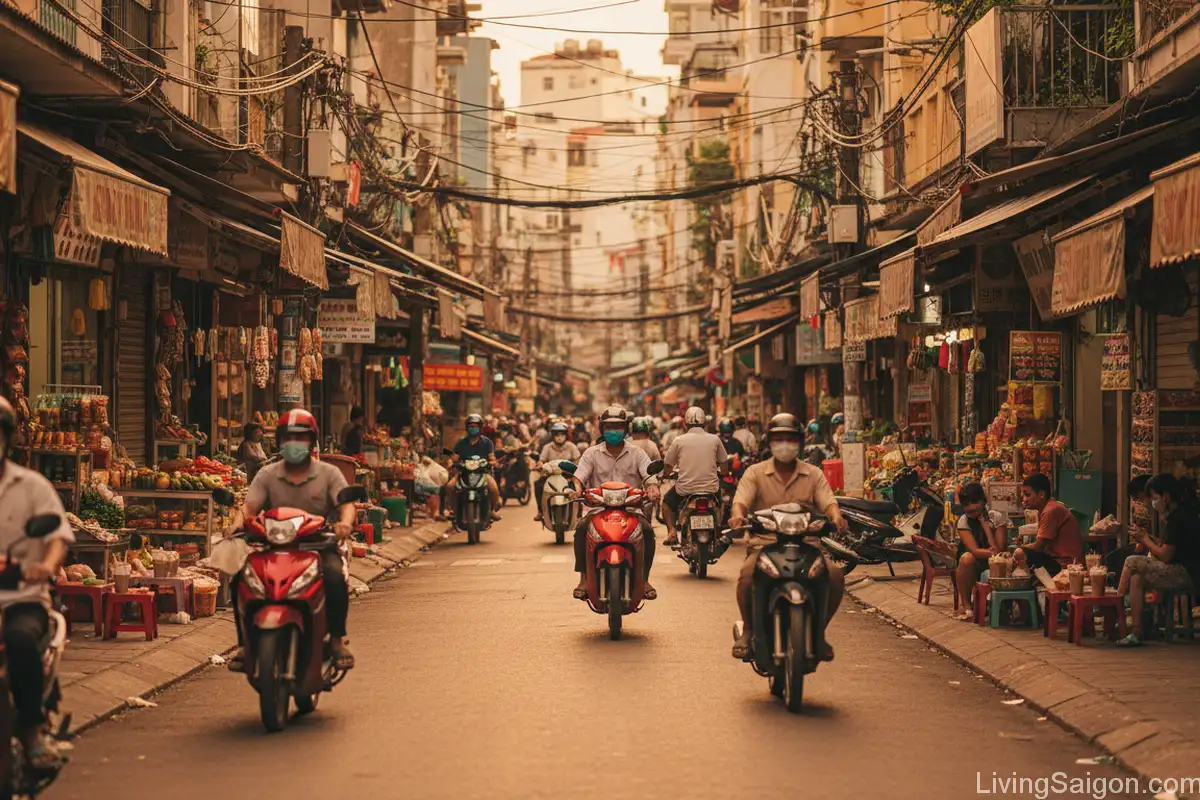
Phu Nhuan — The Underestimated Gem
Phu Nhuan is Saigon’s quiet achiever. It sits between District 1 and the airport corridor, as centrally located as you can get in the city, and yet rarely appears at the top of expat housing lists. That’s its advantage. The district has maintained a genuinely local character that the more expat-saturated areas have largely lost, while still offering the conveniences that make day-to-day life easy.
Phan Xich Long — Phu Nhuan’s main street — is lined with hundreds of cafes and local restaurants and has a solid reputation as one of Saigon’s better eating streets. Gia Dinh Park provides some breathing room in an otherwise dense urban environment. Rents are among the best price-to-location ratios in the city, and the commute to District 1 is short.
For expats who speak some Vietnamese, who have been in the city long enough to not need the expat-bubble infrastructure, or who simply prefer a quieter, more local experience from the start, Phu Nhuan is genuinely undervalued. The Phu Nhuan district guide has everything you need to know about making it work.
- Best for: budget-conscious expats, long-term residents, Vietnamese language learners, people who prefer local neighborhoods
- 1BR rent range: $350–$650/month
- Vibe: quiet, local, underrated, authentic, great value
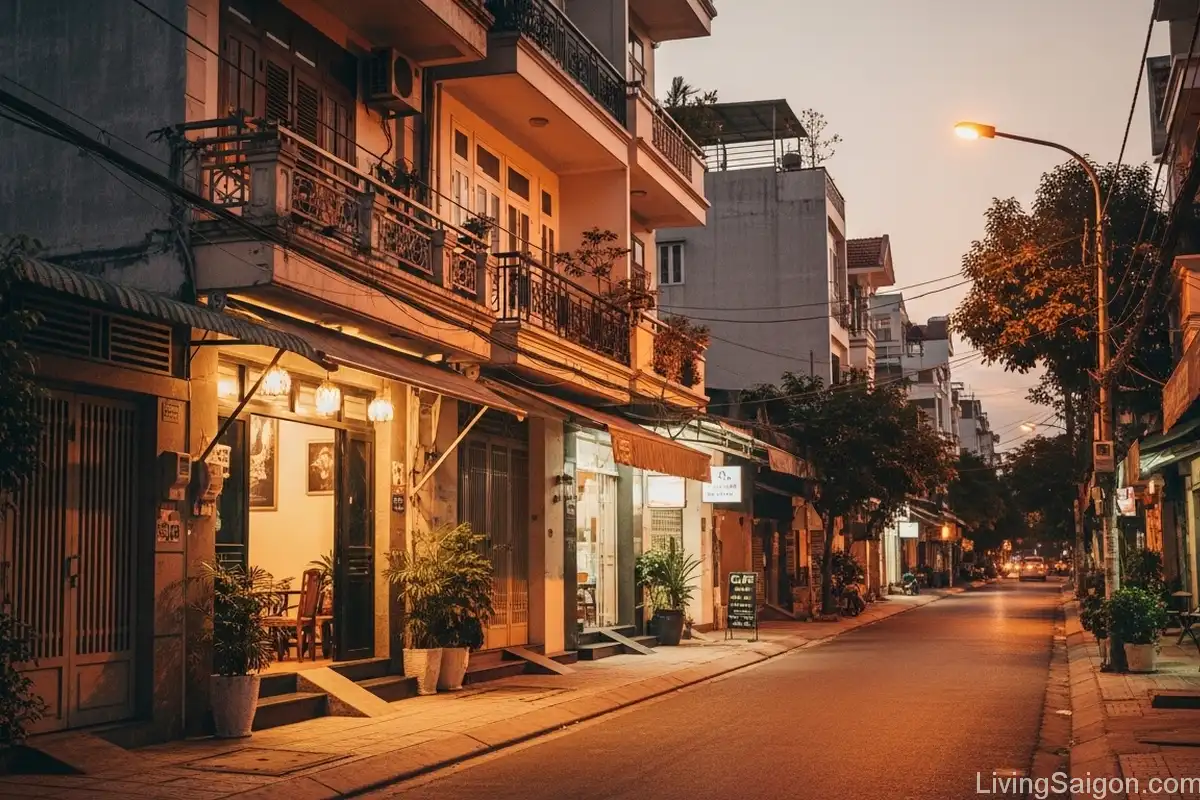
Quick Comparison: Districts in Saigon at a Glance
| District | 1BR Rent (USD/mo) | Best For | Expat Community | Local Feel |
|---|---|---|---|---|
| District 1 | $700–$1,500 | Singles, short stays, CBD workers | ★★★☆☆ | ★★☆☆☆ |
| District 3 | $500–$1,000 | Character seekers, central walkers | ★★☆☆☆ | ★★★★☆ |
| District 4 | $400–$800 | Food lovers, budget central | ★★☆☆☆ | ★★★★★ |
| Thao Dien (D2) | $700–$1,500 | Families, community seekers | ★★★★★ | ★★☆☆☆ |
| District 7 | $500–$900 | Families, space, quiet | ★★★★☆ | ★★★☆☆ |
| Binh Thanh | $400–$800 | Young expats, local vibe | ★★★☆☆ | ★★★★☆ |
| Phu Nhuan | $350–$650 | Budget, authentic, long-term | ★★☆☆☆ | ★★★★★ |
How to Choose Between the Districts in Saigon
The comparison table gives you the numbers, but the real decision usually comes down to a handful of honest questions about how you actually live.
Do you have children?
If yes, start with the international schools. The school your children attend will shape the district choice more than any other factor, because school bus routes are fixed and morning commutes with kids in tow are miserable if you live far from the school. Thao Dien and District 7 have the strongest international school infrastructure. Pick the school first, then narrow down the neighborhood. Our article on best districts for expats in Saigon goes into school options by area in more detail.
What’s your budget for rent?
Being clear about this upfront saves a lot of time. If your ceiling is $600/month for a one-bedroom, Thao Dien and District 1 are largely off the table at that level. Binh Thanh, Phu Nhuan, and the less central parts of Thao Dien offer the best options in that range. For a full cost breakdown by area, the district comparison guide is the most detailed resource on the site.
How important is the expat community to you?
This question matters more than people admit. If you’re arriving alone and need to build a social life quickly, Thao Dien’s dense expat network does a lot of that work for you. If you’ve been in Saigon before, speak some Vietnamese, or actively prefer to live among locals, Binh Thanh or Phu Nhuan give you a better experience. There’s no wrong answer — it’s about being honest about what you actually need.
How long are you staying?
Short stays of one to three months: District 1 is easiest — flexible lease terms, serviced apartments, everything walking distance. Medium stays of three to twelve months: Thao Dien or Binh Thanh give better value and a more sustainable rhythm. Long stays of a year or more: most expats end up wherever they found their community, which varies by person. The article on cheap districts in Saigon is worth reading if budget is a primary driver.
Finding Your Apartment Once You’ve Chosen a District
Knowing the district is one thing. Securing a good apartment in the Saigon rental market is another. A few things worth knowing before you start.
The market moves fast in popular areas. Good apartments in Thao Dien and Binh Thanh don’t sit empty for long, especially furnished one-bedrooms in the $600–$900 range. If you see something good, the decision timeline is days, not weeks.
Deposits are typically two months upfront. Utilities — electricity, water, internet — are almost always additional, and electricity bills surprise people who use air conditioning heavily in a hot climate. Budget an extra $60–150/month on top of the base rent.
Lease terms are normally six or twelve months. Shorter furnished options exist at a premium. Most expats prefer furnished apartments to avoid the complication of buying and then selling furniture. Working with a local agent who knows the neighborhood you’re targeting makes the process significantly faster and less stressful — especially if you don’t speak Vietnamese. Our district guide has recommendations on how to approach the search by neighborhood, and for hands-on help finding the right place, the apartment rental service connects you with agents who know each district well.
One practical tip worth repeating: if you can, spend at least a week in Saigon staying in a short-term rental before signing a lease. Walk around the district at different times of day. Check the noise level outside your potential apartment at 7am on a weekday and 11pm on a Saturday. Take the Grab to wherever you’ll spend most of your time and see how long it actually takes. You’ll know within a few days whether the area fits your life.
The districts in Saigon are different enough that the right choice makes a real difference to your day-to-day happiness. Take the time to get it right, use the detailed neighborhood guides on this site, and don’t hesitate to reach out if you want specific help narrowing it down.