
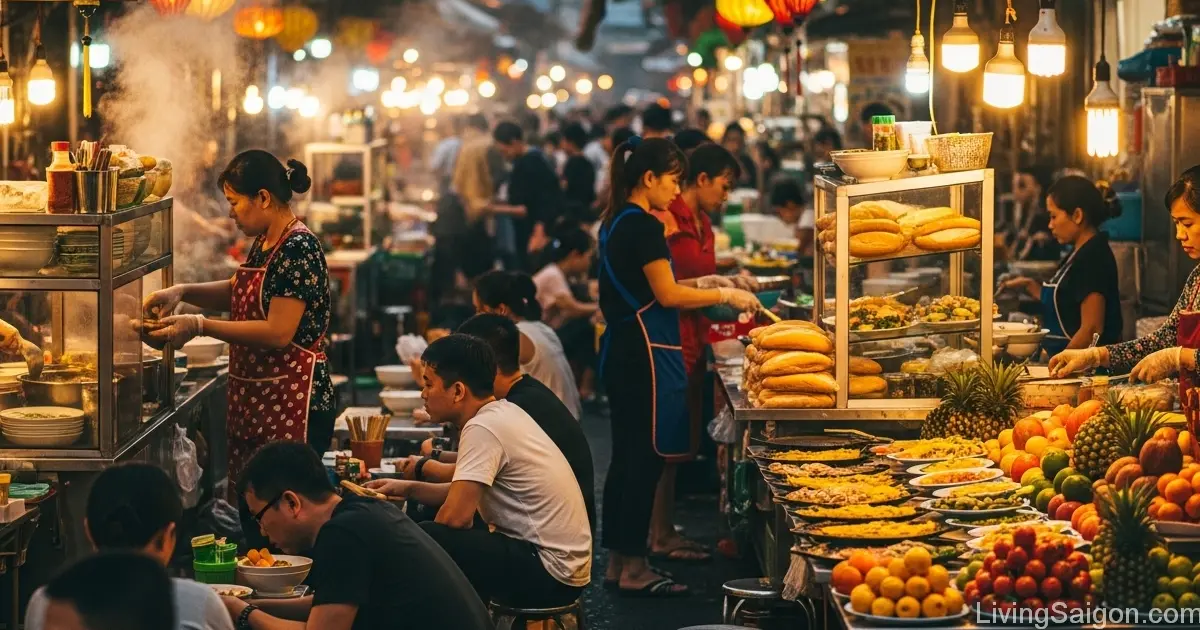
If you ask most expats what they miss most when they leave Saigon, the answer comes quickly and it’s almost always the food. Food in Saigon occupies a completely different category from the food you’ll find in most cities — not just good, not just cheap, but genuinely one of the most exciting and diverse eating scenes anywhere in the world. A bowl of pho from a 5am street stall. Banh mi from a cart that’s been in the same family for thirty years. A beautifully plated brunch at a rooftop cafe in Thao Dien. It’s all here, sometimes within a five-minute walk of each other.
This guide covers the full picture: the essential Vietnamese dishes every expat and visitor should know, where to find the best street food, the cafe scene, the international dining options, and how to navigate the city’s eating culture without the tourist tax. Whether you’ve just arrived or you’ve been here a while and want to eat better, this is where to start.
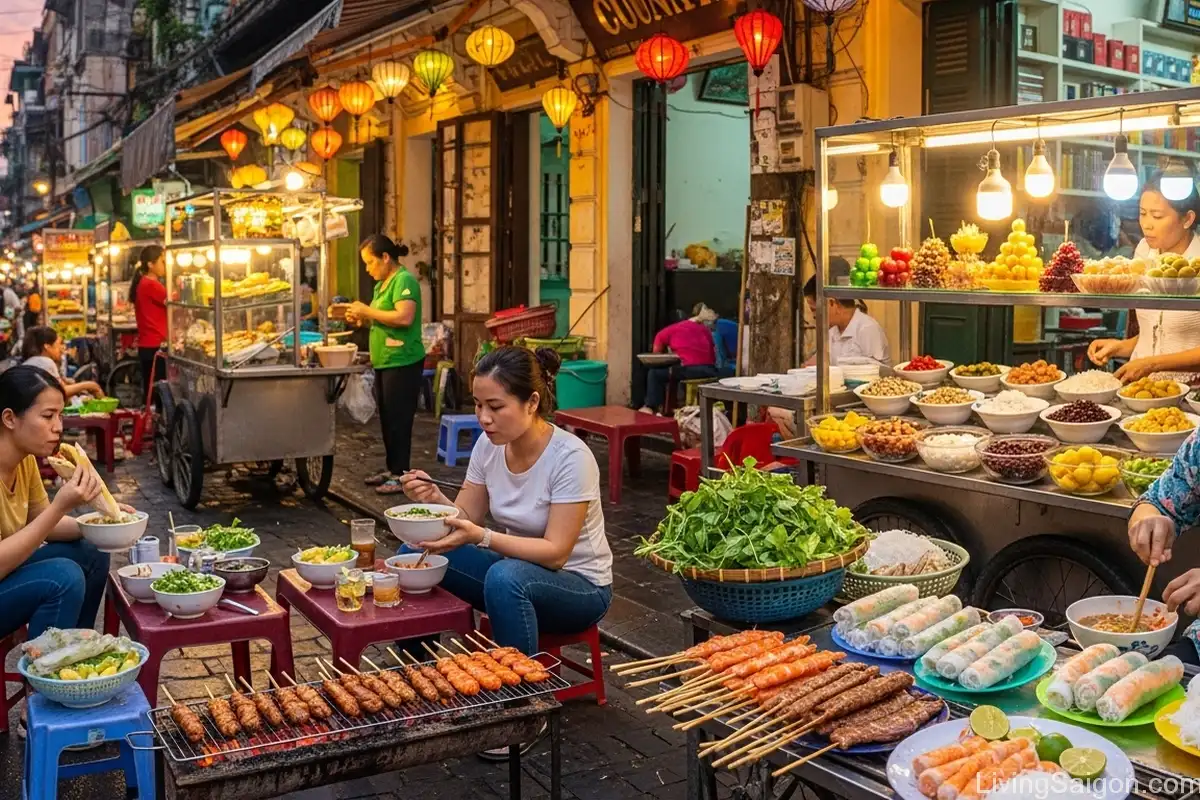
Why Food in Saigon Is in a League of Its Own
It sounds like an exaggeration until you’ve lived it for a few months. The combination of factors that makes food in Saigon so extraordinary is genuinely hard to replicate elsewhere. Fresh ingredients sourced daily from local markets. A culinary tradition built on balance — the interplay of sweet, sour, salty, bitter, and umami that runs through everything from a simple soup to a complex braised dish. A street food culture where the best food often comes from a vendor who has made the same dish for decades. And prices that mean you can eat extraordinarily well without spending much at all.
Saigon’s food scene is also distinct from northern Vietnamese cooking. The city’s cuisine skews sweeter, richer in herbs, and more open to adaptation than Hanoi’s more austere tradition. Southern Vietnamese food absorbed influences from Chinese immigrants, Khmer neighbors, and French colonial history — and the result is a kitchen that’s uniquely its own.
The city also rewards exploration. The most memorable meals rarely happen in restaurants that appear in guidebooks. They happen when you follow a local down a side street, pull up a plastic stool, and point at what the person next to you is eating. That’s Saigon.
The Essential Vietnamese Dishes to Know in Saigon
You could spend years eating your way through this city and never get bored. But there are dishes that form the foundation — the things you need to know before anything else, because they’ll shape how you understand everything that comes after.
Pho — The Dish That Defines the Morning
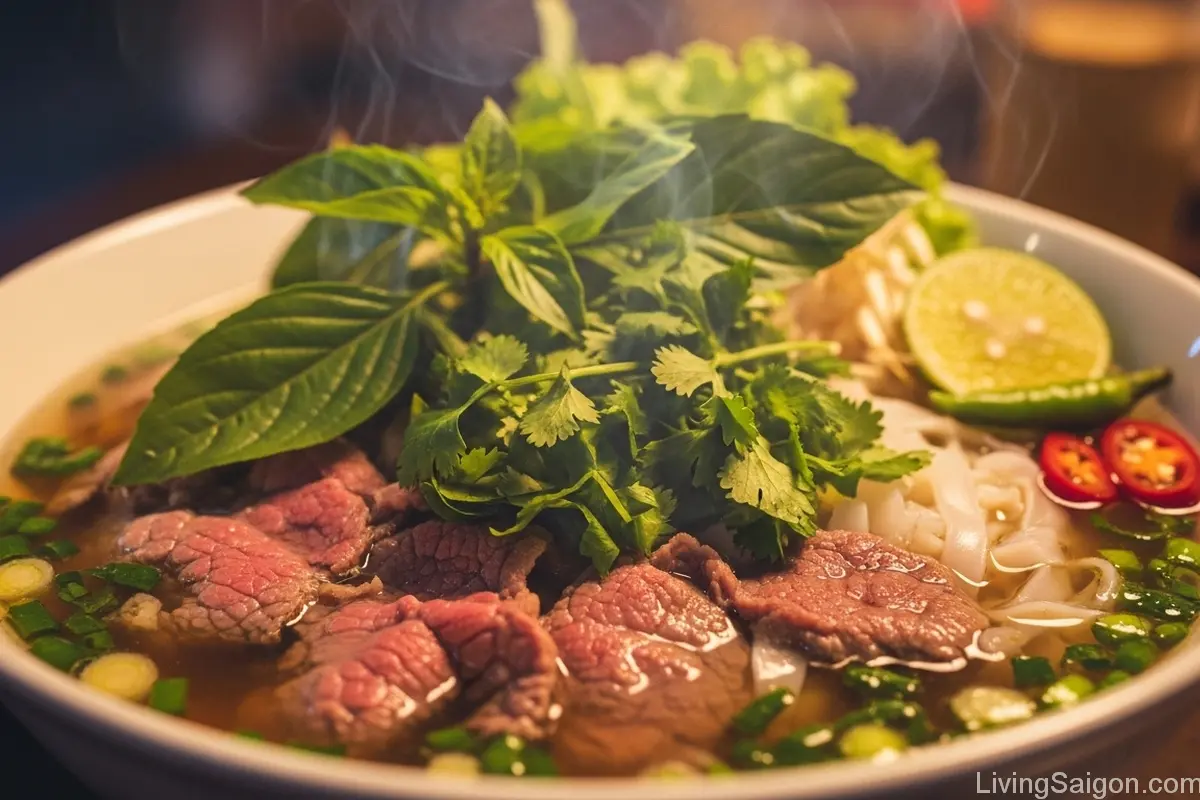
Pho in Saigon is different from what you’ll find in Hanoi, and different again from what gets served in Vietnamese restaurants abroad. Southern pho is richer, slightly sweeter, and served with a generous plate of fresh herbs, bean sprouts, hoisin sauce, and chili on the side. The broth is the soul of it — a clear, deeply fragrant stock built from beef bones, charred ginger, star anise, and a careful combination of spices that good pho shops guard closely.
The best pho in Saigon is eaten early. Most serious pho shops do their best business between 6am and 9am, and the broth is at its peak then. By midday, some places have already sold out. Find a spot with a line out the door, order pho bo (beef) or pho ga (chicken), and add the herbs at the table yourself. A bowl costs around 50,000–80,000 VND ($2–3.50 USD) at most local places.
Banh Mi — Saigon’s Greatest Street Food Export
The banh mi is arguably Saigon’s most famous food contribution to the world, and for good reason. It’s a masterpiece of fusion that works perfectly: a short, crispy French baguette — adapted by Vietnamese bakers to be lighter and airier than the European original — filled with a combination of pâté, cold cuts, pickled daikon and carrot, cucumber, coriander, chili, and sometimes a fried egg. The balance of textures and flavors is extraordinary for something that costs 20,000–35,000 VND ($1–1.50 USD).
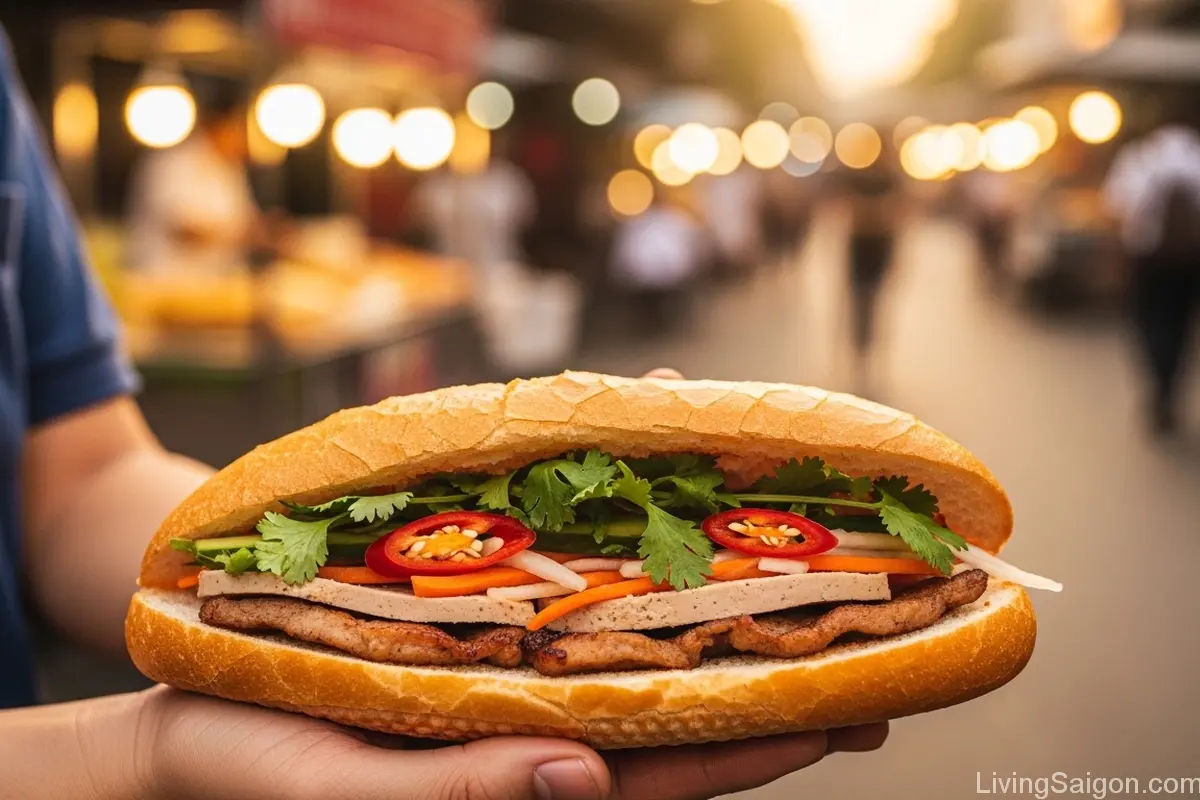
Every neighborhood in Saigon has its banh mi carts and stalls. The best ones have a line. If the bread isn’t warm and the fillings aren’t made fresh that day, keep walking. There are enough options that you never need to settle for a mediocre one.
Com Tam — The Expat’s Lunchtime Staple
Com tam (broken rice) is what a huge portion of Saigon eats for lunch, and it will become a staple of your own routine within weeks. A plate of com tam typically comes with a piece of grilled pork chop (suon nuong), a steamed egg cake (cha trung), shredded pork skin (bi), a fried egg, and a small bowl of light fish sauce broth. It’s hearty, satisfying, and costs 40,000–70,000 VND ($1.75–3 USD) at a good local spot.
Com tam stalls are everywhere, but the quality varies. The sign to look for: a charcoal grill out front, a line of workers eating on their lunch break, and a proprietor who looks like they’ve been doing this for a very long time. Those are the ones worth sitting down at.
Bun Bo Hue — The Underrated Bowl
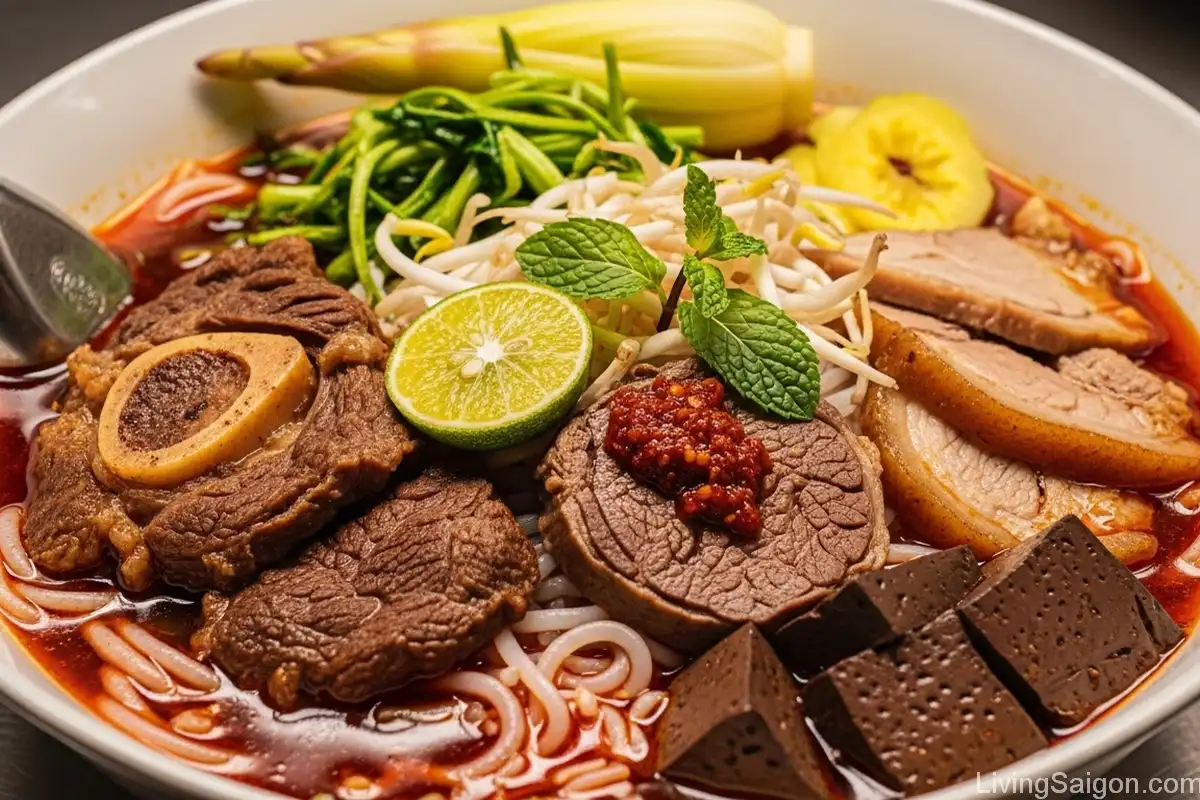
If pho gets all the international attention, bun bo Hue is what serious food lovers in the city gravitate toward. Originating in the old imperial city of Hue, this spicy, lemongrass-heavy noodle soup has taken root strongly in Saigon’s street food scene. The broth is richer and more complex than pho, the noodles are thicker and round, and the heat from fresh chili and shrimp paste gives it a depth that’s addictive once you’ve tried it.
For a guide to the full range of Vietnamese dishes worth knowing — from bun bo to banh xeo to che desserts — our Vietnamese food in Saigon guide goes deep on the culinary traditions behind each one. And if you want a curated shortlist, the must-try dishes in Saigon guide picks the absolute essentials for first-timers.
Street Food in Saigon: Where and How to Eat It
Street food is the backbone of food in Saigon, and understanding how it works unlocks a completely different layer of the city. Most street food doesn’t happen on dedicated food streets or in tourist-designated areas — it happens on the pavement in front of someone’s house, on a corner that’s been occupied by the same vendor for thirty years, or in a narrow alley that you’d walk past without looking twice.
The golden rule: eat where locals eat. A line of motorbikes parked in front of a stall, or a row of workers in construction gear hunched over bowls, is a better indicator of quality than any review on a food app. Prices at these places are always lower than at spots that cater primarily to tourists or expats, and the food is almost always better.
Hygiene anxiety is common among new arrivals and largely unfounded at the popular, high-turnover street food spots. The logic is simple: a stall that serves fifty bowls before 9am is cooking fresh and cooking constantly. The places to be cautious about are ones with low traffic and food that’s been sitting.
Some neighborhoods are particularly good for street food hunting. The streets around Ben Thanh Market in District 1 are famous but touristy — better for the experience than for finding the best prices. The residential streets of Districts 3, 4, and Binh Thanh offer more authentic options at local prices. Pham Viet Chanh street in Binh Thanh has developed a reputation as one of the city’s best eating streets. For a curated guide to the best options, read our article on the best street food in Saigon.
The Cafe Scene: Coffee Culture in Saigon
Vietnamese coffee is something that takes getting used to and then becomes something you genuinely crave. Ca phe sua da — iced coffee with sweetened condensed milk — is the classic: dark, intensely strong robusta coffee drip-filtered through a metal phin directly into a glass of ice. The result is rich, slightly bitter, and very sweet. It’s served everywhere, from street carts charging 15,000 VND ($0.60) to specialty shops charging five times that.
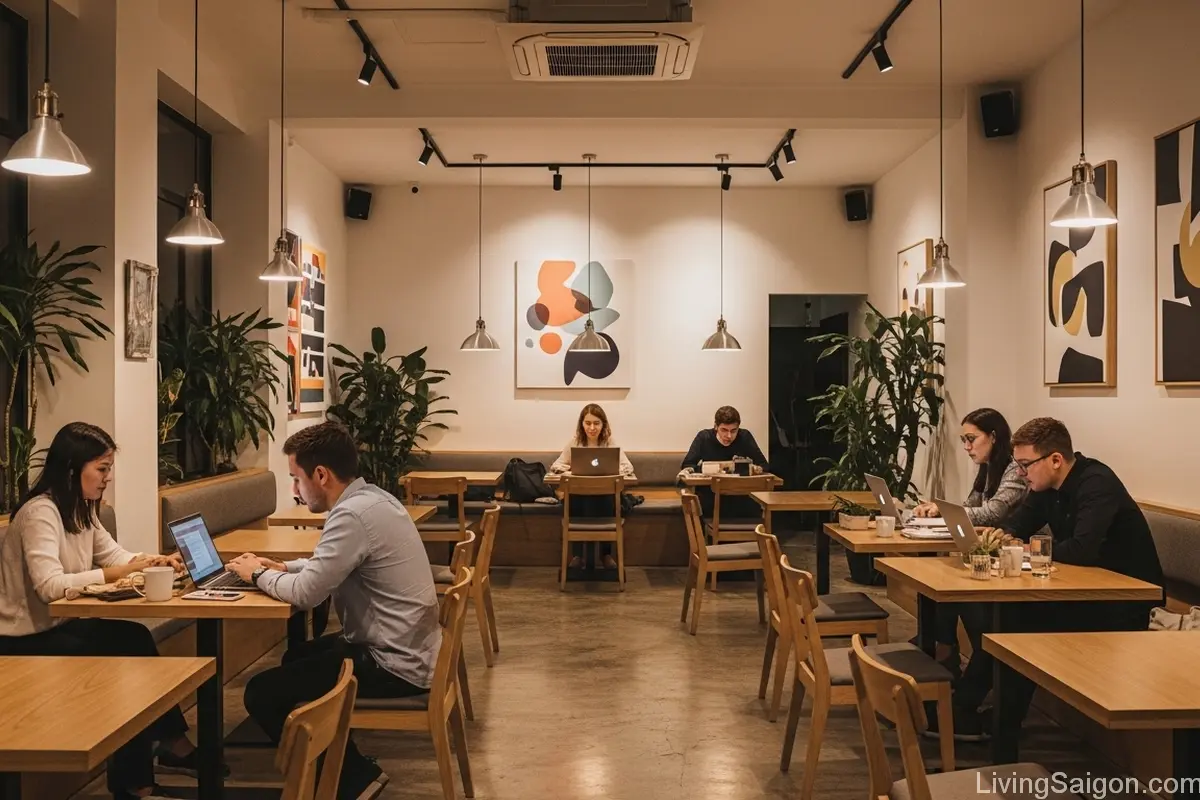
Beyond the traditional, Saigon has developed one of the most vibrant independent cafe scenes in Southeast Asia. The city’s younger generation has embraced third-wave coffee culture enthusiastically, and there are now dozens of specialty roasters and pour-over cafes scattered across the expat neighborhoods and creative districts. Many of them are also among the most beautifully designed spaces in the city — coffee in Saigon is as much about the environment as the cup.
The cafe culture also serves a practical function for the city’s large population of remote workers and freelancers. Sitting in a cafe for three or four hours with a laptop is completely normal, and most establishments have good wifi and enough outlets to accommodate it. For the best options by neighborhood and vibe, our guide to the best cafes in Saigon covers everything from hidden local gems to the most Instagrammable spots in the city.
International Food in Saigon
For a city in Vietnam, Saigon’s international dining scene is surprisingly deep. The large expat communities — Korean, Japanese, Taiwanese, Indian, French, American — have all brought their food with them, and the quality at the top end of each cuisine is genuinely impressive.
Japanese food in particular is very strong. The concentration of Japanese restaurants in Thao Dien and parts of District 1 is remarkable, ranging from proper ramen shops and yakitori bars to high-end sushi counters with imported ingredients. Korean barbecue is excellent throughout District 7 and Binh Thanh. French-influenced restaurants are scattered across the city, a legacy of the colonial period that’s been reinterpreted many times over by successive generations of Vietnamese chefs.
The mid-range international dining scene — Italian, Mexican, American, Indian — has improved significantly over the past decade. There are now credible options for most cuisines in the main expat neighborhoods, though the quality is more variable than at the top end of the Japanese or French scenes.
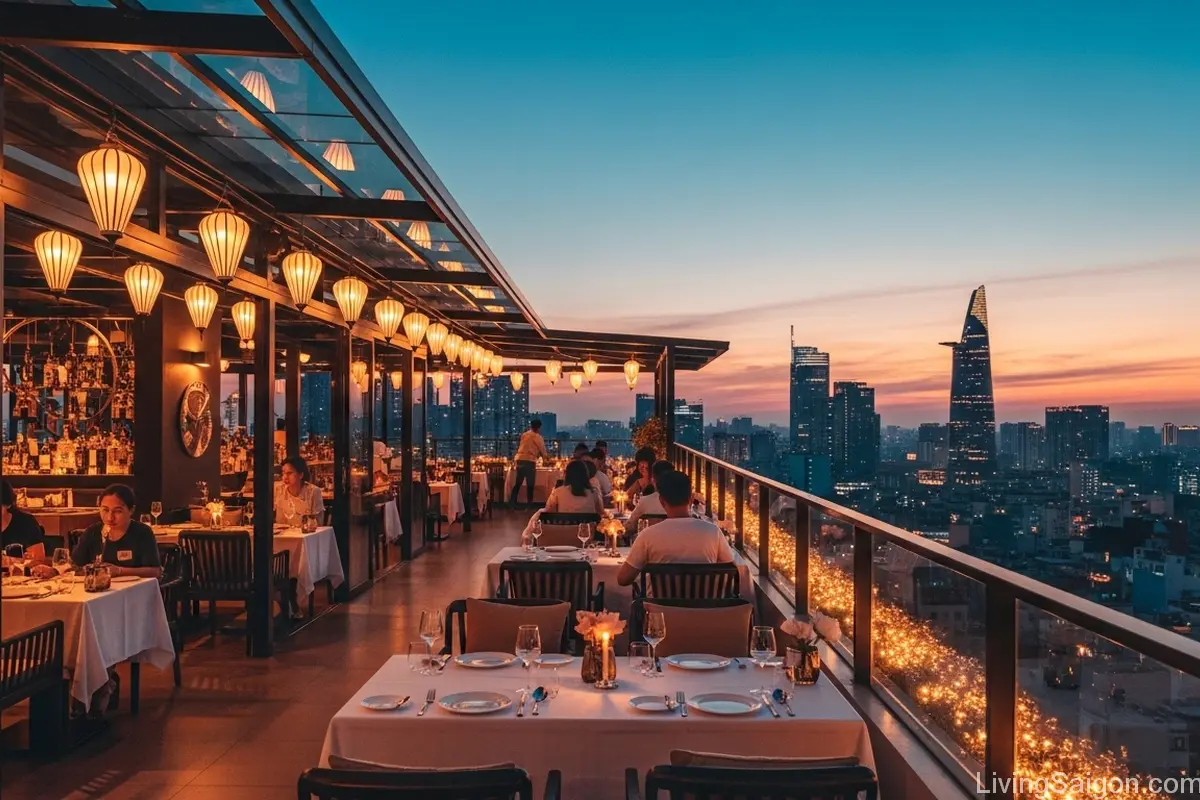
Prices at international restaurants are higher than local food but still low by Western standards. A good meal at a mid-range international restaurant in Thao Dien typically runs $15–30 per person including drinks. Fine dining at the best restaurants in District 1 or Thao Dien can reach $60–100+ per person, comparable to a major city abroad.
Brunch in Saigon
Brunch culture has taken hold in Saigon’s expat neighborhoods in a serious way, particularly in Thao Dien and the creative streets of Binh Thanh. Weekend mornings bring a particular kind of energy to the neighborhood’s cafes and all-day breakfast spots — the kind that reminds you why you chose to live here.
The quality of brunch options has improved considerably in recent years. Eggs Benedict made properly, good sourdough, smoothie bowls, avocado toast that isn’t an afterthought — the standard has risen as the expat population has grown and competition has pushed places to improve. Prices range from around $8–15 for a full brunch meal, which feels reasonable against the backdrop of what the same thing costs in London or Sydney.
For a curated list of the best spots, read our dedicated guide to brunch in Saigon — organized by neighborhood so you can find the best option near wherever you’re based.
Food Markets and Where Locals Actually Shop
The wet market is the beating heart of Saigon’s food system, and visiting one — even if you’re not buying anything — gives you a completely different understanding of how the city’s kitchens work. Ben Thanh Market in District 1 is the famous one, but it’s heavily oriented toward tourists. The neighborhood wet markets — Tan Dinh Market in District 3, Binh Tay Market in Cholon, Van Thanh Market in Binh Thanh — are where locals actually shop.
These markets operate from the early hours of the morning, and by 9am the best produce is often gone. They sell everything: live seafood, fresh herbs and vegetables, prepared foods, dry goods, kitchen equipment. The prices are negotiated, the vendors are fast, and the experience is one of the more genuinely immersive things you can do in the city.
For expats who prefer something more straightforward, the supermarket options have improved considerably. Aeon, Big C, and WinMart are the main chains, and all carry a reasonable range of international products alongside local staples. Annam Gourmet in Thao Dien and District 1 is the premium imported goods destination — the prices reflect it, but the range of Western and Japanese products is genuine.
Food Tours and Eating Your Way Around the City
One of the most effective ways to get oriented in Saigon’s food scene — especially in the first few weeks — is to do a guided food tour. The best ones take you to neighborhoods and stalls you’d never find on your own, give you context for what you’re eating and why it matters, and compress months of food discovery into a few hours.
The options range from motorbike street food tours (the most popular format) to walking tours in specific neighborhoods to more curated dining experiences at mid-range local restaurants. Prices start around $30–50 USD per person for a good half-day tour. Our Saigon city tour options include food-focused experiences that cover both the classics and some of the city’s less-visited eating neighborhoods.
If you prefer to explore independently, the local food in Saigon guide gives you a neighborhood-by-neighborhood breakdown of where the best eating streets and local spots are found. And for a ranking of the dishes you absolutely shouldn’t leave the city without trying, the must-try food in Saigon list is the place to start.
Practical Tips for Eating Well in Saigon
A few things that make the eating experience better, especially for people new to the city.
Learn the names of dishes in Vietnamese. Pronunciation matters more than you’d expect — “pho” sounds nothing like how most English speakers say it, and getting it close enough to be understood by a street vendor makes ordering much smoother. A small amount of Vietnamese food vocabulary goes a long way.
Eat at off-peak hours if you want the best stalls. The most popular street food spots have lines during the morning and lunch rush. If you arrive at a pho shop at 7:30am on a weekday, you’re competing with the neighborhood’s entire working population. Either arrive early and wait, or accept that the best places have queues.
Don’t fear the ice. One of the most common questions from new expats is whether the ice is safe. At established cafes, restaurants, and reputable street food spots, yes — commercially produced ice has been the standard for years. The old advice to avoid it was relevant thirty years ago. Use your judgment at very informal stalls.
The spice level is real. Southern Vietnamese food is not as fiery as Thai or Sichuan, but chili appears in or alongside almost everything. If you have a low spice tolerance, learn the phrase “khong cay” (not spicy) — vendors will generally accommodate.
Cash is still king at street food stalls. While apps like Momo and VNPay have made digital payments more common at restaurants and cafes, the overwhelming majority of street food vendors are cash-only. Keep small denomination notes handy — 20,000 and 50,000 VND notes are the most useful.
For more on the cultural context behind what you’re eating — the history of Vietnamese cuisine, the regional variations, and the dishes that don’t get enough attention — our Vietnamese food in Saigon guide goes into real depth. And if you’re looking to connect with other food-obsessed expats or get local recommendations updated in real time, the expat community groups on Facebook and local forums are genuinely useful resources.
The short version: food in Saigon will exceed whatever expectations you arrived with. Give it time, eat widely, and be willing to follow your nose down a side street. The best meal you’ll have here probably doesn’t have a name on the door.