

If you ask any long-term expat in Saigon where foreigners live, the first place they’ll name is Thao Dien. This ward in the old District 2 — now technically part of Thu Duc City following the 2021 administrative merger, though everyone in daily conversation still uses the original name — has been the center of Saigon’s expatriate residential life for more than two decades. The Thao Dien expat area has developed its own distinct character: part international village, part tropical suburb, part coffee culture capital, and entirely unlike anywhere else in Ho Chi Minh City.
This guide covers everything you actually need to know before choosing Thao Dien as your base: what the neighborhood looks and feels like day to day, where to live and what it costs, the schools and why they matter for your decision, the cafe and food scene that has made the area famous among digital nomads and remote workers, the flooding situation that everyone mentions but few explain properly, and an honest assessment of who the Thao Dien expat area genuinely suits versus who should consider somewhere else. For the broader context of how Thao Dien fits within the city’s full range of neighborhoods, the expat areas in Saigon overview maps out all the options.

What Makes the Thao Dien Expat Area Unique
Thao Dien occupies a bend in the Saigon River, roughly four kilometers northeast of the District 1 city center by road and connected to it by the Thu Thiem Tunnel or the Saigon Bridge, depending on which direction you’re approaching from. The Metro Line 1, now operational, has added a third option that avoids both tunnel and bridge traffic entirely — a significant quality-of-life improvement for daily commuters.
The neighborhood’s character was established by a combination of factors that built on each other over time. International schools were among the first to establish themselves on the east bank, drawn by available land and lower real estate costs than the center. The schools attracted expat families. The families attracted the cafes, restaurants, supermarkets, and service businesses that expat households need. Those amenities attracted more expats, including singles and couples without children who valued the lifestyle infrastructure. And the organic growth of a genuine international community — people who stay for years, form friendships, build social networks — gave the neighborhood a sense of belonging that newer or more transient expat zones rarely achieve.
The result is a neighborhood where you can realistically spend most of a week without leaving, not because it’s isolated, but because everything you need for a comfortable, varied daily life is within a relatively compact geography. Morning coffee at one of dozens of excellent cafes, lunch at a Vietnamese or international restaurant, afternoon work session at a coworking space, evening run along the river, dinner out with friends from the neighborhood — this rhythm is available here in a way it isn’t in most other parts of Saigon.
The Geography of the Thao Dien Expat Area
Understanding Thao Dien’s internal geography helps make sense of both the property market and the daily lifestyle. The neighborhood isn’t uniform — different streets and sub-areas have meaningfully different characters, and knowing which part of Thao Dien you’re looking at matters when evaluating an apartment or planning your social life.
The Core: Nguyen Van Huong and the Main Eating Streets
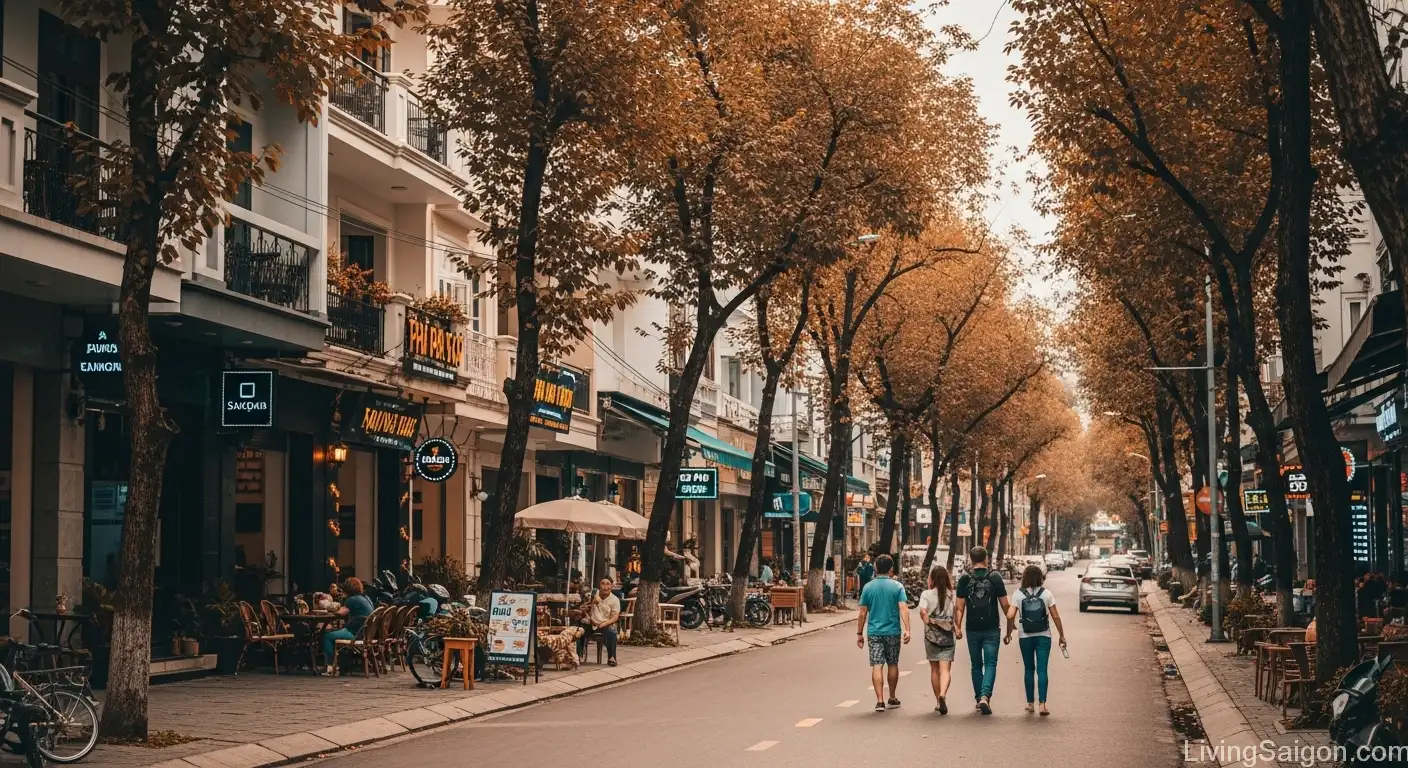
Nguyen Van Huong is the spine of the Thao Dien expat area’s social life. This street and its immediate surrounds — Xuan Thuy, Vo Thi Sau within the ward, the short connecting lanes between them — contain the highest density of cafes, restaurants, bars, and boutique shops in the neighborhood. Walking the length of Nguyen Van Huong on a weekend morning, you encounter a cross-section of Thao Dien’s international community: French families at outdoor cafe tables, Australian couples at brunch spots, Korean digital nomads at laptop-friendly cafes, and Vietnamese families who have lived here for generations navigating the same streets their grandparents did before the expat wave arrived.
The concentration of good food along and around Nguyen Van Huong is genuinely impressive. Vietnamese restaurants, Japanese and Korean spots, French bakeries, craft beer bars, rooftop restaurants with river views, and no fewer than a dozen specialty coffee establishments operate within a ten-minute walk of each other. For a curated breakdown of the best cafes specifically, our cafes in Thao Dien guide covers the scene comprehensively with current information on which spots are best for different purposes — working, socializing, or just a long slow breakfast.
The Residential Interior: Streets and Compounds
Beyond the main eating streets, Thao Dien’s residential interior is a mix of tree-lined lanes, gated villa compounds, and newer apartment towers that have been built on former agricultural or industrial land as the area has densified over the past decade. The character of the interior streets is noticeably quieter and more residential than the main roads — bougainvillea over garden walls, the sound of children playing in compound pools, the occasional rooster still crowing from a Vietnamese household that predates the development wave.
The gated villa compounds — An Phu, Saigon Pearl, The Estella, and many others — provide the most secluded and most family-oriented living environments in the neighborhood. They vary significantly in age, quality, maintenance standards, and price, and spending time in several before committing to one is strongly advisable. Older compounds may have dated facilities but better-established gardens and more stable management. Newer ones have modern fitness centers and pools but less developed greenery and sometimes teething problems with maintenance and building management.
The Riverside and Pearl Area
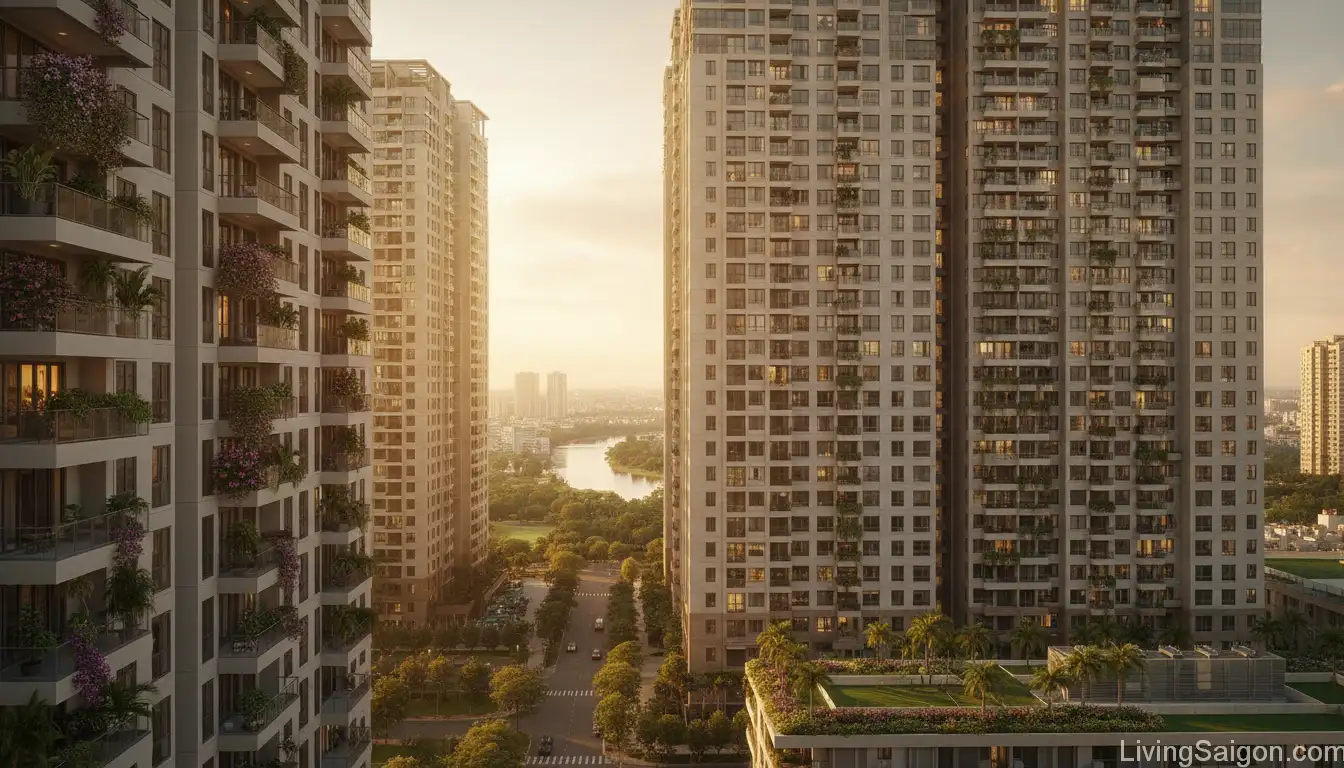
The stretch along the Saigon River — particularly the development around Saigon Pearl — has a different feel from the older Thao Dien interior. The high-rise towers here offer river views and a more urban apartment aesthetic that appeals to people who want the Thao Dien address and community but prefer a contemporary building over a garden villa. The riverside promenade, when accessible, is one of the more pleasant outdoor spaces in the neighborhood — a place to run or walk in the early morning before the heat builds.

Thao Dien Expat Area: Apartments and Rent
The property market in the Thao Dien expat area is the most active and most internationally oriented in Saigon. Rental properties range from studio apartments in older buildings to five-bedroom villas with private pools in premium compounds, and the market moves quickly — good apartments at fair prices don’t sit unsold for long.
Rent Ranges by Property Type
For a studio or compact 1-bedroom apartment in an older building or mid-range compound, expect to pay $600–$850/month. A modern 1-bedroom in a well-maintained building with amenities (pool, gym, 24-hour security) runs $850–$1,300/month. Two-bedroom apartments in the mid-range sit at $1,100–$1,800/month; in premium compounds and river-view buildings, 2-bedrooms reach $1,800–$3,000/month. Villas — the three, four, and five-bedroom garden properties that make Thao Dien feel suburban in the best possible way — start around $2,500/month for older units and climb to $5,000–$8,000/month or more for large, well-maintained properties in premium compounds.
The practical implication: Thao Dien is expensive relative to other Saigon neighborhoods. A couple paying $1,500/month for a 2-bedroom here could get equivalent or superior quality in Binh Thanh for $900–$1,100/month. The premium pays for the neighborhood — the school access, the cafe ecosystem, the community feel, and the specific Thao Dien character that many expats find worth the extra cost. Whether that premium makes sense depends entirely on your priorities and your situation.
Finding an Apartment in Thao Dien
The Thao Dien rental market has a high proportion of English-speaking landlords and real estate agents relative to other parts of the city, which makes the search considerably more accessible for foreign arrivals. Online platforms (Facebook groups specifically — the “Thao Dien Expat Community” group and similar pages are active and useful), local real estate agents, and personal referrals from existing residents are all productive search channels.
A few practical notes for the search: always visit in person before committing, check the air conditioning systems carefully (an old or undersized system in a Saigon summer is a significant quality-of-life issue), ask specifically about the flood history of the street and building, understand what utilities are included versus billed separately, and verify whether the lease allows subletting if your plans might change. For a step-by-step walkthrough of the apartment-finding process specific to Thao Dien, our guide to apartments in Thao Dien covers the process in detail. The apartment rental service in Saigon can also connect you with agents who specialize in this neighborhood and communicate clearly in English — useful if you’re arriving without local contacts.
International Schools: The Thao Dien Advantage
The concentration of international schools in and around the Thao Dien expat area is the single most important factor for expat families with school-age children — and the primary reason many families choose this neighborhood over every other option in Saigon, regardless of the premium cost.
The Major Schools
The British International School (BIS) Ho Chi Minh City, located on Xuan Thuy street in the heart of Thao Dien, follows the British National Curriculum from Early Years through to A-Levels and has been the anchor institution of the neighborhood’s family expat population for decades. BIS operates a bus network that covers a significant portion of the city, but living in Thao Dien puts most families within a ten-minute drop-off. Waiting lists for popular year groups are real — if BIS is your target, contact the admissions office well before your move date.
The Australian International School (AIS) on Nguyen Van Huong follows the Australian curriculum and is the other major anchor school of the neighborhood. It shares much of the family-expat demographic with BIS, and the schools’ physical proximity means that children from different families often know each other even if they attend different institutions — contributing to the small-town community feeling that defines social life in Thao Dien for families.
The International School Ho Chi Minh City (ISHCMC) and several other international institutions with campuses in the broader District 2 / Thu Duc area also feed into the Thao Dien residential community, as families choose the neighborhood partly for proximity to whichever school they’ve selected. The multiplier effect — school choice leads to neighborhood choice leads to community — is the engine that has sustained Thao Dien’s position as the dominant expat family area in Saigon for years.
If You Don’t Have Children
The school infrastructure matters less directly for childless expats, but it matters indirectly: it’s the reason the neighborhood has the specific demographic and community feel that it does. The presence of so many family expats creates a particular social tone — organized, community-oriented, with a strong weekend social culture built around family events, sports clubs, and the kinds of activities that don’t depend on nightlife. Singles and couples who want a more active after-dark scene centered on bars and clubs may find Thao Dien’s social life slightly domesticated compared to what’s available in District 1 or parts of Binh Thanh. Those who prioritize a warm, established community over nightlife access will find Thao Dien’s family-oriented character exactly right.
Cafe Culture: Why Thao Dien Is a Digital Nomad Favourite
The cafe density in the Thao Dien expat area is exceptional by the standards of any city, not just Saigon. Within a fifteen-minute walk from most points in the neighborhood, you can choose between specialty roasters doing meticulous pour-overs, large airy working spaces with fast wifi and communal tables, cozy shophouse cafes with excellent Vietnamese drip coffee, and multi-story venues that double as light brunch restaurants in the mornings and social spaces in the afternoons.
Several cafes have become institutions in their own right — places that anchor the neighborhood’s social geography as reliably as any bar or restaurant. The Saturday morning farmers market that has operated near the heart of Thao Dien for years draws a consistent crowd from across the expat community and provides a weekly meeting point that keeps the social network active even for people who work from home all week.
The working-from-cafe culture is particularly well-developed here. Many of the neighborhood’s cafes understand that their customer base includes people who will spend four or five hours at a table with a laptop between one coffee and one meal, and they’re set up for it — power outlets at tables, reliable wifi, natural light, and enough ambient noise to feel productive without being distracting. For a curated guide to which cafes work best for remote work versus social coffee, our Thao Dien cafes guide breaks down the neighborhood scene in practical detail.

Food in Thao Dien: From Street Stalls to Fine Dining
The food scene in the Thao Dien expat area is among the most diverse in the city, reflecting the breadth of nationalities that have made the neighborhood home over the years. The range covers virtually every cuisine: Vietnamese com tam and pho at local stalls that have operated here for decades, French bistros and patisseries, Japanese ramen and sushi restaurants, Korean BBQ, Indian curry houses, American-style brunch spots, Italian restaurants with proper wood-fired ovens, and a growing selection of contemporary fusion and modern Vietnamese fine dining.
The price range is equally broad. A Vietnamese breakfast at a neighborhood stall costs $2–3 USD. A mid-range international dinner for two with wine runs $40–80 USD. The top-end dining experiences in and around Thao Dien are genuinely excellent by regional standards, with several restaurants competing seriously for the city’s most discerning food community. For the best current options across price points, the food in Saigon guide provides context on how Thao Dien’s dining scene fits within the city’s broader culinary landscape.
One dimension of the Thao Dien food scene worth highlighting specifically for expat families: the neighborhood has the best density of imported food retail in Saigon. Annam Gourmet has one of its flagship locations here; several smaller specialty food shops stock European cheeses, Australian meat cuts, international breakfast cereals, and the specific ingredients that don’t show up at local supermarkets. Cooking at home with imported ingredients is genuinely practical here in a way it isn’t in most other Saigon neighborhoods.
The Flooding Question: What You Actually Need to Know
Any honest guide to the Thao Dien expat area has to address flooding directly, because it affects enough streets in the neighborhood significantly enough that it’s a real practical consideration when choosing an apartment — not just a minor inconvenience.
Thao Dien’s flooding comes from two sources: tidal flooding from the Saigon River, which is worsened by upstream development reducing the river system’s capacity, and rainwater flooding from the inadequate drainage infrastructure that hasn’t kept pace with the neighborhood’s rapid densification. The combination means that during the rainy season (May to October) and particularly during high tide events, some streets in the neighborhood become passable only on motorbike or not at all for one to three hours at a time.
The critical point is that flooding is highly localized. Some streets in Thao Dien flood reliably every rainy season. Others — often just two or three streets away — have never flooded in living memory. Before renting any property in the neighborhood, ask the landlord, ask neighbors, and ask in the local Facebook expat groups about the specific street’s flood history. Ground-floor apartments on known flood-prone streets should generally be avoided. Upper-floor apartments on the same street are significantly less impacted. Raised villas with garden buffer space between the street and the entrance are typically better protected than street-level townhouses.
This is not a reason to avoid Thao Dien — most of the neighborhood’s popular residential streets are either not seriously flood-affected or have infrastructure that makes flooding a manageable occasional inconvenience rather than a recurring crisis. But due diligence on the specific address before signing a lease is essential.
Community Life and Social Infrastructure
The sense of community in the Thao Dien expat area is one of its most genuinely distinctive features, and one that’s difficult to appreciate fully until you’ve experienced it. In a city as large and transient as Saigon, where the expat population rotates significantly every few years, Thao Dien has developed a level of social continuity that most neighborhoods lack.
The Facebook groups, the WhatsApp networks, the school parent communities, the Saturday market regulars, the sports clubs — rugby, football, yoga, running groups — all intersect and overlap to create a social fabric where new arrivals can build a genuine network within weeks rather than months. This matters enormously for people relocating alone or as a couple without an existing social base in the city.
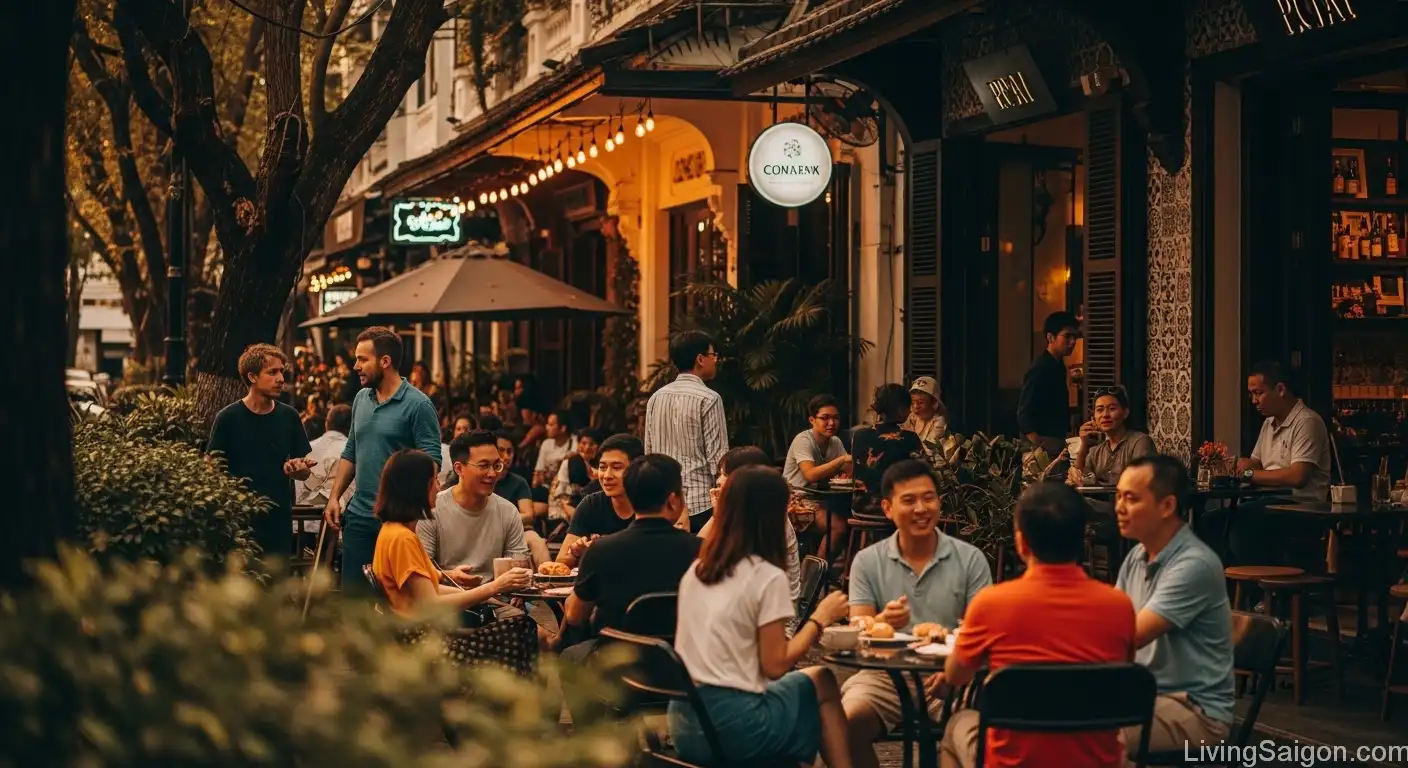
The neighborhood also has a more stable long-term expat population than most parts of the city. Where District 1 sees constant turnover as business travelers come and go, and where newer expat areas haven’t had time to develop the same depth of social infrastructure, Thao Dien has a core of people who’ve been here for five, ten, and fifteen years and who form the backbone of the community’s institutional memory. Their knowledge of where to find things, who to call when something goes wrong, and how to navigate Saigon’s systems is an informal but real resource for anyone who integrates into the neighborhood properly. Our guide to expat life in Thao Dien goes deeper into the community dimension and what the social calendar actually looks like across a typical year.
Getting to and from the Thao Dien Expat Area
Connectivity is the one area where Thao Dien’s position has been most improved in recent years. The Metro Line 1 now connects the neighborhood to the Ben Thanh terminal in District 1 in approximately twelve minutes with no traffic — a transformation for anyone who commutes to the center regularly and previously had to budget forty-five minutes to an hour by Grab or car during peak hours.
For non-metro trips, Grab remains the primary option. The Thu Thiem Tunnel is the fastest road connection between Thao Dien and District 1 when traffic is light, but during the morning and evening rush hours the tunnel approach roads slow significantly. The Saigon Bridge is a useful alternative for trips to Binh Thanh and the airport. Motorbike ownership remains common among long-term Thao Dien residents for exactly the same reason it’s common across the city — it bypasses traffic in a way that no four-wheeled vehicle reliably can.
For a complete picture of how the Thao Dien expat area connects to the rest of the city’s neighborhoods — the comparison with District 7, the working-from-home versus commuting calculus, and how Thao Dien’s specific position in the city’s expat ecosystem has evolved — the where to live in Saigon guide provides the strategic overview. And if you’ve made the decision and are ready to start the apartment search in earnest, our apartment rental service in Saigon connects you with agents who work specifically in the Thao Dien market and can shortlist properties matched to your requirements before you even arrive.
Is the Thao Dien Expat Area Right for You?
The honest answer is: it depends on exactly what you want from your Saigon experience.
Thao Dien is the right choice if you have children in international school, if you want to plug into a ready-made expat social network as quickly as possible, if you work from home and want to be surrounded by excellent cafes and a productive working environment, if you value space and greenery over urban density, and if the premium cost of living in the neighborhood fits your budget without strain.
It may not be the right choice if you want to be embedded in Vietnamese urban life rather than an international bubble, if you’re single and your social life centers on nightlife and late-night activity rather than community events and weekend brunch, if your budget is genuinely tight and the Thao Dien rent premium is a stretch, or if your work requires daily commuting to parts of the city far from the east bank.
For a detailed comparison of Thao Dien against District 7 — the other main family expat area in Saigon — the Thao Dien vs District 7 comparison covers the trade-offs across cost, school options, lifestyle, and daily commute. And for a guide to the best cafes and restaurants that give you a sense of what the neighborhood’s social fabric actually looks and feels like, the best cafes in Saigon page covers Thao Dien’s standout spots alongside the city’s wider coffee culture scene.
Thao Dien is many things to many people — suburb, village, cafe culture capital, family community, digital nomad hub — but it’s rarely disappointing for those who choose it with a clear sense of why it suits their life. Getting that clarity before you sign a lease is what this guide is designed to help you do.